Cantonese Being Squeezed Out of the Classroom

Cantonese Being Squeezed Out of the Classroom

Several years ago, when I found out my daughter might not get into the primary school affiliated to her kindergarten, I panicked. I had only applied to one school and now, I had to look for alternatives.

I was not looking for a famous or prestigious school. Instead, I wanted to find a school that did not have a high-pressure test culture, one that instead stressed a more relaxed and joyful approach to learning. I was also looking for a school that used Chinese as a medium of instruction and taught Chinese in Cantonese.

This proved to be much harder than I imagined in a city where Cantonese is the main language spoken by around 90 per cent of the majority ethnic Chinese population.

According to a comprehensive survey of 512 primary schools and 454 secondary schools conducted in 2013, the Cantonese advocacy group Societas Linguistica Hongkongensis found that 71 per cent of primary schools and 25 percent of secondary schools were using Putonghua as the medium of instruction for Chinese language (PMI). This meant anything between one and all Chinese classes in those schools are taught in Putonghua.

Today, whenever officials are about the government’s position on PMI for Chinese, they repeat the line that this is a “long-term goal”. In 2008 the Standing Committee on Language Education and Research (SCOLAR), a group set up to advise the government on language education, announced plans to allocate $200 million to help schools switch to PMI.

However, there is no timetable for full implementation of this long-term goal. This should make us  wonder, where did the goal come from and what are the reasons for adopting it? To try and answer these questions, I had to dig through some history.

The Mysterious Origins of the “Long-term Goal”
In 1982, the colonial government invited an international panel to conduct a review of Hong Kong’s education system. The panel recommended that Cantonese be the medium of instruction for the first nine years of schooling, so that teaching and learning would be conducted in “the language of the heart”. The recommendation was supported by the volumes of evidence that show mother-tongue teaching to be more effective.

Where it did refer to Putonghua, the panel recommended it be taught as a publicly-funded but extra-curricular subject at primary level and built into the timetable as a separate subject at secondary level.

In 1996, a report by the Education Commission said Puthonghua should be part of the core curriculum at primary and secondary levels and offered as an independent subject for the Hong Kong Certificate of Education Exams in 2000.

It also called on SCOLAR to,

“study further the relationship between Putonghua and the Chinese Language subject in the school syllabus to ascertain whether it would be more appropriate for Putonghua to be taught as a separate subject or as part of the Chinese Language curriculum in both short term and the long term.”

Note that at this stage there is no mention that Putonghua be a medium for teaching Chinese language (PMI), let alone the sole medium.

A year after the handover, in 1998, a study was commissioned to examine the effectiveness of teaching Chinese in Putonghua, to be completed by 2001. But before the studies were even finished, the first mention of the “long-term goal” appeared.

In its October 1999 review of proposed education reforms, the Curriculum Development Council said it was a goal in “the long term to adopt Putonghua as medium of instruction in the Chinese language education.”

A SCOLAR document from 2003 goes on to

“…fully endorse the Curriculum Development Council’s long-term vision to use Putonghua to teach Chinese Language.”

Yet the same document states

“…there is as yet no conclusive evidence to support the argument that students’ general Chinese competence will be better if they learn Chinese Language in Putonghua.”

In fact, of three studies referred to in the report, two studies found students’ performed no better or worse when taught in Putonghua.

According to Sy Onna, a secondary school Chinese language teacher who has studied the topic extensively, the government has never given a satisfactory explanation of why PMI for Chinese was adopted as a long-term goal. Academic research shows mixed results for the effectiveness of PMI, and has found no overall improvement in Chinese language competence.

For Cantonese language advocates like Societas Linguistica Hongkongensis, the reasons for promoting this long-term goal are clearly political – to dilute Hongkongers’ attachment to their native language on the one hand and to promote greater cultural integration with the Mainland on the other.

However, publicly at least, most proponents of PMI are likelier to cite its economic advantages and, to an even greater extent, its educational advantages.

“My Hand Writes My Mouth”
When I ask Professor Lam Kin-ping what the most compelling reasons are for PMI, he answers with the well-rehearsed assurance of someone who has answered the question many times before. Lam is Director of the Centre for Research and Development of Putonghua Education at the Faculty of Education at the Chinese University of Hong Kong, one of the organisations commissioned to carry out studies on the effectiveness of PMI in 1998.

He says he holds a fundamental “belief” that students learn better in PMI Chinese classes because they are listening, speaking, reading and writing in the same language code. Lam argues that in classrooms where Chinese teaching is conducted in Cantonese, students need to “switch codes”.

“The listening and speaking training is in Cantonese. Cantonese is at the end of the day a dialect, we can’t just write a dialect, so we have to adjust it internally, have to make it standard, switch some phrases and even sentences,” he says.

Lam thinks it makes sense to teach in Putonghua because it is very similar to written modern standard Chinese. Whereas Cantonese is a vernacular, a dialect that cannot easily be written or accepted in formal written contexts, says Lam.

For some people, this chimes with the idea of “my hand writes my [what my] mouth [utters]” – a slogan promoting the modernisation of written Chinese, harking back to the May Fourth movement of 1919 when classical Chinese was still the written standard. This core idea has been used to justify the need for PMI by scholars, education professionals and schools who support it, and is accepted without question by many parents.

But this does not make it a universally accepted truth.

Professor Tse Shek-kam, Director of the Centre for Advancement of Chinese Language Education and Research at the University of Hong Kong’s Faculty of Education, rejects the idea that students learn better in PMI classrooms because they do not have to “code-switch”. Nor does he accept that the Cantonese used in Chinese lessons is so far removed from modern standard written Chinese as to necessitate mental gymnastics.

Tse points out text-books are written in standard Chinese, which can be read aloud in Cantonese. Besides, he says, Chinese teachers do not speak in slangy street Cantonese.

“Our Chinese teachers speak very good Cantonese, very good Chinese,” he says. If anything, formal Cantonese has preserved many aspects of what would be considered literary and “proper” Chinese, he adds.

The proximity between spoken Chinese and written Chinese, “depends on the person’s education level, their reading experience and cultural cultivation.”

Tse says that if speaking good Putonghua really put students at an advantage in writing good Chinese, then students from Northeast China  and Beijing, where the “purest” Putonghua is  spoken would score highest in Chinese in public examinations. Yet, he says students from Shandong and Jiangsu/Zhejiang score higher.

“Both Jiangsu and Zhejiang are areas where distinct dialects are spoken, but they also have a strong tradition for literature and well-established publishing sectors,” Tse says.

For him, the advantages of teaching Chinese in Cantonese outweigh the advantages of teaching it in what is essentially a foreign spoken language to most Hong Kong students. Teachers and students are more comfortable communicating in their mother-tongue, making for livelier and more critical discussions that facilitate deeper learning.

Conflicting Evidence
In an interview with Ming Pao in April, one of the scholars tasked by the government to conduct longitudinal studies on the effectiveness of PMI, Professor Tang Shing-fung of the Hong Kong Institute of Education, said he had reservations about a wholesale switch to PMI, as evidence does not currently show PMI is a better way to teach Chinese language.

But PMI supporter Lam Kin-ping says his own observations in the classroom and reports from frontline teachers show students in PMI classes do perform better.

“We have seen improvements, for instance students can write longer articles, they consciously refrain from writing Cantonese terms  and phrases, it is very easy for them to adjust [to written Chinese],” says Lam.

Lam acknowledges it is difficult to find quantitative proof of the above from research data, but he says his experiences and those of teachers convince him that it is real.

Sy Onna, who teaches separate Chinese Language and Putonghua classes at a local secondary school and is a member of the Progressive Teachers Alliance, dismisses Lam’s observations. She says being able to write longer articles with fewer Cantonese colloquialisms are not necessarily a sign of better writing.

“These are only superficial improvements,” Sy says. “As Tang Shing-fung points out, argument setting, structure and composition are just as if not more important, and these have nothing to do with Putonghua.”

This may be one reason secondary schools that teach Chinese in Putonghua often switch back to Cantonese in senior classes, as students prepare for approaching public examinations (as shown in Societas Linguistica Hongkongensis’ survey).

In a study published in 2011 of a school that switched to PMI in 2000, CUHK professor Angela Choi Fung Tam found  school administrators were keen to push for PMI because they believed it would enhance the school’s reputation and help it to attract more academically able students.

This would support the view of both PMI advocate Lam Kin-ping and critic Tse Shek-kam that it is perhaps schools and parents, rather than the government who are taking the lead in pushing for the rapid switch to PMI.

But Tam’s study also found teachers were far more ambivalent – while they believed PMI would improve students’ Putonghua, they did not think it would raise their overall Chinese competence. Some senior teachers who experienced the switch said they had noticed a general decline in students’ language proficiency and school reports showed a drop in pass rates in public exams in Chinese language from 100 before PMI was introduced to around 90 afterwards.

“I think the government knows it doesn’t work, there is no evidence it works. To this day they haven’t set a timetable,” says Tse.

Making Informed Choices
I began this article outlining the predicament I found myself in while searching for a suitable primary school for my daughter. Eventually, she was accepted by the primary school affiliated to her kindergarten and we enrolled her in the sole class that teaches Chinese in Cantonese in her year. The other four classes all use PMI for Chinese.

Most of my daughter’s classmates’ parents told me they consciously chose Cantonese because they thought it would be better for their children to learn in the language spoken at home. A few of them said Cantonese was an important part of Hong Kong culture and identity.

However one parent said she was advised to place her child in the Cantonese class by education professionals, and another said it was because the PMI classes were already full. Both said they would switch to a PMI class if they could.

As I was also curious about whether my daughter’s former kindergarten classmates had ended up learning Chinese in Cantonese or Putonghua, I contacted some of their parents too. Of the eleven who replied, six had children who were in PMI classes. In most of these cases, parents said they had chosen a PMI school or class because they wanted their child to speak “native” level Putonghua.  They also believed it would help their child to write better Chinese and be good for their future careers.

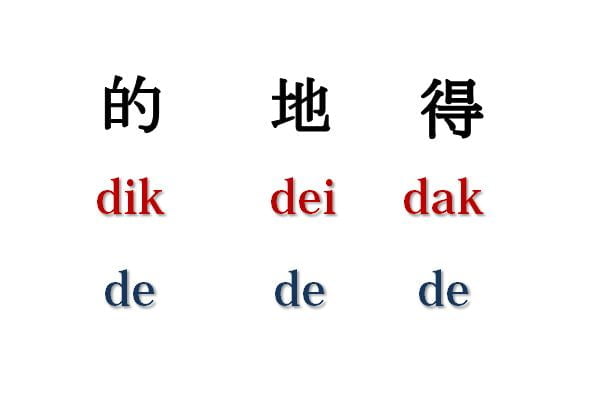
Three parents said they had yet to notice any changes in their children’s Chinese abilities and two said it had a positive impact. But two parents reported a negative impact. One, who I’ll call T, said her son would sometimes mix up the characters , and , which are pronounced differently in Cantonese, but the same in Putonghua.

T told me, “I wish I had known then, what I know now, that writing good Chinese does not depend on Putonghua but on a person’s cultural and educational level and on how much they read.”

In terms of reading, it seems Hong Kong primary students are doing extremely well. In a study of reading literacy in primary school children in 49 countries and regions carried out in 2011, they ranked first – ahead of Taiwan which was seventh. So coming from a predominantly Cantonese speaking city does not seem to have affected Hong Kong school children’s reading abilities, a foundation for developing good writing skills.

The issue of PMI for Chinese has undoubtedly become a highly political and emotional one. But politics and emotions aside, the question we keep going back to is whether PMI is a better educational choice, and do we even have the information we need to make that judgment?

Any advantage gained through applying the principle of “my hand writes my mouth” needs to be balanced with the widely accepted principle that students learn better when taught in their mother tongue.

Through reviewing the evidence and speaking to experts, what I have learned is that PMI may improve students’ fluency in “native” Putonghua, but this can also be achieved through teaching Putonghua as a separate subject.  Students may use fewer Cantonese words, phrases and grammar in their writing, but PMI cannot be said to have raised their overall competence in Chinese.

For parents like me, the choices themselves appear to be shrinking. While not all the schools teaching Chinese in Putonghua do so exclusively, many of the parents I spoke to agree with me that increasingly, the classes that teach in Cantonese are being seen as somehow “inferior”. Academically stronger kids will gravitate towards or be placed in PMI schools or PMI streams. Parents who worry their children may be labeled as less able may avoid putting them in the Cantonese Chinese class.

The government has offered incentives in the form of cash and personnel to help schools switch successfully to PMI. But school governing bodies and administrators, parents and an industry of extra-curricular literature and classes profiting from a transition to PMI are providing the momentum to push a long-term educational goal that lacks clear evidence, seemed to appear out of nowhere, and carries huge political implications.

Originally published www.yuenchan.org, July 2015

Parents Concern Group on National Education
This summer marks the 3rd anniversary of the anti-National Education movement. A number of organisations, including Scholarism, Progressive Teachers Alliance, Umbrella Parents and the Parents’ Concern Group on National Education issued a joint statement on Saturday 25th July.

There will also be a series of three seminars on PMI, the Chinese History curriculum and extra-curricular activities respectively .The first seminar on PMI will be held on August 8th at 2.30 pm in Room 103 of the Duke of Windsor Social Service Building.
Hong Kong Indigenous March Against Questionable Arrests and Spurious Charges

https://bcmagazine.smugmug.com/Bcene-photos/2015/HK-Indigenous-Protest-March/50872094_Qx2X6k#!i=4230428635&k=SCfvXMb

Hong Kong Indigenous march from Causeway Bay to the High Court in support of the protesters who were arrested in Yuen Long during the anti-smuggling protests earlier this year. Among those protestors is Ng Lai-ying who has been convicted of assaulting a police officer with her breasts. Even though there’s no video evidence to support the ‘alleged’ assault and plenty to show that Ng was thrown to the floor and assaulted by police giving her a bloody nose.

The 100m long march is a visual and vocal reminder of the double standards that now seem to apply in Hong Kong where the police and blue ribbon pro-Beijing supporters can break the law with impunity. While HongKongers face dubious charges backed with fabricated evidence – exposed by the courts.

https://bcmagazine.smugmug.com/Bcene-photos/2015/HK-Indigenous-Protest-March/50872094_Qx2X6k#!i=4230427187&k=sXVhwsZ

https://bcmagazine.smugmug.com/Bcene-photos/2015/HK-Indigenous-Protest-March/50872094_Qx2X6k#!i=4230428633&k=ZDsj6pw

https://bcmagazine.smugmug.com/Bcene-photos/2015/HK-Indigenous-Protest-March/50872094_Qx2X6k#!i=4230429780&k=DnfQs9J

Grand Opening @ Burger Joys

https://bcmagazine.smugmug.com/Bcene-photos/2015/Burger-Joys-Grand-Opening-20/50835452_5D6TCW#!i=4227178477&k=vXvs6rN

https://bcmagazine.smugmug.com/Bcene-photos/2015/Burger-Joys-Grand-Opening-20/50835452_5D6TCW#!i=4227196748&k=SKpkSDm

Burger Joys in Wanchai celebrated their Grand Opening on the 24 July with friends, customers and suppliers.
Thank you to the staff who worked tirelessly to make the evening very enjoyable.
Click on any image to see the full gallery of photos

https://bcmagazine.smugmug.com/Bcene-photos/2015/Burger-Joys-Grand-Opening-20/50835452_5D6TCW#!i=4227168099&k=sTTJcTF

https://bcmagazine.smugmug.com/Bcene-photos/2015/Burger-Joys-Grand-Opening-20/50835452_5D6TCW#!i=4227182171&k=39p3JNS

Https://bcmagazine.smugmug.com/Bcene-photos/2015/Burger-Joys-Grand-Opening-20/50835452_5D6TCW#!i=4227190317&k=F3Q3wsG

https://bcmagazine.smugmug.com/Bcene-photos/2015/Burger-Joys-Grand-Opening-20/50835452_5D6TCW#!i=4227187151&k=L6VwpjR

https://bcmagazine.smugmug.com/Bcene-photos/2015/Burger-Joys-Grand-Opening-20/50835452_5D6TCW#!i=4227194403&k=Pb73tFh

https://bcmagazine.smugmug.com/Bcene-photos/2015/Burger-Joys-Grand-Opening-20/50835452_5D6TCW#!i=4227194409&k=qnFHZT9

McLaren 675LT – Hong Kong Launch

https://bcmagazine.smugmug.com/Bcene-photos/2015/McLaren-675LT-Launch/50825906_KPDn5X#!i=4226359895&k=fs3mQwF

The newest McLaren, the 675LT was officially launched in Hong Kong on the 24 July, 2015. The track-focused car’s distinct points include high speed performance, lightweight, optimised aerodynamics, and increased power making it the strongest, fastest, lightest model in the McLaren Super Series – only 500 are available worldwide.

Belonging to the Super series, the McLaren 675LT is inspired by the McLaren F1 GTR “Long Tail”, the car which dominated the Le Mans 24 Hour race in 1997. The newly introduced car follows its predecessor in design and looks to provide the driver with an incredible driving experience of unique intensity.

McLaren 675LT enhanced bodywork styling enables an increase of 40% in downforce compared to other cars in the series; higher downforce enables higher speeds and better control. Compared to the McLaren 650S, the 675LT is 100kg lighter – weighing at 1,230 kg. The increased 19 degree air intakes enabling better cooling while the use of a magnesium roll cage and enhanced carbon fibre allows minimised weight and maximised rigidity. The 675LT can accelerate to 100 km/h in 2.9 seconds, 200 km/h (120mph) in 7.9 seconds, before reaching a top speed to be 330 km/h (205mph).

The McLaren 675LT is the racecar you can bring home, legal for street driving. Unfortunately for those with a spare $5.8m in your pocket it’s already sold out in Hong Kong.

Blur Live @ HKCEC – 22 July, 2015

http://bcmagazine.smugmug.com/Bcene-photos/2015/Blur-Live-HKCEC-22-July-2015/50786078_q7s3WM#!i=4222135625&k=vkwS54b

Blur rocked a sold-out HKCEC Hall 5 with a selection of greatest hits and tracks from their new album The Magic Whip – written in Hong Kong after the bands last concert here in 2013. The album is full of astute observations about life in in the SAR, but there is something a little bit extra special hearing live songs and tales about your home. If there was one complaint, the gig was not even two hours, so many great songs unplayed… Thanks for coming Blur, see you again soon luv Hong Kong!
Click on any photo to access the full gallery of images.

http://bcmagazine.smugmug.com/Bcene-photos/2015/Blur-Live-HKCEC-22-July-2015/50786078_q7s3WM#!i=4222125761&k=pKGst7j


http://bcmagazine.smugmug.com/Bcene-photos/2015/Blur-Live-HKCEC-22-July-2015/50786078_q7s3WM#!i=4222104226&k=4Bp9f29

http://bcmagazine.smugmug.com/Bcene-photos/2015/Blur-Live-HKCEC-22-July-2015/50786078_q7s3WM#!i=4222106492&k=vWRDxDh

http://bcmagazine.smugmug.com/Bcene-photos/2015/Blur-Live-HKCEC-22-July-2015/50786078_q7s3WM#!i=4222117489&k=HGz3FqS

http://bcmagazine.smugmug.com/Bcene-photos/2015/Blur-Live-HKCEC-22-July-2015/50786078_q7s3WM#!i=4222113745&k=6x8mbqJ

http://bcmagazine.smugmug.com/Bcene-photos/2015/Blur-Live-HKCEC-22-July-2015/50786078_q7s3WM#!i=4222118274&k=tD4WGdp

http://bcmagazine.smugmug.com/Bcene-photos/2015/Blur-Live-HKCEC-22-July-2015/50786078_q7s3WM#!i=4222138049&k=Hss5f8H

Hong Kong Qualify for WorldT20

Babar Hayat

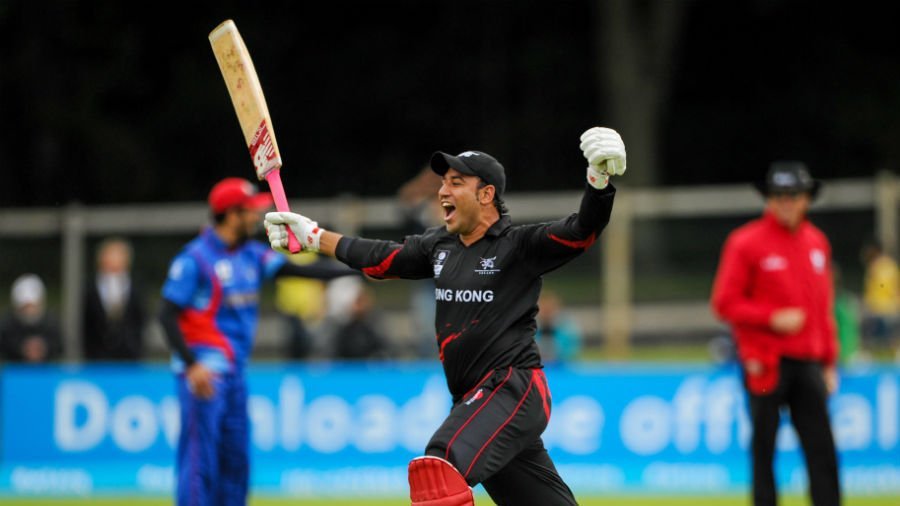
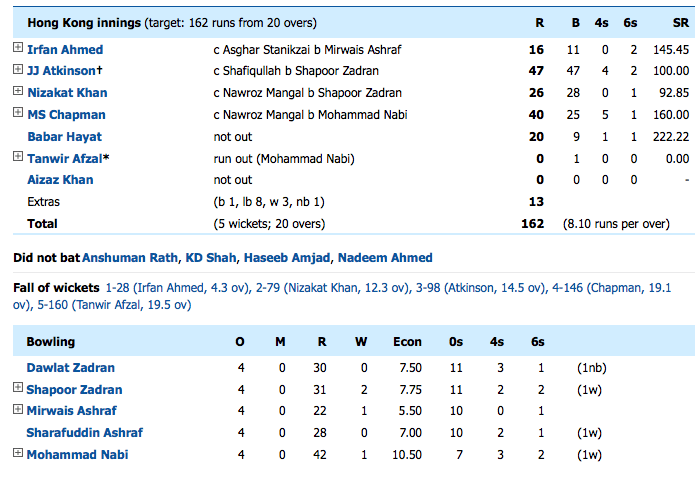
Hong Kong beat Afghanistan off the last ball of the match to qualify for the World T20 in India in 2016.

Hong Kong’s chase of Afghanistan’s 161 for 7 sprang to life with the arrival of Mark Chapman, who demonstrated the urgency that was sorely needed earlier with 40 off 25 balls. The 21-year-old vice-captain frequently shuffled around the crease for paddles and scoops to throw the Afghanistan bowlers off their lengths.

Hong Kong scored 12 runs in the 16th, 17th and 18th overs, with Chapman doing the majority of the damage including a crisp six over long-off in that stretch. He ramped another four past fine leg in the 19th and a single off the last ball of that over kept him on strike with Hong Kong needing 16 off the final over.

Mark Chapman attempted to clear midwicket from the first ball of Mohammad Nabi’s over, but was brilliantly caught on the boundary. If it seemed as if Hong Kong’s chances of victory had gone, Babar Hayat thought otherwise. He swatted the next delivery through fine leg for four, and then launched the third ball of the over, another full toss, over midwicket for six. That took the equation down to six runs from three balls, and Nabi then bowled a wide to knock another run off the target. Babar then scampered a three to the long boundary at midwicket, before Tanwir Afzal was run out attempting a single. That left two required from the final ball of the match, which Hayat slapped through midwicket to secure qualification.

Screen Shot 2015-07-21 at 23.15.16

Afghanistan’s total of 161-7 had appeared to set up the encounter seemed perfectly and so it proved, as an enthralling run chase played out. Hong Kong’s intent was clear from Irfan Ahmed’s two emphatic straight sixes in the opening four overs. After he was dismissed for 16, Jamie Atkinson and Niakhat Khan added 51 for the second wicket, though Hong Kong slipped below the required rate. Niazkhat was well caught at third man. Soon after Atkinson, who played responsibly for 47 and nonchalantly swatted a couple of sixes over long on, was caught at long off.

That left Hong Kong needing 64 from 5.1 overs – an onerous task against Afghanistan’s bowling attack. But Mark Chapman played an innings that showcased his timing, improvisation, power and purpose running between the wickets to set up the thrilling denouement.

The day began with Afghanistan winning the toss and choosing to bat: a surprising decision given the 10am start at Malahide on a slightly overcast day. Mohammad Shazhad, Afghanistan’s chunky opener, did not seem perturbed by the conditions as he powered Tanwir Afzal for two straight boundaries in the opening over of the match. But off the first over in the fourth over he attempted to flat-bat Haseeb Amjad down the ground, and could only get a leading edge to third man, where Aizaz Khan snaffled a sharp chance. Five immaculate deliveries to Asghar Stanikzai followed as Haseeb recorded a wicket maiden: a rare achievement in Twenty20cricket, especially in the Powerplay.

With Nadeem Ahmed continuing the form he displayed in taking 5-12 against Namibia, Hong Kong established a measure of control. After eight overs Afghanistan had scored only 50 runs, but, with only one wicket down, they had developed a platform from which to accelerate. Irfan was hit for two sixes in his first over as Stanikzai and Nawroz Mangal bristled with intent.

Aizaz Khan was hit for boundaries from his opening two deliveries, but his response highlighted his character. Varying his length and delivering well-directed yorkers, he conceded only two runs from his next seven balls that included removing Stanikzai for 29 with a delivery that was full and jagged back late, and left Afghanistan 85-2 off 11.1 overs.

With Mangal making a cultured 53, Afghanistan continued to accelerate. But Afghanistan’s assault was less spectacular than they would have envisaged, with Haseeb once again outstanding in the death overs.

Hong Kong never wilted in the field, with Chapman taking two smart catches at long on to prevent Afghanistan reaching 170. But Hong Kong’s best moment of the innings came when Najibullah Zadran heaved Irfan to midwicket and Kinchit Shah proceeded to take a spectacular diving catch.

Screen Shot 2015-07-20 at 14.09.39

Summer International Film Festival 2015

siff cover-01

Enjoy films on the big screen? Or simply have nothing to do this summer? The Summer International Film Festival returns for another year! This summer, it’s showcasing 32 films across 59 screenings all surrounding the theme of complexity and sentimentality.

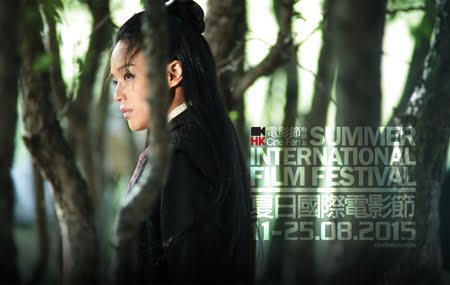
This year’s SIFF 2015 opens on 11th August with 聂隐娘 (The Assassin (2015)) directed by Hou Hsiao-Hsien, about a thoughtful killer Nie Yin Niang (Shu Qi 舒淇), who has to decide whether to go against her morals as an assassin or as a woman. The film won the Best Director award at the Cannes Film Festival 2015. The Director and and cast will meet the audience on the 11 August and there’s a masterclass with the Director on the 12 August. The festival closes with Woody Allen’s Irrational Man about a philosophy professor Abe Lucas (Joaquin Phoenix), who finds himself in an existential crisis, but rediscovers himself through meeting Jill Pollard (Emma Stone). Blurring comedy and drama, it nicely closes with the theme of complexity and sentimentality.

Wild-City-03

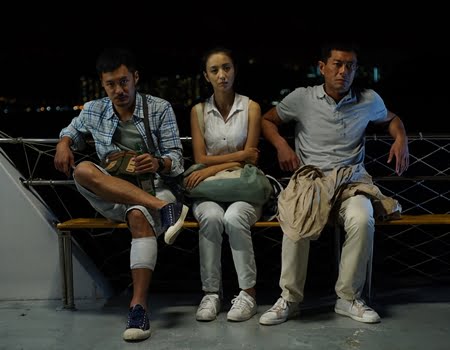
The festivals Gala Premiere is the new Ringo Lam film Wild City starring Louis Koo, Shawn Yue and Tong Liya. With his trademark exhilarating car chases along Hong Kong city streets, director Ringo Lam returns after a 12-year hiatus to the crime genre that, together with City on Fire and Full Alert, can be considered his “City Trilogy”. A film about people in the modern world who worship money to the point of dogmatic ignorance, Wild City issues a warning to the greedy and selfish lost souls in Hong Kong… The Director and cast will meet the audience at the 18 August screening.

The two most interesting festival programmes this year are:
The Battle of Sexes: Screwball Comedy. A genre that originally emerged during the Great Depression when Hollywood responded to the hardships of everyday life with films whose sparkling dialogue and romantic complications played havoc with perceptions of class, gender and love. Typically it’s the female who dominates a relationship, challenging the male central character’s masculinity… The two then engage in a humorous battle of the sexes; a new theme for Hollywood and audiences at the time, but one which has become a core of film makers globally since.
Films: Trouble in Paradise (1932, Director Ernst Lubitsch), It Happened One Night (1934, Director: Frank Capra) My Man Godfrey (1936, Director: Gregory La Cava), His Girl Friday (1940, Director: Howard Hawks), The Philadelphia Story (1940, Director: George Cukor), The Lady Eve (1941, Director Presto Strugess).

Annex - Fonda, Henry (Lady Eve, The)_01

Tsai Ming-Liang, Now and Then. The Malaysian born Taiwanese director’s five film retrospective, presents works which illuminate the themes of superstitions and reincarnation, sexual desperation, and isolation. The director’s uncompromising aesthetic of long fixed shots with little movement, complex characters and minimal dialogue, set him apart from other Asian directors, leading him to be one of Asia’s most significant filmmakers of the last 25 years.
Films: Rebels of the Neon God (1992), Vive L’Amour (1994), The River (1997), What Time is it There? (2001), Walker/No No Sleep (2014).

Film festivals are a chance for old and new films to once again appear on the big screen locally, an opportunity to appreciate a film in the surroundings for which it was created. They also offer, through the extended programme of seminars and panel discussions, a chance to enrich your experience and appreciation of a film that going to your local multiplex does not.

Other films shown in Cine Fan SIFF include:
The Assassin (聂隐娘), Yakuza Apocalypse (極道大戦争), Diary of a Chambermaid (Le journal d’une femme de chamber), Standing Tall (La Tête haute), Prophecy (予告犯), Seashore (Beira-Mar), A Touch of Zen (俠女), The Brand New Testament (Le Tout Nouveau Testament), Trouble in Paradise, Kumiko, The Treasure Hunter, The Lady Eve, Piku, It Happened One Night, Love & Peace (ラブ&ピース), My Man Godfrey, Slow West, Flying Colours (ビリギャル), Güeros, The Double Life of Veronique (La double vie de Véronique), Gentlemen Prefer Blondes, Love letter, The Philadelphia Story, Wild City, PK, His Girl Friday, Vive L’Amour (愛情萬歲), The River (河流), What Time Is It There?( 你那邊幾點), Irrational Man

Tickets for the Cine Fan SIFF will be on sale on 21st of July, from URBTIX.

Summer International Film Festival (SIFF) 2015
Date:
11–25 August 2015
Venues:
UA Cine Moko, The Grand Cinema, The Metroplex, MCL Telford Cinema, HK Arts Centre, HK Science Museum
Tickets: $75, $65, $85 from URBTIX
More info: screening schedule http://cinefan.com.hk/cms/schdeule/

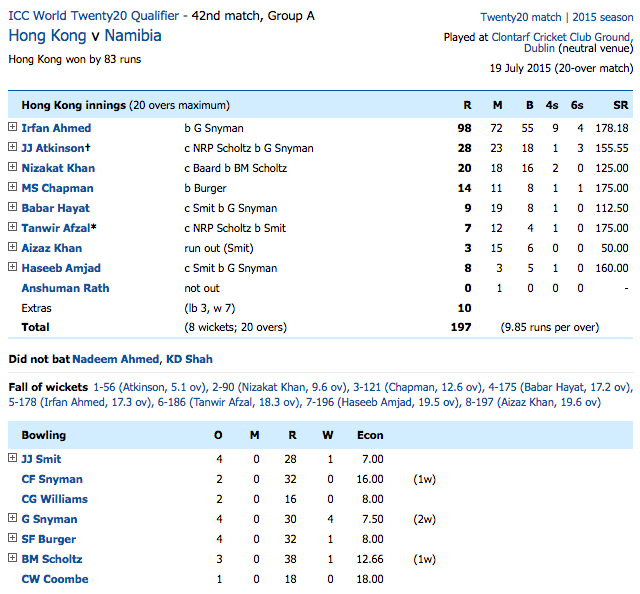
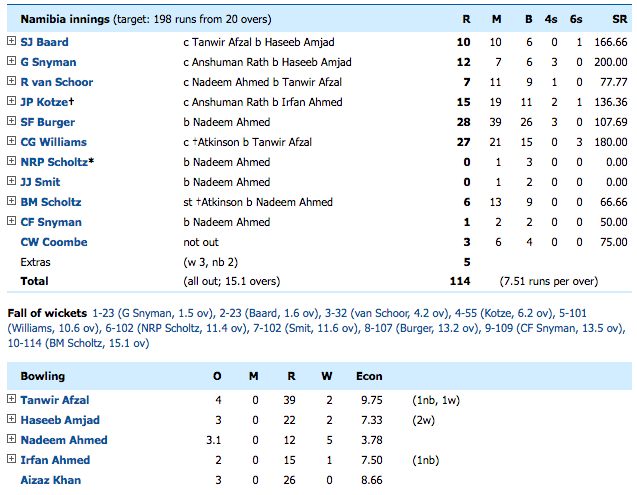
Hong Kong beat Namibia by 83 Runs

irfan

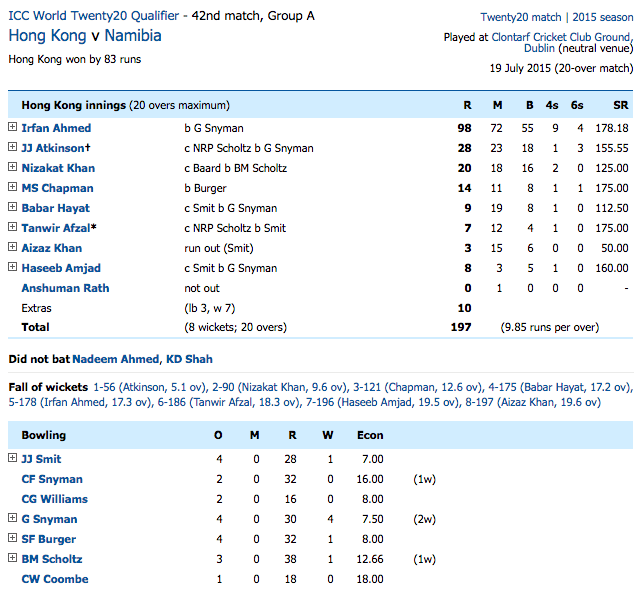
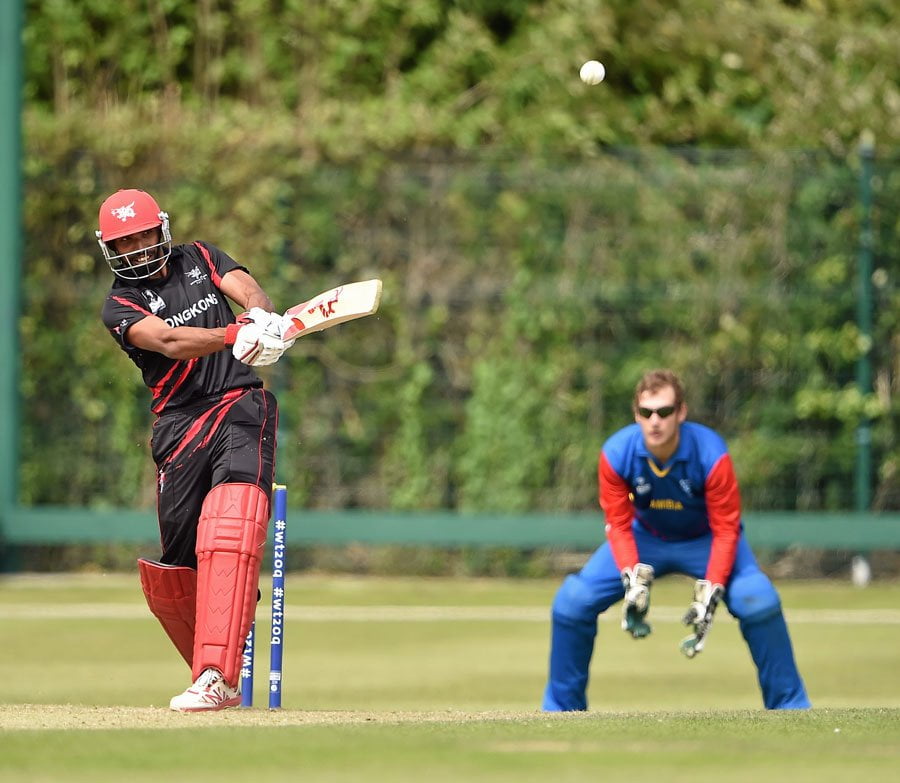
Man of the Match Irfan Ahmed blazed to a 55-ball 98 after which left-arm spinner Nadeem Ahmed took a career-best 5 for 12 to lead Hong Kong past Namibia by 83 runs. The victory ensured Hong Kong’s qualification for the playoff stages and they remain in the hunt for a World T20 spot. Namibia, despite the loss, will join them.

Hong Kong, having been inserted, got off to a rapid start – 56 in five overs – before Gerrie Snyman dismissed Jamie Atkinson in the sixth over. Two 30-plus partnerships took the total past 120. Irfan then added 54 runs off 26 balls with Babar Hayat for the third wicket, but both batsmen fell in the space of two balls. Hong Kong were 178 for 5 in the 18th over, but could only add 19 runs in the remaining 15 deliveries to finish on 197 for 8.

Irfan had four sixes and nine fours to make his career best score, but fell fell two runs short of what would have been the first century of this year’s World T20 Qualifier.

Nadeem AhmedNamibia openers Snyman and Stephan Baard began the chase strongly. They took the score to 23 for 0 in the second over but fell in successive balls to seamer Haseeb Amjad. Then captain Tanvir Afzal got rid of Raymond van Schoor in the fifth over but Namibia kept up with the asking rate and were 101 for 4 in the 11th over. But they lost the remaining six wickets for only 13 runs.

Nadeem was at the centre of that collapse, strike twice in 12th and doing it again in the 14th over to run through the tail and bring the match to a very quick and abrupt finish.

The win saw Hong Kong finish second in Group A and they will play Afghanistan on 21 July – the winner of that game will qualify for the WorldT20 in India in 2016 and move into the semi-finals of the tournament. The loser gets another chance against the fourth place team.

Hong Kong beat Namibia

Hong Kong beat Namibia

Additional reporting: Cricinfo