
Active Racial Discrimination in HK Men’s Rugby

racial-hkru

In 2015 it’s disgusting that the Hong Kong Rugby Union (HKRU) have announced active racial discrimination! For many years millions of people have fought and struggled to be accepted for who they are regardless of skin colour. That in Hong Kong a multi-cultural melting pot where ability, regardless of race, has always been recognised should find one of it’s leading sporting organisations actively racially discriminating against non-ethnically Chinese rugby players is disgusting and illegal.

The recent press release from the HKRU (read the now edited entry here) states that “The modified Championship Club structure sees that league now highly focused on serving as an entry point and breeding ground for Chinese players, with all teams required to include a minimum of 14 ethnic Chinese players in each match day squad.”

UPDATE: The HKRU has deleted the above sentence from their website, and made no reference to the edit – the original can be read here, relevant sentence is at the bottom of page 1

How far stuck up their arse’s are heads of the white leaders of the Hong Kong Rugby Union? Did they not hear the furour when earlier this year the Chinese Football Association published racially insulting posters about HK’s Football Team. Did they not see HongKongers reaction to it both on social media – mass condemnation – and in real life, the booing of the Chinese National Anthem and tickets selling out so fans of all races and colours could show their support for the HK team.

How insulting is it to the HK eligible players that they’ll face selection discrimination because of their race – even though they might have been born in HK, be eligible and good enough to represent the HK National team – yet find their way blocked because they are not ethnically Chinese.

I can fully understand the desire to improve the national team, but rather than make divisions made on race, why not instead of “a minimum of 14 ethnic Chinese players in each match day squad” it’s a “a minimum of 14 HK eligible players in each match day squad”.

The Basic Law of Hong Kong specifically bans racial/ethnic discrimination. Chapter 602 The Racial Discrimination Ordinance long title starts “An Ordinance to render discrimination, harassment and vilification, on the ground of race, unlawful; … the function of eliminating such discrimination, harassment and vilification and promoting equality and harmony between people of different races…”

The ordinance further goes on to define Racial Discrimination as

1: In any circumstances relevant for the purposes of any provision of this Ordinance, a person (“the discriminator”) discriminates against another person if
(a) on the ground of the race of that other person, the discriminator treats that other person less favourably than the discriminator treats or would treat other persons; or…..

3. It is declared that, for the purposes of this Ordinance, segregating a person from other persons on the ground of the race of that person is treating that person less favourably than the other persons are treated.

Even before any match day squads are selected, the press release and decisions made by the HKRU amount to Racial Harassment under Section 7 of the ordinance.

Even China has accepted that racial discrimination is illegal, the PRC’s naturalization policy and eligibility requirements have been changed from ‘ethnically Chinese’ to this: http://www.immd.gov.hk/eng/services/chinese_nationality/Application_for_Naturalization_as_a_Chinese_National.html

The HK Sporting Institute makes no discrimination on the race of the Rugby Union players it gives professional contracts to!
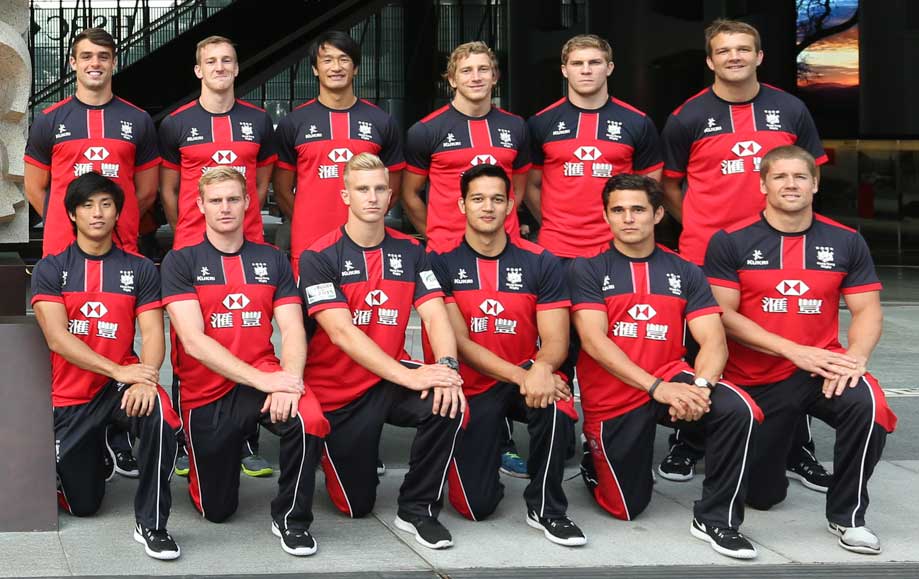
How many of these men will be denied the chance to represent Hong Kong because they are not 'ethnically Chinese"
How many of these men will be denied the chance to represent Hong Kong because they are not ‘ethnically Chinese”

A rugby 15’s match day squad is usually 23 players, to demand that 14 are ethnically Chinese is over 50%.

Here is the squad list Hong Kong v Japan, 2 May 2015:
1 WEI Hon Sum Leon; 2 Alex HARRIS; 3 Jack PARFITT; 4 Adam BUTTERFIELD; 5 Paul DWYER; 6 Matthew LAMMING; 7 Toby FENN; 8 Nicholas HEWSON; 9 LEE Ka To Cado; 10 Ben RIMENE; 11 Charlie HIGSON-SMITH; 12 Max WOODWARD; 13 Jamie HOOD; 14 Tom MCQUEEN; 15 Alex MCQUEEN; 16 John AIKMAN; 17 Lachlan CHUBB; 18 Jack NIELSEN; 19 Alex BADDELEY; 20 Damian BAILEY; 21 Adam ROLSTON; 22 Jonny REES; 23 Niall ROWARK; 24 Jack DELAFORCE (2 ethnically Chinese players)

Here is the Hong Kong squad for the recent Qingdao 7s:
Max WOODWARD (captain); Nick HEWSON; Jamie HOOD; Rowan VARTY; YIU Kam Shing; Benjamin RIMENE; Alex MCQUEEN; Cado LEE Ka To; Christopher MAIZE; Tomasi LAWA; Calvin HUNTER; Michael COVERDALE. (2 ethnically Chinese players).

Which of these non-ethnically Chinese players who are selected as good enough to represent their country will be dropped to satisfy the racial quota demands of the HKRU?

RACIAL DISCRIMINSTION IS DISGUSTING AND ILLEGAL!

Change the squad requirements to “14 players eligible to represent Hong Kong”

bc magazine has asked the HKRU, World Rugby, Asia Rugby and HSBC, the national team sponsor, for comment on this active racial discrimination.
Police Re-Write History to Remove Communists

HK Police website in 2010

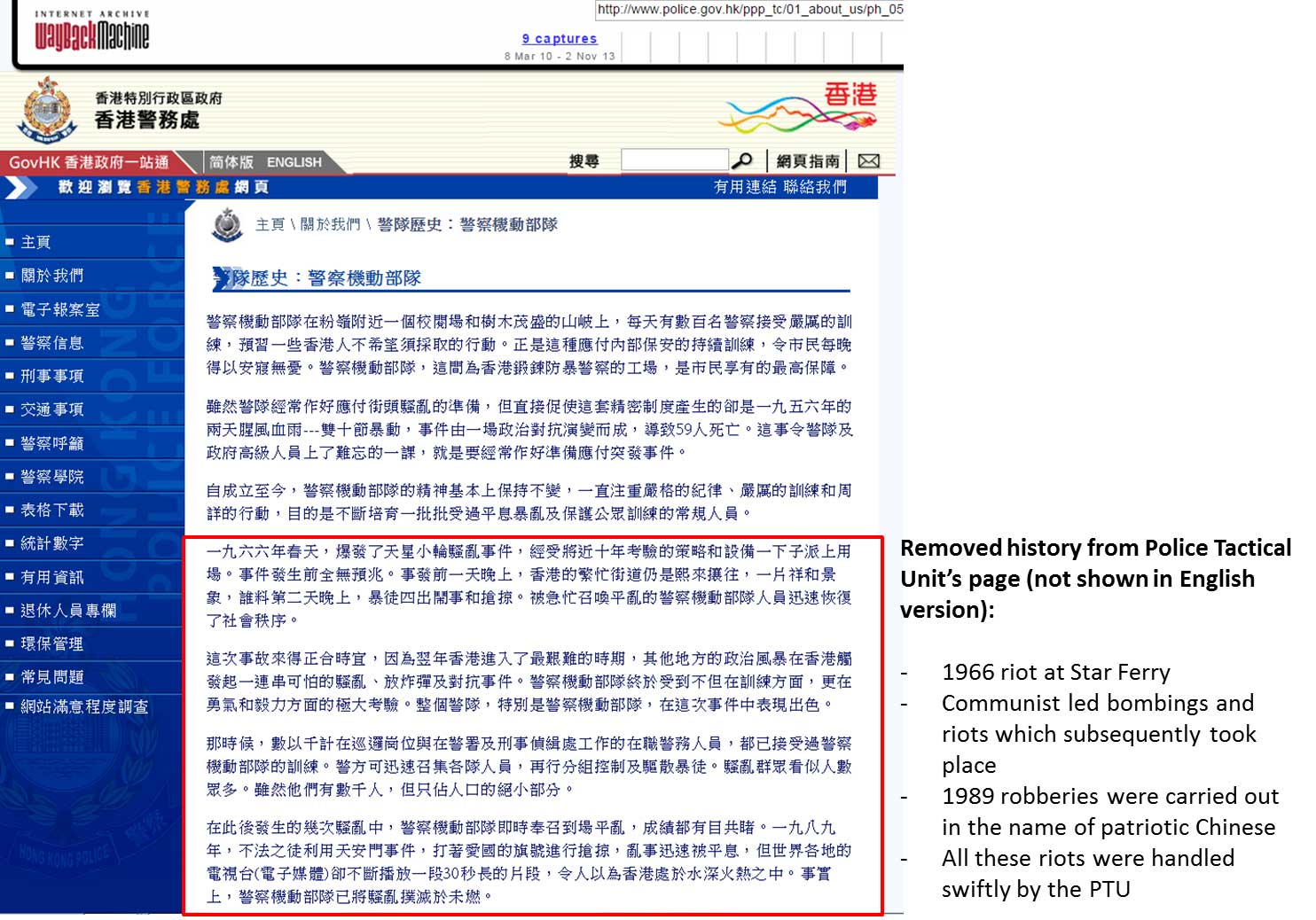
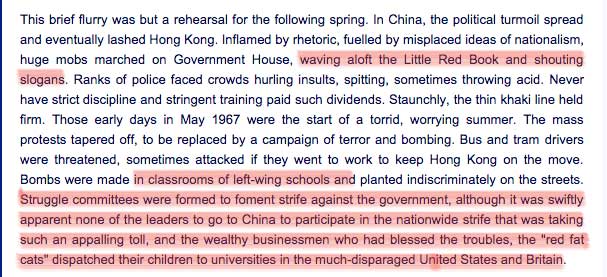
The Hong Kong Police Force website has been re-writing history in an apparent attempt “clean up” the ‎Communist Party and pro-China individuals reputations. Words like “communist” have been removed in several places as have details of communists making bombs at school & setting up “struggle committees” during the 1967 communist instigated riots.

Another comment on a trend back then that resembles Hong Kong today has been removed “wealthy businessmen who had blessed the troubles, the “red fat cats” dispatched their children to universities in the much-disparaged United States and Britain”

As have all mentions of “Little Red Book”

Here is the original text from the Internet archive and ‘new’ version of history – deleted parts in bold

HK Police website in 2010

Police website text in 2010 – source
This brief flurry was but a rehearsal for the following spring. In China, the political turmoil spread and eventually lashed Hong Kong. Inflamed by rhetoric, fuelled by misplaced ideas of nationalism, huge mobs marched on Government House, waving aloft the Little Red Book and shouting slogans. Ranks of police faced crowds hurling insults, spitting, sometimes throwing acid. Never have strict discipline and stringent training paid such dividends. Staunchly, the thin khaki line held firm. Those early days in May 1967 were the start of a torrid, worrying summer. The mass protests tapered off, to be replaced by a campaign of terror and bombing. Bus and tram drivers were threatened, sometimes attacked if they went to work to keep Hong Kong on the move. Bombs were made in classrooms of left-wing schools and planted indiscriminately on the streets. Struggle committees were formed to foment strife against the government, although it was swiftly apparent none of the leaders to go to China to participate in the nationwide strife that was taking such an appalling toll, and the wealthy businessmen who had blessed the troubles, the “red fat cats” dispatched their children to universities in the much-disparaged United States and Britain.

Through the tear smoke and the terror, the police held firm. They never quavered.

Their loyalty was never in doubt. And in a remarkable show of support, the public rallied to their side. It was the common people of Hong Kong, and the police sworn to protect them, who turned the tide. The insanity gradually ebbed.

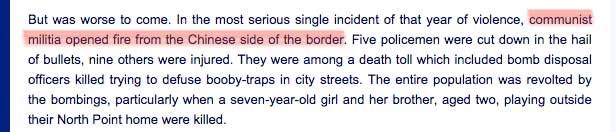
But was worse to come. In the most serious single incident of that year of violence, communist militia opened fire from the Chinese side of the border. Five policemen were cut down in the hail of bullets, nine others were injured. They were among a death toll which included bomb disposal officers killed trying to defuse booby-traps in city streets. The entire population was revolted by the bombings, particularly when a seven-year-old girl and her brother, aged two, playing outside their North Point home were killed.

Revived Police Website text
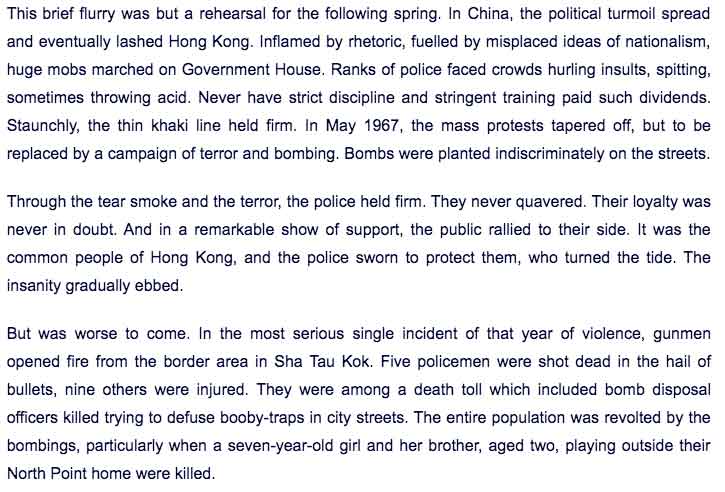
This brief flurry was but a rehearsal for the following spring. In China, the political turmoil spread and eventually lashed Hong Kong. Inflamed by rhetoric, fuelled by misplaced ideas of nationalism, huge mobs marched on Government House. Ranks of police faced crowds hurling insults, spitting, sometimes throwing acid. Never have strict discipline and stringent training paid such dividends. Staunchly, the thin khaki line held firm. In May 1967, the mass protests tapered off, but to be replaced by a campaign of terror and bombing. Bombs were planted indiscriminately on the streets.

new-police-website-text1-web

Through the tear smoke and the terror, the police held firm. They never quavered. Their loyalty was never in doubt. And in a remarkable show of support, the public rallied to their side. It was the common people of Hong Kong, and the police sworn to protect them, who turned the tide. The insanity gradually ebbed.

But was worse to come. In the most serious single incident of that year of violence, gunmen opened fire from the border area in Sha Tau Kok. Five policemen were shot dead in the hail of bullets, nine others were injured. They were among a death toll which included bomb disposal officers killed trying to defuse booby-traps in city streets. The entire population was revolted by the bombings, particularly when a seven-year-old girl and her brother, aged two, playing outside their North Point home were killed.

UPDATE
As the public increasingly criticises the police for re-writing history on its website, Police Commissioner Steven Lo Wai-chung is reported to have responded that the “streamlined version” is to match modern reading habits as the original version was “too long to fit in the page and people may lose interest in reading it.”

'new'-version-police-website3-web

Sources: 本土新聞Local Press, PassionTimes 熱血時報, 蘋果日報, Hong Kong Police Force, Real Hong Kong News, Internet Archive Wayback Machine

Zhang Xiaoming’s Comments Devoid of Legal Basis

Not that the ‘Rule of Law’ means anything in China where a ‘contract’ is often worth less than the paper it’s written on, but according to the Progressive Lawyers Group, Zhang Xiaoming’s recent statement has no legal basis under the Basic Law.

The Director of the Central Government’s Liaison Office, Zhang Xiaoming, said on the 12 September that the Chief Executive’s (CE) position transcends that of the executive, legislative and judicial branches of government, and that separation of powers between these three branches of government can only be applied at the level of a sovereign.

The Progressive Lawyers Group considers such views to be devoid of legal basis for the following reasons.

(1) The CE’s position stems from the Basic Law, with no “special legal status”

The Basic Law has constitutional status in Hong Kong SAR, and is the source which sets out the CE’s powers. The SAR’s affairs, including the CE’s roles and limits on his powers, are provided for under the Basic Law, and cannot be altered simply by some apparatchik claiming that the CE is the means by which the Central Government rules Hong Kong:

– Article 2 of the Basic Law clearly states that Hong Kong enjoys executive, legislative, and independent judicial (including the power of final adjudication) powers.

– Article 11 of the Basic Law requires that Hong Kong’s systems in respect of executive, legislature and judiciary shall be based on the Basic Law itself.

– Article 59 of the Basic Law stipulates that the SAR Government is the executive branch of government in Hong Kong, and that the CE is the head of the SAR Government. Thus, the CE is clearly and merely part of the executive branch, and does not in any way enjoy a status which transcends the executive branch.

– Article 64 of the Basic Law also states that the SAR Government must abide by the law. Thus, as the head of the SAR Government, the CR must abide by and cannot transcend the law, including the Basic Law.

As can be seen, under the Basic Law, there does not exist any so-called special legal position when it comes to the CE’s role in Hong Kong’s political system. Thus, Zhang Xiaoming’s statements are devoid of legal basis.

(2) Separation of powers between the three branches of government is not only applicable at the sovereign level, the CE is subject to legislative and judicial checks

The separation of powers between the executive, legislative and judicial branches, where they operate independently but also subject to checks on each other’s powers, is something that is currently applicable to the national, state and even local governments of many democratic jurisdictions. Zhang Xiaoming’s assertion that this concept is applicable only at the level of the sovereign clearly shows his ignorance in this regard.

As to Hong Kong, looking at the provisions of the Basic Law as a whole, the existence of such separation of powers is relatively clear, and was affirmed by the Court of Final Appeal (see Leung Kwok Hung v The President of the Legislative Council of the Hong Kong Special Administrative Region (2014), paragraph 27). The Basic Law clearly delineates Hong Kong’s executive, legislative and judicial branches of government, and in a various parts set out provisions which create checks on each other’s powers. For example:

– Article 64 of the Basic Law states that the SAR Government must abide by the law and be accountable to the Legislative Council.

– Articles 49, 50, 51 and 76 states that the CE’s checks on the Legislative Council, such as the special circumstances when he can dissolve the Legislative Council.

– As regards the judiciary, Article 80 of the Basic Law states that the various courts of Hong Kong constitute the Hong Kong’s judiciary, which exercises the Hong Kong SAR’s judicial power, and the independence of the judiciary is protected by Article 85: “The courts of the Hong Kong Special Administrative Region shall exercise judicial power independently, free from any interference”.

(3) Zhang Xiaoming should seek to familiarise himself with the Basic Law

Zhang Xiaoming graduated with law degrees from Southwest University of Political Science and Law and Renmin University of China, both of which are apparently colleges of renown within Mainland China. However, his remarks on Saturday demonstrated his twisting and ignorance of the law, which is a disservice to his alma mater’s reputation. Rather than yet again sowing trouble and discord in Hong Kong, Zhang Xiaoming the apparatchik should seek first to familiarise himself with the Basic Law before saying anything further on these topics. In short, Zhang’s comments are so patently absurd that those seeking to defend him should be careful of being seen as sailing too close to the wind, lest they end up also appearing as buffoons themselves.

Progressive Lawyers Group
14 September 2015
https://www.facebook.com/proglawgroup

Originally published in The Stand News

The Progressive Lawyers Group  are a group of Hong Kong lawyers dedicated to promoting core values of rule of law, judicial independence, democracy, human rights, freedom, and justice.

Police Look to Buy Hearts + Minds With ‘Free’ Gift

https://bcmagazine.smugmug.com/Bcene-photos/2015/Police-Hearts/51867446_HhshFM#!i=4339839177&k=rZSj3VM

With their reputation, integrity and ‘public trust’ at levels too low to accurately measure, the Hong Kong police instead of investigating crimes are blocking the street and looking to buy ‘hearts and minds’ with ‘free’ gifts!

Outside Wanchai MTR exit A4, at around 5:30pm on the 8 September, 2015, there’s a police van illegally parked blocking one westbound lane of Hennessy Road. Why’s the van there? To act as a poster billboard! That area of road is clear of bus stops and is used for car and taxi drop-offs to the MTR. The van’s location also forced members of the public to stand dangerously out in the middle of Hennessy Road to hail a taxi.

Unlike most illegally parked police vans, this one actually had turned off it’s engine – much to the obvious displeasure of the driver.

https://bcmagazine.smugmug.com/Bcene-photos/2015/Police-Hearts/51867446_HhshFM#!i=4339839099&k=BvZ2Grf

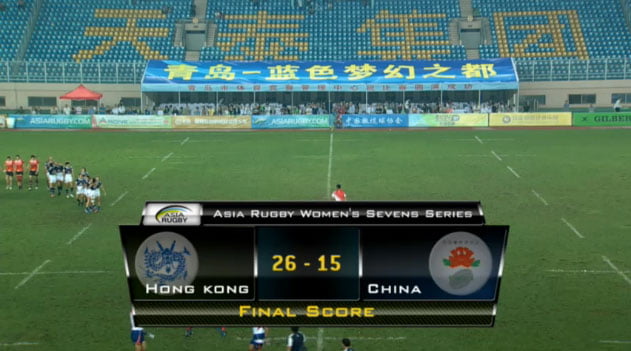
Hong Kong Win the Women’s Seven Series – China Sevens

Hong Kong Win the Women's Seven Series

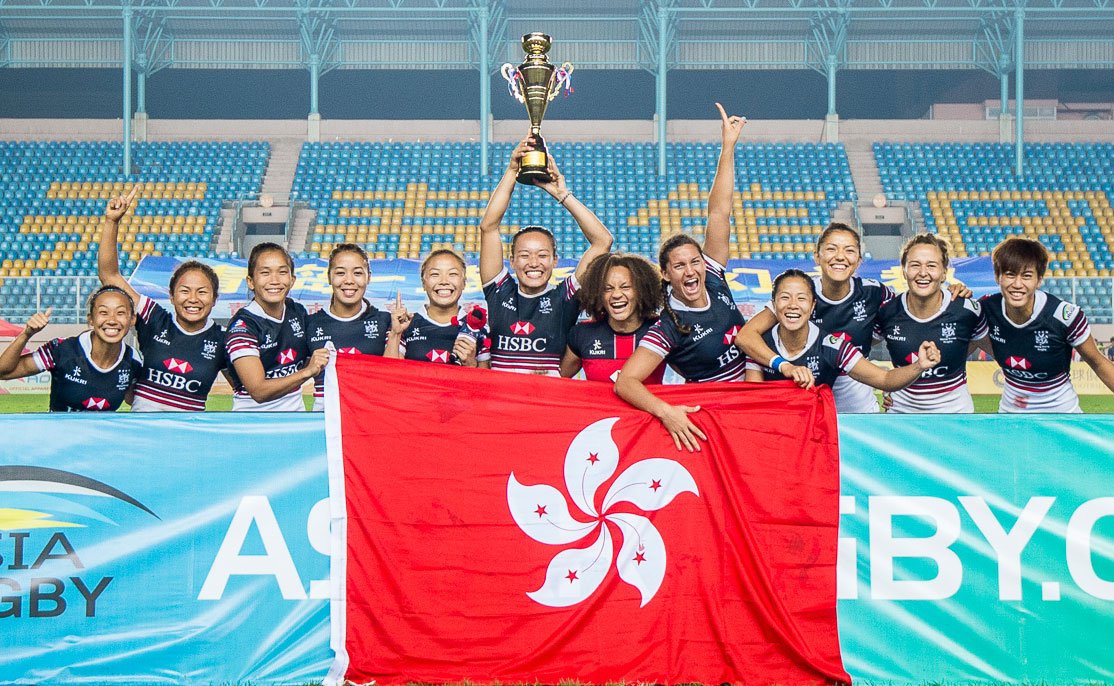
Hong Kong Win the Women’s Seven Series 26-15 over China
It’s the first ever Cup win for the Hong Kong women in the Asia Seven Series
Absolutely brilliant rugby from Hong Kong including a hat-trick from Aggie Poon in the final

hong-kong-win

Hong Kong Squad to Face China

Hong Kong face China in their World Cup qualifying campaign 3 September at the Bao’ab Stadium in Shenzhen, kick-off 7:35pm.

The 23 man squad selected by the HK Football Association is:

Goalkeepers
1. Yapp Hung Fai (Eastern), 18. Tsang Man Fai (South China), 19. Wang Zhenpeng (Kitchee)

Defenders
2. Lee Chi Ho (Biu Chun Rangers), 3. Baise Festus (Eastern), 5. Kilama Jean Jacques (Eastern), 20. Cheng King Ho (Eastern), 13. Cheung Kin Fung (South China), 14. Sealy Jonathan Jack (South China), 15. Chan Wai Ho (South China),
21. Kwok Kin Pong (Pegasus)

Midfielders
4. Bai He(Shijiazhuang Yongchang), 6. Huang Yang (Kithcee), 10. Lam Ka Wai (Kithcee), 12. Lo Kwan Yee (Kithcee), 16. Leung Chun Pong (South China), 17. Tan Chun Lok (Pegasus), 23. Ju Yingzhi (Eastern)

Forwards
7. Chan Siu Ki (South China), 8. Xu Deshuai (Eastern), 9. Annan Christian Kwesi (Kitchee), 11. Karikari Godfred (Beijing Beikong), 22. McKee Jaimes Anthony (Pegasus)

Chinese Documentary Festival 2015

Chinese Documentary Festival 2015

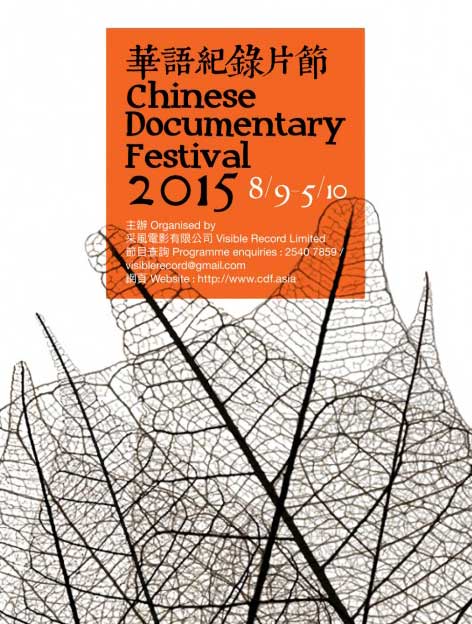
The Chinese Documentary Festival 2015 featuring 31 documentaries from China, Hong Kong, Taiwan and France starts on 8 September with 40 screenings running until the 5 October. There’s an Award Ceremony on the 19 September to announce the winners in the three competition categories Hong Kong Documentary, Documentary Features and Documentary Shorts.

Hong Kong Documentary
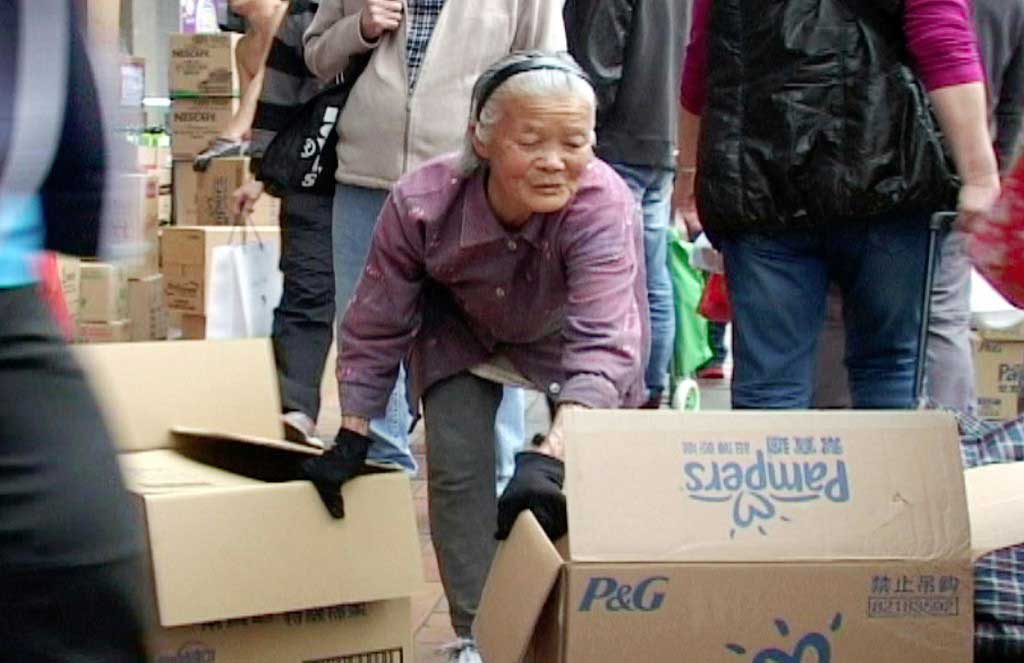
This year the Festival again includes a Hong Kong Documentary Award with an aim to promoting local films. There were over 30 Hong Kong entries with eight making it to the festival. ‘Search for one’s identity’ is a popular theme among Hong Kong entries, this includes Tsang Tsui Shan’s Flowing Stories and Wong Siu Pong’s Connection. Karl shows us the social and familial pressure faced by a student movement leader. Taiwanese director Kuo Shiao-yun’s inspiring film, Adversity Challengers, follows a group of Hong Kong youth competing in Taiwan cycling contest. A new work by agricultural activist Chan Hao Lun, Open Road after Harvest, focuses on three contemporary farmers. Van Drivers by Kanas Liu is the story of a group of volunteer van drivers who transported supplies back and forth to the protestors during the Umbrella Movement.

Lee Po

Features
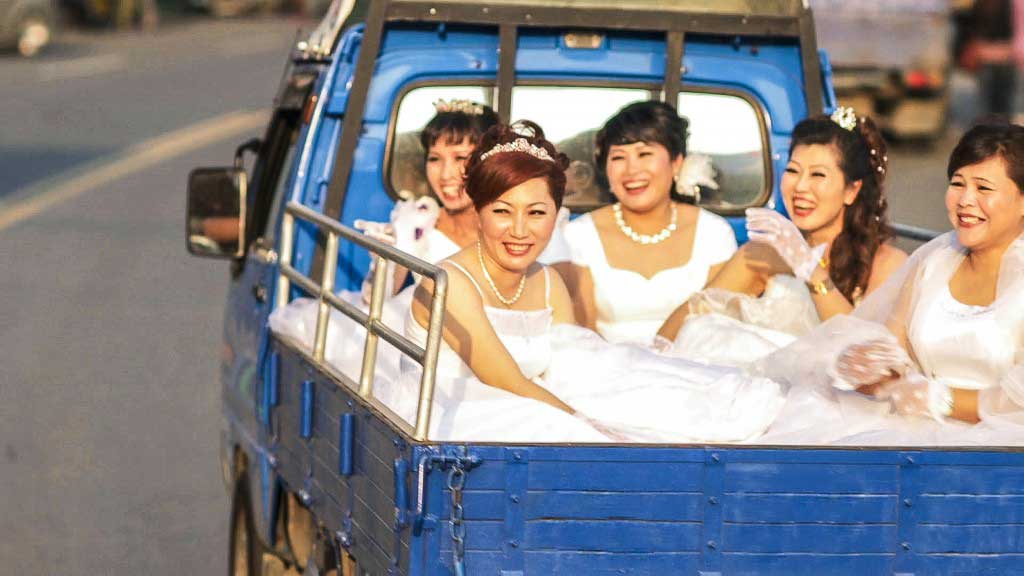
Competition is fierce in this year’s features category. Celebrated Taiwanese director Yang Li Zhou’s The Moment – Fifty Years of Golden Horse narrates in a light-hearted manner the history of Taiwan’s Golden Horse Awards. Bridge Over Troubled Water is filmed in a small village where a tug of war competition by primary school students takes place. It also looks at the issue of immigrant brides. It is uplifting without being sentimental. Ninth Uncle and Heaven’s Will from China allow us a glimpse of the country’s social condition through the eyes of two ‘nobodies’. Su Beng, the Revolutionist, is the biography of the 90 year old political activist. Wu Kang: The Village Committee is a remarkable documentation of the resistance in Shantou’s Wu Kang village and the changes that followed. The Taste of Apple follows Next Media, from its move to Taiwan to its sell-off which has sparked off a fierce discussion on Taiwan’s freedom of the press.

Bridge Over Troubled Water

Shorts
The short films include Taiwan’s Water is Life, a film about conservation whose underwater filming is absolutely stunning. Old Soul looks at five people from different fields who share the same commitment to conservation and the future of Taiwan’s agriculture. One of the protagonists is the director of Water is Life Ke Chin-yuan. In Southland Soldier, a group of soldiers who once fought in Burma for the Chinese Nationalist Party find themselves forgotten by the government and are left to face the plight of forced relocation and land reclamation in a foreign land. Fishing Life, Lingering Sound documents Taiwan’s soon to be extinct fish fry counting technique. Cantonese Rice is an attempt by a French born Chinese-German woman to understand the longing for their homeland of the older generations living overseas.

New Taipei City Documentaries
The New Taipei City Documentaries features six award-winning works with different topics and styles. Some of the Taiwanese directors will attend the festival’s seminars to share their experience on filming and how to promote their works.

Seminars
The festival includes four seminars including Go Hong Kong or Mainland China where two directors from Hong Kong and Taiwan whose works all focus on ‘the search of identity’ talk about their own views on immigration. Freedom of press in Hong Kong and Taiwan hosted by The Taste of Apple’s director Kevin H.J. Lee where local journalists discuss the freedom of press and the hegemony of large corporates. Hong Kong and Taiwan Agricultural Documentaries”invites several speakers including directors Ke Chin-yuan and Chan Ho Lun who are strongly committed to agricultural issues to share their views on agriculture in Hong Kong and Taiwan.

Special Selection
There are three special selections at the 2015 festival. Sunflower Occupation is about Taiwan’s Sunflower Movement. The other two are in a genre less familiar for audiences –the mockumentary. Taiwan’s We Are Happy Family and Hong Kong’s The Aqueous Truth blur the line between fiction and reality and are meant to provoke discussion and self-reflection.

Chinese Documentary Festival
Date:
8 September to 5 October, 2015
Venue:
HK Arts Centre, agnès b. CINEMA (2 Harbour Road, Wanchai)
HK Space Museum, Lecture Hall (10 Salisbury Road, TST)
HK Science Museum, Lecture Hall (2 Science Museum Road, TST)
Tickets: $65 from Urbtix
More info: www.cdf.asia

Additional reporting: Visible Record

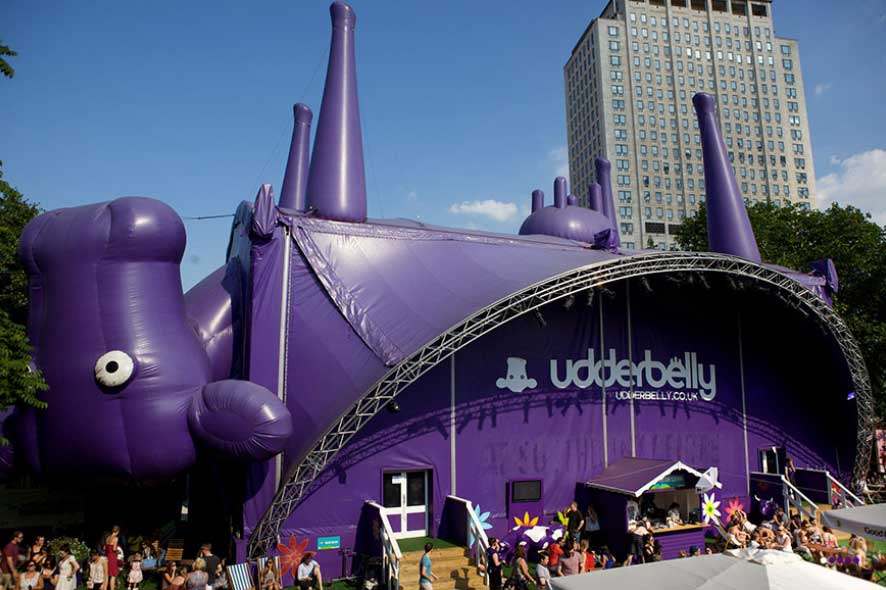
Udderbelly Festival 2015-16

udderbelly

The Udderbelly Festival to be held in conjunction with The Great European Carnival (4 December 2015 to 14 February 2016) has already released tickets to some great shows including comedians Rory Bremner, Jason Manford, musicians Gobsmacked, Michael Winslow and shows such as The Boy with Tape on His Face and The Elephant in the Room.

Udderbelly Festival
Date: 4th December 2015 – 14th February 2016
Venue: Central Harbourfront
Tickets: various