An extra one-off public holiday on 3 September 2015 has been approved by Legco. Local lawmakers approved the controversial ‘political’ holiday a few months after Beijing announced that September 3 will be a holiday to mark the 70th anniversary of Japan’s surrender in the World War II.
Lee Cheuk-yan of the Labour Party said: “It is sad to see that the Leung Chun-ying government must follow Beijing’s order even over a holiday.” While Dr Kwok Ka-ki of the Civic Party said: “It is a political holiday. It is a product of the bad relations between Beijing and Tokyo, and Beijing wants to make use of the opportunity to do something to embarrass and criticise Japan. If the Hong Kong government cares so much about Chinese history, why does it not designate the birthday of Dr Sun Yat-sen as a public holiday?”
While millions of Chinese died fighting the Japanese during World War II, China itself did not exist and the CCP itself did absolutely nothing to end the conflict. Japan surrendered unconditionally on the 11 August 1945 after the US dropped two atomic bombs on Hiroshima and Nagasaki.
To create a new public holiday to celebrate the surrender seems nothing more than Beijing having a dig at Japan and looking to keep open wounds which the rest of the world closed years ago. To create a new holiday to remember the rumoured 14-20 million who died and the many millions more who became refugees would be respectful, but that doesn’t fit in the CCP’s China is great narrative which stirs the fires of patriotism when it needs to distract attention from a failure.
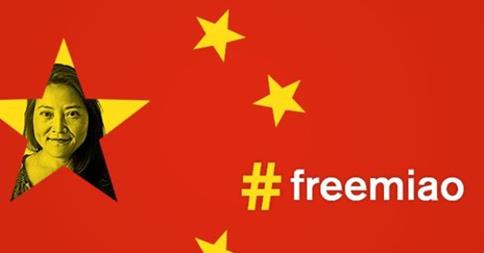
Great News – Mainland Chinese journalist Zhang Miao will be freed without charge following nine months in detention after she helped cover the Hong Kong democracy protests for German publication Die Zeit.
For background read this article by Angela Köckritz
Hong Kong is among the fourteen Associate teams who will attempt to outwit, outplay and outlast one another in Ireland and Scotland at the World Twenty20 Qualifier. The six surviving teams after an intense 51-match event in 18 days will earn a ticket to India for the 2016 World Twenty20 next March. With the World T20 scaling back from a biennial event to once every four years from 2016 onwards – and no guaranteed places for Associates in the 50-over World Cup – there is even greater desperation in this tournament.
The event has been trimmed from 16 to 14 teams from the last time it was held in the UAE, while two playoff berths in the knockout stage have also been slashed. Now, only the top six from each group will advance to the playoffs. The respective table-toppers during the round-robin challenge receive immunity until the semi-finals as well as the prize of a guaranteed slot for the main event in India.
Sadly Duckworth-Lewis may play a massive role at this event. Consistent rain washed out many of the official warm-up matches and this may have teams wanting to bat last, with overs reduced and all 10 wickets in hand.
The Groups
Group A: Ireland, Nepal, Hong Kong, PNG, Namibia, USA, Jersey
Group B: Afghanistan, UAE, Netherlands, Scotland, Canada, Kenya, Oman
Hong Kong have had a steady build-up to the tournament, splitting a T20 series with Namibia in May before travelling to England. Irfan Ahmed who has struggled at the Associate tournaments in the past comes into this tournament in excellent touch. The squad is also boosted by the return of vice-captain Mark Chapman in the middle order. Hong Kong’s biggest asset is their pace bowling unit spearheaded by Ahmed, Aizaz Khan and captain Tanwir Afzal, who will all be a handful on seaming wickets.
Format
During the group stage each team will play each other, with 2 points for a win, 1 point for a draw/no-result. The top six sides from the 18-day tournament during which 51 matches will be played, will join the 10 Full Members for the ICC World Twenty20 India 2016, which will be held from 11 March to 3 April 2016.
The sides that finish second and third in each of the two groups will play cross-over matches with the two winners joining the table-toppers for the India tournament. The losing sides of the two play-off matches will then play the fourth-placed sides from each of the two groups in cross-over matches with the winners completing the 16-team line-up for the ICC World Twenty20 India 2016.
Catch up with the action at www.icc-cricket.com or www.cricinfo.com
Hong Kong Squad
Tanwir Afzal (c), Mark Chapman (vc), Aizaz Khan, Anas Khan, Anshuman Rath, Babar Hayat, Ehsan Nawaz, Haseeb Amjad, Irfan Ahmed, James Atkinson, Kinchit Shah, Nadeem Ahmed, Nizakat Khan, Waqas Barkat, Waqas Khan, Giacomo Lamplough, Charlie Burke (Coach).
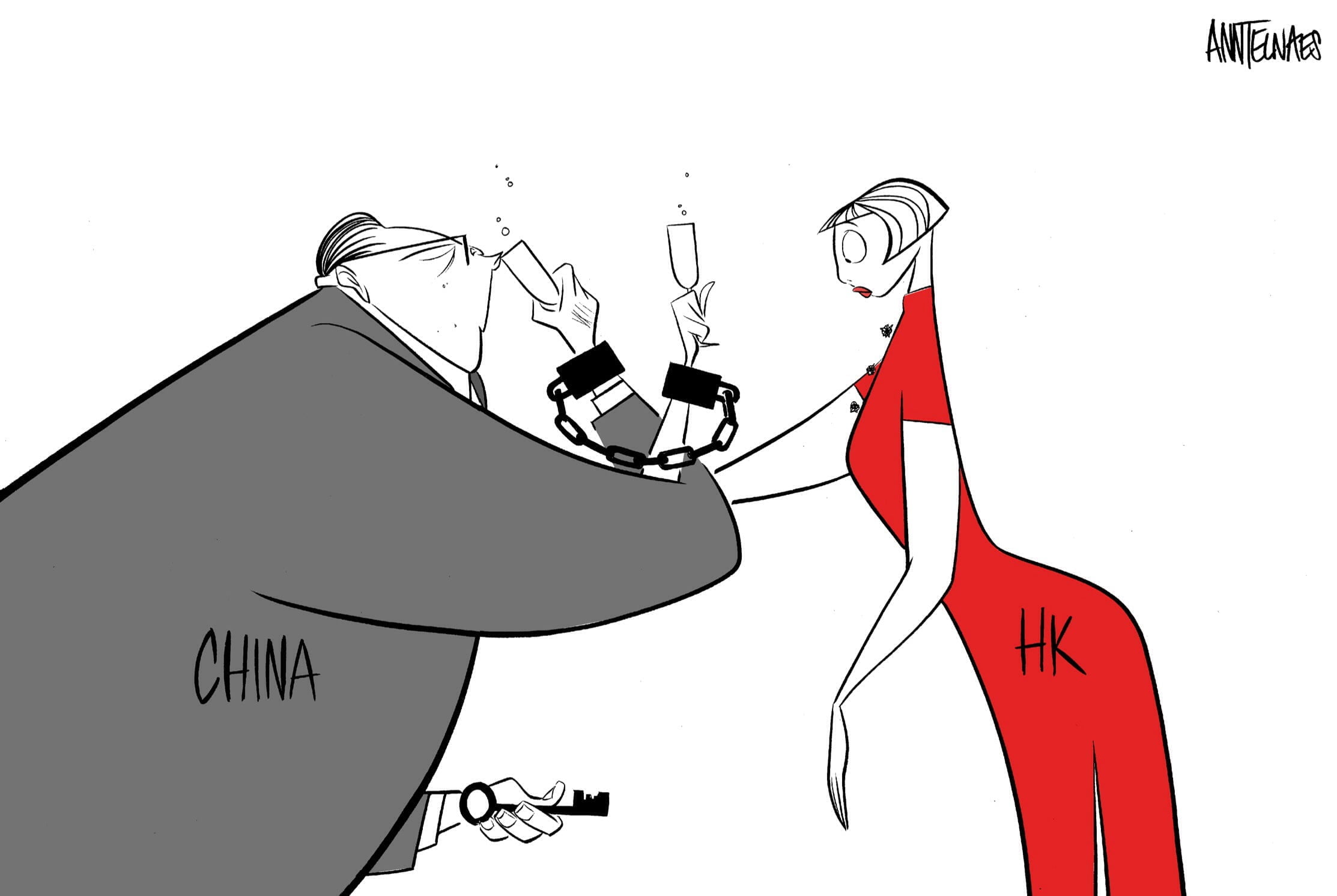
The Chinese economy is now facing its strongest challenges for a generation and Xi JinPing’s best efforts to create a nationalistic, shareholder, last stand for the stock market seem to have largely failed. What the fall out from this will be we can only speculate, but the enormous economic disaster that is the Chinese economy is not of Hong Kong’s making. Back in the colonial days, if the British economy collapsed, Hong Kong would not be expected to fall on its sword in sympathy. Likewise, given the stormy times ahead for China, Hong Kongers should not be looking at going down with the sinking ship, but instead working on preserving what makes the city different, or the Two Systems part of the Basic Law. Given this, the idea of a Hong Kong City State becomes increasingly more viable and appealing.
The impracticalities of a Hong Kong City State are often premised on the geopolitics of Asia remaining similar to what it has been for the last 30 years. But once you accept the premise that the geopolitics of Asia are heading into turbulent seas, then the question of how best Hong Kong can survive the storm becomes much more pertinent and pressing. More independence and autonomy, and not less, suddenly become compelling.
When you live in the shadow, of the overly jealous and malign CCP, even uttering the word independence under your breath is high treason against The Party. Certainly, there are significant amounts of people who believe the independence debate in Hong Kong was created by the CCP to create social division within the democratic movement and brand everyone who opposes the government as splitists. In China, there can be no worse a traitor than a splitist. However, most of the anti-independence arguments are actually ill-thought out if we work back from 2047. For, when we look at the pros and cons of more independence based on 2047 as a starting point, it starts to make a lot of sense and a much smarter path to follow than blithely accepting whatever bones the CCP wishes to throw Hong Kong erstwhile its own economy and political system rips itself apart.
It’s not too early to ask the question, what will happen come 2047? Does Hong Kong law become superseded by Mainland law? Because if that’s going to be the case, the day this is officially announced, whether it be tomorrow or in ten years time, will be like pulling a plug on the city. Money, resources and people will stampede to safer havens. Those that faithfully pledge their full allegiance to The Party, will be left in a hollow shell of a city as anything that creates real, global value will be gone.
If your argument against greater Hong Kong independence is that HK’s unchangeable destiny is to eventually be fully assimilated into CCP’s China and become a carbon copy of any other CCP city then you must first be clear what these other cities will look like in five years time, or even five months time! Simply pointing out that we need to be more like ‘them’, but having no clue what ‘them’ will look like and having zero control of how ‘they’ are created is no plan at all. Hong Kong certainly has all the tools to make a positive contribution to the place known as China for many years to come. The same can’t be said of the multitude of cites we’re supposed to be more like, and that includes Shanghai. The most likely future for these cities are astronomically high, local debts, huge environmental clean-up bills, violent, social unrest and rampant corruption. None of which Hong Kong suffers from yet. Hong Kong has everything it needs to protect itself from such a bleak future, but unfortunately the current government seems intent on throwing away all the city’s global advantages in a lame attempt to show loyalty to a broken political part that pretends its a country.
No one who advocates greater independence is dreaming that Hong Kong isn’t part of China in a physical sense, but being geographically part of a continent and being ruined by the politically oppressive CCP are not one-in-the-same. The CCP is not China, it is not the country, neither is it the people. It is a shadowy, political organisation with a horrific track record for wreaking havoc upon the peoples of China throughout its very short and violent tenure. There will come a time when the CCP no longer holds power, but there will still be a China and also city in its south called Hong Kong. This is what the independence debate is based on, a practical approach to preservation, and there’s a lot to be protected here in this quasi-City State. This is the true pragmatic path for Hong Kongers now, or how does Hong Kong negotiate the impending disaster that is the CCP’s complete loss of trust in China and not be destroyed with it?
Currently the CCP tirelessly tries to bewitch pragmatists in Hong Kong with the narrative that the only future lies with them, a transient and decaying political entity, motivated by self-preservation and quick gain. However this lie becomes increasingly less convincing with every passing week. Hong Kongers are no stranger in handling inept northern governments. They have played this game for almost two centuries and they know when the winds of change howl, and China looks like a shaky pile of eggs (危如累卵 – Wei Ru Lei Luan), their future lies in protecting their own autonomy and not integrating more into turmoil.
The opinions in this article are of those of the writer, if you agree or disagree feel free to leave a comment here or on our facebook page. The wonders of a free press allow for a discussion and debate of ideas – unlike north of the border.
Incompetent and self-interested politicians have flourished in Hong Kong due to voter apathy – HongKongers this is our home take an interest in who and how it’s being run.
All Permanent Residents over 18 are eligible to vote.
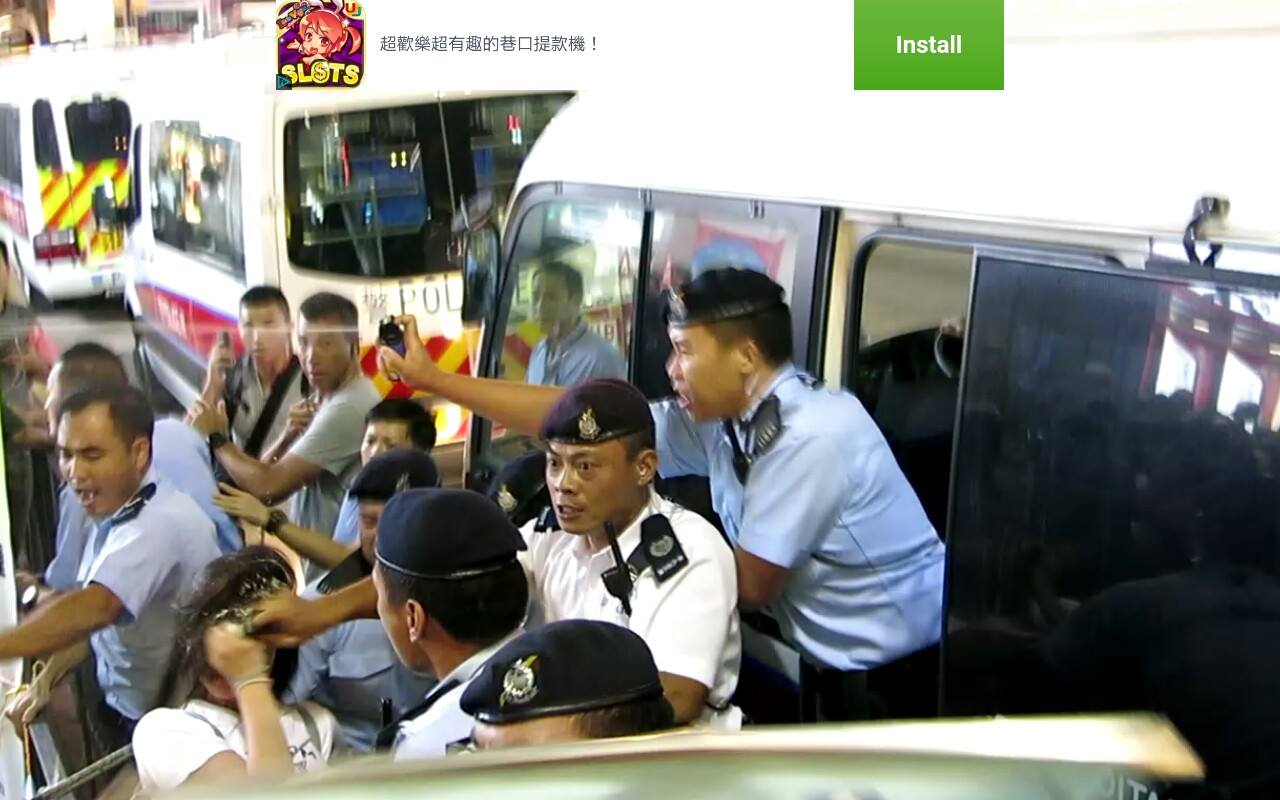
Out of control police pepper spraying and assaulting HongKongers. The plain clothes officers in the background look surprised the actions of the uniformed officers, who are standing behind a road side barrier and in their police van. Why one policeman thinks its ok to rub pepper spray in the face of woman is quite beyond me. Surely these unprovoked actions amount to assault with a weapon and the police involved should be charged and jailed.
Richard Scotford on Sunday night’s protest in Sai Yeung Choi Street where respect for the police amongst law abiding HongKongers hits a new low – if that were possible – as those attacked are arrested and the attackers, protected or ignored by police.
From the very offset, this protest was never really about aunties dancing on the street, but instead a proxy fight for what many believe is the increasing Mainlandisation of Hong Kong. From as early as 18:00 there was a visibly high presence of plainclothes police in the area. The police had clearly mobilised high numbers of officers and it would later become clear to all why that was the case. At 19:30, the main group leading the protest, HK Localism Power, began to set up their speakers and banners.
Just in front of where the Localists planned to speak, a ten metre, empty corral had been created with police barriers. It wasn’t clear what the barriers were doing other than blocking half of the road to both pedestrians and the increasing number of protesters who were now quickly gathering. The protesters, quickly pushed the barriers to the one side and opened up the throughway. These barriers remained at the side of the road for at least fifteen minutes until some police tried to reopen up the corral again.
At this point there were hundreds of Localists in the area, who found themselves both in and outside of the newly created corral. It was all very confusing. No one could figure out why the police were so insistent on making the corral so close to the Localist booth. Needless to say, this action skyrocketed the tensions between both the police and the protesters. The police first moved the barricades out, then moved them back, then out, then back again, but there were just too many confused people in the way. Finally the police dragged the barriers a further twenty metres down the road and made a new corral.
This was when the first scuffle broke out between a police officer and a protester. As in every incident like this, almost everyone has no clue as to why the police have suddenly targeted just one person. The crowd closed ranks and the person was able to scurry away without being detained. Interestingly, and this would set the tone for the rest of the night, the police officer involved in the melee ran nearly a hundred metres down the road after the intended target . At which point the crowd demanded to know why the person was being detained, as is his lawful right, but the police could not answer. They then hogtied the man and violently barged him through the crowd to take him to a waiting van.
I have no problem with this slightly aggressive police, arrest procedure, if the man is found to have committed a serious crime, but bear in mind the enormous effort the police had invested in detaining this single person, and then how hands off they became once things got really serious and laws were blatantly being broken.
This first arrest then went on to lead to the first pepper spraying of the night. This occurred when the police, erroneously stated that their vehicle was surrounded and so needed to use pepper spray to push back the crowds. The reality was that the vehicle was behind a barrier, on Nathan Road with free access to leave at anytime. Protesters were on one side only, standing on the footpath, behind the barrier. There was no reason to indiscriminately pepper spray those on the footpath.
While the first pepper spraying of the night was taking place on Nathan Road, it became clear as to why the police had wanted to create their corral. With a police escort that even a president would be proud of, in came a tiny contingent of Pro-Beijing supporters with flags and a loud speaker. A fifty minute slanging match and flag waving contest ensued between the two groups, divided by a very thick, blue line of police. In this regard, I thoroughly support the idea that the police are there to protect free speech for everyone but once again, we have to see the police orders in context. For this coming July 1st march, booth licenses have been refused on the grounds of security, yet, the police mobilised an entire army to ensure that two Pro-Beijing supporters could stand on a stepladder and shout profanities at an already agitated crowd. The police action was tantamount to mobilizing hundreds of officers to ensure that Joshua Wong could shout abuse at five hundred CCP stalwarts.
If getting the Bejing loyalists in was impressive, extracting them was a military operation to behold as the police effectively made an impenetrable blue tunnel for them to scurry through. It was epic, superstar treatment fit for a king. Needless to say, the tensions were now off the charts and most importantly, the confidence of the Blue Ribbons in the area was at an all time high, as the police had demonstrated in spectacular fashion who they were supporting, and so the fighting began. Not, pushes and shouting like you see at most protests but full on fist fights and assaults with isolated Localists getting the worst of it by gangs of ageing male Blue Ribbons.
All the serious fighting occurred on Nathan Road. As more Localists began to stream of Sai Yeung Choi Street to help those that had been assaulted they easily cornered the attackers. So what did the police do with the assailants? They released them to the great consternation of the crowd. At this point, let’s remember the first Localist arrested, who was chased 100metres down the road, hog-tied and carried onto the police van by six officers, yet now the police were confronted with victims of assault, with obvious signs of injury and there were multiple people wanting to give statements and the police let them go. No hogtying, no violent police take-downs, no pepper spraying. Those accused of the assaults were given the friendly shoulder tap and released out of sight.
But not out of sight enough!
Protesters had seen the police release them and weren’t going to tolerate it.
At this point, the police could have saved themselves a lot of legwork if they’d have treated the Blue Ribbons like the Localists and bundled them into waiting cells in Mongkok Police Station. Instead, rolling battles ensued as the Localists hunted down the released Blue Ribbon assailants, to demand that they be arrested once again.
Serious scuffles continued all the way to Tong Mi Road, which is practically Sham Shui Po, until once again the assailants were cornered on Palm Street. The police then set up another defensive circle around those accused of assault until a police van arrived to finally take them away. To ensure that the police didn’t release them again, Ray Wong, leader of HK Indigenous, went in a police van too to make a statement, escorted by 8 police men, erstwhile the accused attackers sauntered onto the waiting police van with a gentle shoulder tap from the police.
All in all, the night was a sad example of just how much energy the police will spend on detaining Localists, erstwhile going to great lengths to avoid detaining their own so called supporters. The aunties never featured in the night, not even for a minute. The night was never about dancing. The Localists chose the dancing because they knew it would get a rise in the authorities, and true to form, the HK police showed once again that they are now just a paramilitary force set up to defend the Mainland. They’re happy to let clear assaults pass by in plain sight, so long as those doing the assaulting support the Mainland.
18 years after it closed, and 66 years after it originally opened Lai Yuen is ‘re-imagined’ on the Central Harbourfront this summer. The result is simple uncomplicated fun. The contrast to last winter’s Great European Carnival couldn’t be more profound, that was noise, flashing lights, scream inducing rides… Lai Yuen by contrast is a throw back to a simpler less complicated time where fun and enjoyment was shared and involved participation rather than staring at a screen which provides the entertainment.
There’s a wide range of games, flick your flip flop, parachute man, toss the magnet, feed the elephant and my favourite throw the feather duster. A half dozen rides aimed strictly, apart from the dodgems, at young children and ice-skating.
If there’s a criticism it’s that the food quality is very average and the prices – $15 for a small bottle of water – a bit expensive. There’s also a lack of seating near the food court. Last winters GEC had its food prices and quality just right. But there’s nothing stopping you bring your own beverages, and even with mist sprays on many of the games the Lai Yuen midway is hot when the sun’s beating down.
Games and rides are paid for with tokens, each token is $10. For food and beverage, you need to purchase a (top-upable) stored value card which is valid for the duration of the fair and unused credit up to $300 can be refunded.
Is it any good? Yes, go with a group of friends take a step back in time and enjoy the simple fun of playing, sharing, relaxing and having fun. Does it have the repeat visit attraction of the Great European Carnival maybe not. But it’s different, and enjoyable and a reminder of days gone bye.
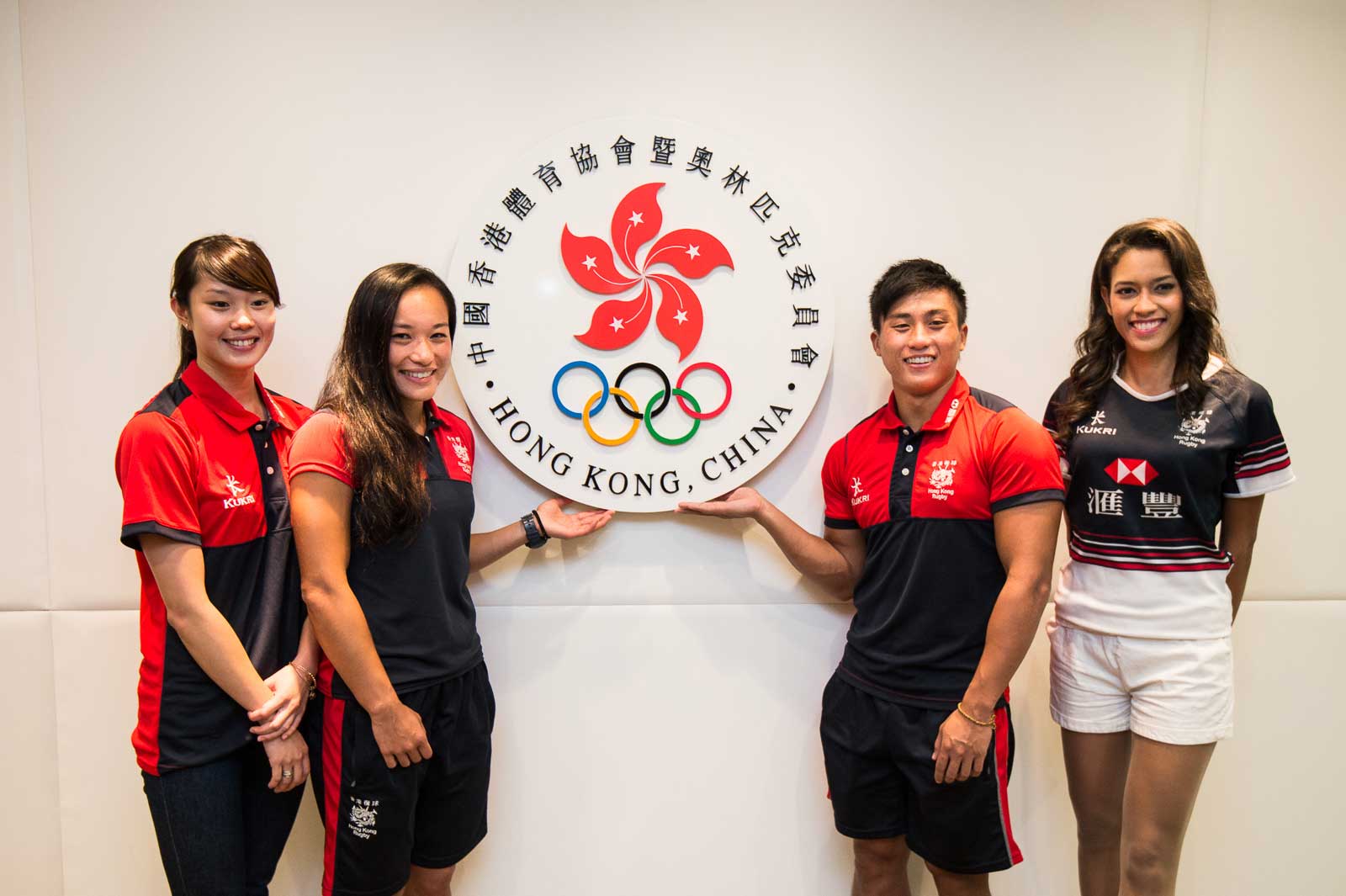
Tickets for the two day Asia Olympic Sevens Qualifier on the 7-8 November will go on sale in August priced at $360 for a 2 day pass and $200 for a day pass. The two day tournament will feature the men’s and women’s Rio2016 Asia qualification matches.
The men’s tournament is a 12 team event featuring with the men’s winner claiming Asia’s sole automatic slot amongst the 12 teams participating in the 2016 Summer Olympics in Rio de Janeiro, Brazil, where Rugby Sevens will make its much anticipated debut. Competing to be Asia’s representative will be China, Chinese Taipei, Hong Kong, Iran, Japan, Kazakhstan, Malaysia, Philippines, Singapore, South Korea, Sri Lanka, Thailand
Already qualified for the men’s competition are Fiji, New Zealand, South Africa, Great Britain, USA, Argentina and the hosts Brazil. The remaining five places will be awarded to the winners of regional qualifiers in Europe, Oceania, Africa and the Hong Kong tournament for Asia as well as the winner of a 16-team international repêchage tournament to be held later in the year.
The women’s qualifier is an 8 team event, the first part of a two leg qualification process that culminates in Tokyo on 28-29 November 2015. Teams competing in the women’s event are China, Hong Kong, Japan, Kazakhstan, Singapore, Sri Lanka, Thailand, Uzbekistan.
The winner heading to Rio to join New Zealand, Canada, Australia, Great Britain, Colombia, USA,France andhosts Brazil who have already booked their spots at the 2016 Olympic Games
“The opportunity to participate in an Olympic Games is the ultimate dream for any athlete, and we are totally focused on preparing for the November tournaments,” commented women’s sevens veteran Cheng Ka Chi.
Asia Rugby Sevens Qualifier Date: 7-8 November, 2015 Venue: HK Stadium Tickets: $360 (2-day pass), $200 (1-day pass), under 12 free. More info: Exact details of the ticket buying process have yet to be released