Radio Beijing Broadcast – 3 June, 1989

https://soundcloud.com/james-t-griffiths/radio-beijing-broadcast-june-3

A rare broadcast recorded by G. Jack Urso working the overnight shift at WQBK-1300 AM on 3 June, 1989. It is dignified and speaks for itself. It is also remarkable because it came from China’s official radio outlet, Radio Beijing the precursor to what is now China Radio International.

According to Urso the announcer’s name is Yuan Neng and he was transferred from his job for broadcasting the report. The script was by Wu Xiaoyong, Deputy Director of the English Language Service at Radio Beijing. His father, Wu Xueqian, at the time was a Senior Council Vice-President. According to reports, Wu was put under house arrest for two to three years and later moved to Hong Kong.

Transcript: This is Radio Beijing. Please remember June the third, 1989. The most tragic event happened in the Chinese capital, Beijing.
Thousands of people, most of them innocent civilians, were killed by fully armed soldiers when they forced their way into the city. Among the killed are our colleagues at Radio Beijing.
The soldiers were riding on armored vehicles and used machine guns against thousands of local residents and students who tried to block their way. When the army convoys made a breakthrough, soldiers continued to spray their bullets indiscriminately at crowds in the street.
Eyewitnesses say some armored vehicles even crushed foot soldiers who hesitated in front of the resisting civilians.
Radio Beijing English Department deeply mourns those died in the tragic incident and appeals to all its listeners to join our protest for the gross violation of human rights and the most barbarous suppression of the people.
Because of this abnormal situation here in Beijing, there is no other news we could bring you. We sincerely ask for your understanding and thank you for joining us at this most tragic moment.

Here’s the story of how the broadcast survived http://www.aeolus13umbra.com/2012/05/lost-voice-of-radio-beijing.html


26th Anniversary of June 4

http://bcmagazine.smugmug.com/Bcene-photos/2014/Tiananmen-25th-Anniversary/41425488_4FHBHt#!i=3292634297&k=6w7tNML

The first ‘June 4’ since the ‘birth’ of the Umbrella Movement sees a wide range of commemorative vigils being held across Hong Kong. Their is increased awareness among HongKongers of the need for accountable government locally. That the Chief Executive CY Leung is more interested in pleasing those in Beijing than the people he was ‘elected’ to represent.

HongKongers still believe that they should be advocating the development of democracy on the Chinese mainland, the mantra of the June 4 vigil in Victoria Park. What has changed since last year is the awareness of the suffocation of Hong Kong by Beijing, the lack of accountability of government officials, rampant nepotism, the death of one country-two system and the stealthy transformation of Hong Kong from the city they love and are proud to call home to ‘just another Chinese city’.

Candlelight Vigil for the 26th Anniversary of June 4
Organized by: The Hong Kong Alliance in Support of Patriotic Democratic Movements in China
Venue: Hong Kong Victoria Park Football Field, Causeway Bay – 8pm
More: Started in 1990, the largest and longest-running commemorative event for June 4, over 180,000 attended last year.

Hong Kongers’ June Fourth Rally
Organized by: Civic Passion
Venue: Hong Kong Cultural Center, Tsim Sha Tsui – 8pm
More: Started in 2013, over 3,000 attended last year

June Fourth Commemoration
Organized by: Hong Kong University Students’ Union
Venue: Sun Yat-sen Place, University of Hong Kong, Sai Ying Pun – 7:30 pm.

Memorials for the Tiananmen Square protests of 1989
Organised by: Proletariat Political Institute, Civic Passion and other localism groups will be Venues:

Hong Kong Island
– Siu Sai Wan Estate Bus Terminus (19:00-21:00)
– Shau Kei Wan MTR Station Exit A3 (19:00-21:00)
– Hing Fat Street Entrance, Victoria Park, Causeway Bay (16:00-18:00)

Kowloon East
– Kai Tin Shopping Centre, Lam Tin (Outside) (16:30-18:30)
– Yue Man Square Park, Kwun Tong (17:00-19:00)
– Ngau Tau Kok Road Flyover Rest Garden, Kowloon Bay (19:00-21:00)

Kowloon West
– Fat Tseung Street MTR Exit, Un Chau Shopping Centre, Sham Shui Po (19:30-21:30)
– Prince Edward MTR Station Exit B1 (20:00-21:30)
– Clock Tower, Tsim Sha Tsui (19:00-22:30)
– Mei Foo MTR Station Exit A (19:00-21:00)

New Territories East
– Shatin MTR Station Exit A (17:30-19:30)
– Tai Wai MTR Station Exit A (18:00-20:00)
– City One MTR Station Exit D (19:00-21:00)
– University Railway Station Bus Terminus (19:00-21:00)
– Tai Po Market MTR Station Exit A (19:00-21:00)
– Sheung Shui MTR Station Exit C (19:00-21:00)

New Territories West
– Tai Ho Road, Citywalk, Tsuen Wan (Open Ground) (18:30-20:00)
– Kwai Chung Shopping Centre, Kwai Fon (Outside) (19:00-21:00)

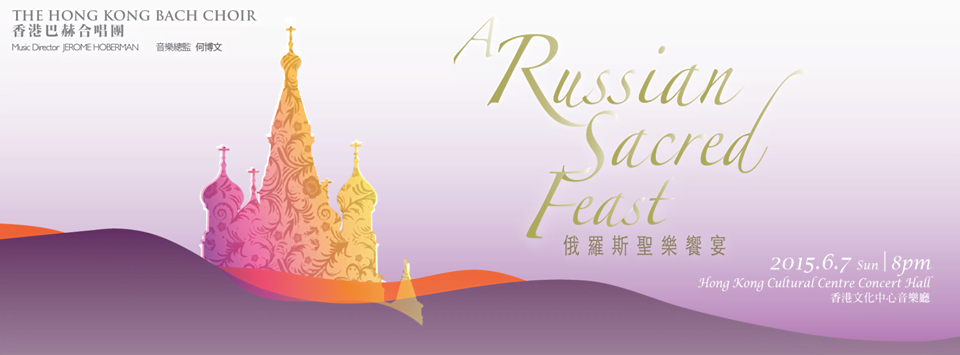
A Russian Sacred Feast @ HK Cultural Centre – 7 June, 2015

A Russian Sacred Feast

Sergei Rachmaninoff is among the most popular composers of “classical music,” his works beloved for their intensely romantic melodies and rich harmonies. Some of his tunes have even been adapted for popular songs (“All by Myself,” “Never Gonna Fall in Love Again,” etc.). In Hong Kong he is best known for his piano music, especially two of his four concertos, but he also wrote outstanding symphonies and operas, as well as two major extended, unaccompanied choral works that reflect his deep Russian Orthodox piety: the Liturgy of St. John Chrisostom (1910) and the All-Night Vigil (also known as the Vespers), completed five years later.

Orthodox Christian practice forbids the use of instruments (other than bells) in church music, limiting its sound to that of the human voice. Rachmaninoff’s All-Night Vigil finds its roots not only in traditional Russian sacred chant, but also in Pyotr Ilyich Tchaikovsky’s pioneering, elaborate choral setting of the same service. The Hong Kong Bach Choir, which in January 2005 sang a single movement from this magnificent work in a program of Vespers selections, here offers a more extended selection, chosen for the beauty and variety of the individual pieces.

As with Rachmaninoff, the theme of Orthodox Christianity plays a prominent role in the music of Rodion Shchedrin, perhaps the most illustrious living Russian composer (the Carmen Ballet, Anna Karenina – also a ballet – the opera Dead Souls, and five Concertos for Orchestra, among many others). But while his choral masterpiece The Sealed Angel (1988) incorporates sacred Orthodox texts, in the Church Slavonic language, it blends them with themes from Nikolai Leskov’s eponymous story. As the composer wrote, “The religious feeling runs through Leskov’s story. As though golden spangles of initial lines of Orthodox liturgical chants sung by Leskov’s Old Believers in hard times are scattered here and there.” In the end, the work is a modern Russian secular liturgy based on canonical Orthodox texts, and results in music of surpassing sensual beauty.

Programme
Sergei Rachmaninov: Selections from All Night Vigil, Op. 37
Rodion Shchedrin: The Sealed Angel

Performers
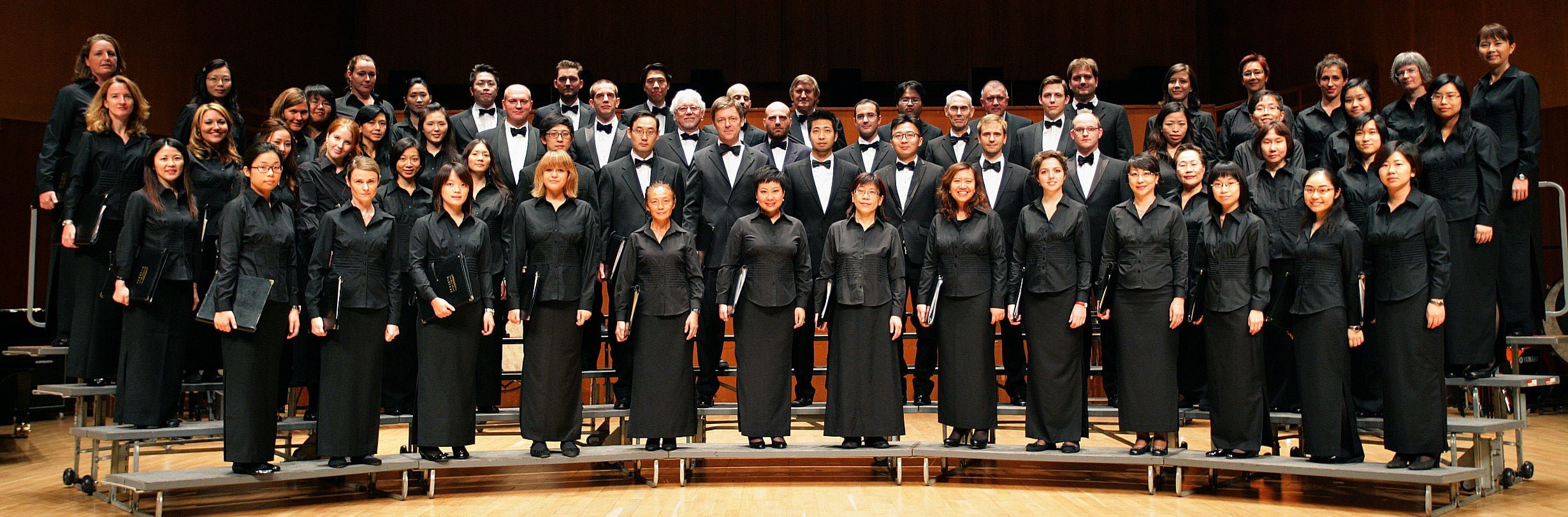
The Hong Kong Bach Choir
Featuring Soloist: Megan Sterling, Principal Flute of the Hong Kong Philharmonic Orchestra
Music Director & Conductor: Jerome Hoberman

The-Hong-Kong Bach-Choir

A Russian Sacred Feast
Hong Kong Bach Choir
Date: 8pm 7 June, 2015
Venue: HK Cultural Centre, Concert Hall
Tickets: $240, $160, $80 from URBTIX
More info:
10% off: Members of the Law Society of Hong Kong, Hong Kong Institution of Engineers, Hong Kong Institute of Architects, Hong Kong Institute of Surveyors, Hong Kong Arts Administrators Association
15% off: Friends of the Hong Kong Bach Choir
50% off: Full-time students, senior citizens, people with disabilities and the minder, and CSSA recipients

On the 26th Anniversary of Tian’anmen Massacre – an Open Letter to Fellow Students in Mainland China

On the 26th Anniversary of Tian’anmen Massacre – an Open Letter to Fellow Students in Mainland China

By a group of overseas Chinese students, letter penned by Gu Yi, published: May 27, 2015

This letter, written in Chinese, has been circulating through email groups and on social media since May 20. Yesterday the Chinese Communist Party-run Global Times gave it a free publicity push – double strength (here and here). – China Change

We are a group of Chinese students born in the 1980s and 1990s and now studying abroad. Twenty-six years ago on June 4th, young students, in life’s prime with innocent love for their country just as we are today, died under the gun of the People’s Liberation Army in Beijing’s streets. This part of history has since been so carefully edited and shielded away that many of us today know very little about it. Currently outside China, we have been able to access photos, videos and news, and listen to the accounts of survivors, unfettered. We feel the aftershocks of this tragedy across the span of a quarter century. The more we know, the more we feel we have a grave responsibility on our shoulders. We are writing you this open letter, fellow college students inside China, to share the truth with you and to expose crimes that have been perpetrated up to this day in connection with the Tian’anmen Massacre in 1989.

Around 9:30 on the night of June 3rd, 1989, gun shots tore the tense streets of Beijing. On that day, troops enforcing martial law opened fire on students and residents who had protested peacefully for nearly two months. The demonstrations were initiated by college students but people from all walks of life participated, numbering over 300,000 at the peak. The center area of the peaceful sit-in was in Tian’anmen Square. It was a time when the nation had been encouraged by the relatively freer and more open political atmosphere throughout the 1980s, people had had trust in the Communist Party and held expectations of a government that called itself “the people’s government.” At a time when economic crisis threatened and corruption worsened, students and residents wanted to have a dialogue with the nation’s leaders to make the country a better place. Never for a moment did the peaceful demonstrators dream that a planned massacre was awaiting them.

Per orders from Deng Xiaping, Li Peng and other Chinese leaders, the PLA forced its way toward Tian’anmen Square to clear out the student occupiers. They drove tanks with machine guns mounted on top, and they shouted “I will not attack if I am not attacked” while opening fire on civilians. On its route at Muxidi (木樨地), several hundreds of unarmed civilians fell in streaming blood shouting “Fascists!”, “Murderers!” Among them was Yan Wen (严文), a 23-year-old mathematics student at Peking University, shot dead by bullets to his thigh. He was there with a camera to record history. Another was the 17-year-old high school student Jiang Jielian (蒋捷连) who had been determined to go to the Square to be with older brothers and older sisters there. 19-year-old Wang Nan (王楠) was yet another who fell, and the bullet-holed helmet he wore is now on display in Hong Kong. The 21-year-old Wu Xiangdong (吴向东)had with him a death notice that read, “For democracy and freedom, for the fate of the nation, every ordinary person has a responsibility.” According to witness accounts, the troops that had entered the Square beat clusters of students with batons even though the two sides had already agreed on the student withdrawal; at Liubukou (六部口), tanks chased, and ran over, a column of students who had left the Square and were walking back to their campuses. Fang Zheng, a senior at Beijing Sports University, lost his legs to speeding tank tracks. There had been unconfirmed reports that pockets of protesters were encircled and executed en mass. Around June 4th, massacres also occurred in Chendu, Sichuan province, and elsewhere.

In mid and late June that year, the government issued three versions of a “report on quashing the riots.” It portrays the civilians as a rioting mob and presents precise numbers of dead and wounded among the troops and the loss of vehicles, but at the same time, it is vague and contradictory on the number of civilian deaths. Questions remain: why were the weaponized troops unable to defend themselves [if there was indeed a riot]? If they were unable to defend themselves, how did they break through the blockade of hundreds and thousands of civilians? What caused the people of the nation to gather in the streets of the capital to prevent the troops from moving forward? The report claims that the civilian deaths were few. If so, why repeatedly alter the number of death and never publish an accurate count? If the report is to be believed, the civilians attacked the soldiers first. If so, why was the first death among soldiers not reported until more than three hours after the troops opened fire and blood bathed Muxidi? During the protest, police once confided to Zhou Fengsuo (周锋锁), one of the student leaders in the Square, that “Beijing’s public order has never been so good” as the last two months of “disruption” and “riot.” According to the memoir of Hou Dejian (侯德健),[the Taiwanese poplar singer] who stayed until the last moment in the Square, students insisted on non-violent principles even at the last moment of forced withdrawal and threw away any possessions that could be used to attack.

Meanwhile, the atrocities of the troops were recorded in photos of bleeding wounded and stacked bodies, videos of shooting civilians, hospitals’ body identification notices and body counts, shocking reportage by Wu Xiaoyong (吴晓镛)of Central People’s Radio Broadcast, not to mention the persistent questioning of Tiananmen Mothers over the last twenty-six years. If all of these are lies as the government claims they are, what is making these parents, now white-headed and frail, seek justice for so many years while sacrificing a normal life?

Last year on Capitol Hill in Washington, DC, this writer met with some of the survivors of the massacre. The MC read aloud a partial list of the dead, and people proceeded in a long line to pay respects with flowers. From hundreds to thousands, there have been different numbers and we might never know exactly how many died that year in Beijing. But people witnessed many shocking crimes, and perhaps many more occurred at unknown corners without witnesses. Some witnesses have grown old, others have passed away, and still others dare not speak even though they now live safely overseas. The Chinese government has never dared to publicize the exact number of deaths, and in dealing with a historical event of such magnitude, it first portrayed it, solemnly, as an “anti-revolutionary riot,” and then over the time it downplayed it as a “political ripple,” systematically erasing it from the collective memory of a generation. June 4th has become a “sensitive” time each year, an unmentionable date. Such an enforced taboo is a reverse proof that the atrocities against civilians in 1989 are something the Communist Party would rather keep mum about, although this is a Party with a murderous history of civil war, anti-rightist movements, and the Cultural Revolution.

A classmate of this writer believes that the events from twenty-six years ago are too far back, today’s China is getting better and better, and he lives a very happy life.  As I walked on the Avenue of Eternal Peace two years ago, I saw no trace of blood or bullets but skyscrapers and the bustling of people and cars. We live in prosperity, but what kind of prosperity it is – our imagination is constantly challenged by the astonishing scale of high and low ranking officials, the marriage of power and money that the students opposed twenty-six years ago has become the prevalent model of the state economy. Xi Jinping’s regime waves the banner of anti-corruption, but ordinary people are thrown in jail as trouble makers for holding signs asking officials to disclose their assets.  The clans of Deng Xiaoping and Li Peng, whose hands were stained with the blood of students, have become filthy rich. We are shocked to discover that we are governed by officials whose family members live abroad. In other words, we are ruled by a bunch of foreigners, and China is merely the goose that lays golden eggs for them.

Twenty-six years ago, students wanted freedom of the press; and twenty-six years later, all media are still controlled by the Party’s Propaganda Department, and journalists and lawyers are being put in jail for invented crimes. Gao Yu’s crime was leaking state secrets, or the ruling party’s latest ideological guidelines. Some of my friends are of the opinion that those who draw the Party’s ire do so because they are famous and conspicuous. We, on the other hand, are mere ordinary people who don’t care about politics. But are ordinary people safe from harm? Think about Xia Junfeng (夏俊峰), Xu Chunhe (徐纯合), and the daughter of Tang Hui (唐慧). No one is safe in a dictatorial system.

When North Korean soldiers crossed the border and killed innocent Chinese, and when Burmese bombers bombed Chinese territory, this government merely “protested.” Come to think about it, the PLA’s only military victory in the last thirty years was the bloodbath in Beijing’s streets on June 4th, 1989!

This is fragile and distorted prosperity. Stability maintenance expenses are as big as the military budget; the Great Fire Wall is being stacked ever higher. They all indicate that, at any moment, truth can come to broad daylight, and the prosperity can collapse.

A voice inside China that says, the Tian’anmen Massacre was unfortunate, but the Chinese Communist Party has learned a lesson, and we don’t want to obsess over it. But the suppression has never stopped: the truth about June 4th is still covered up, the dead still do not have closure, some survivors have served long prison terms, Tian’anmen Mothers are prevented by security police from paying visits to their children’s burial sites. Last year, a group of scholars was detained for having a home seminar to remember that day, and a female student at the Beijing International Studies University was disappeared for proposing a technology to spread the truth about the Tian’anmen Movement.

Meanwhile, the man who made the decision to open fire on students and civilians has been admired and extolled as the chief designer [of China’s economic rise], and neither officers nor soldiers who directed the killings have been tried in a court of law. Do not expect this regime to plead guilty. Nor will they confess to errors as they did after the Cultural Revolution ended, because they know all too well that, once they acknowledge their crimes, they will likely be engulfed by the people’s wrath. They claim they have the ownership of a “universal truth,” but they have built high walls on the Intenet, and they hide in dark rooms to delete news as well as comments. Such is their “confidence in guiding theories” and their “confidence in the path chosen.”

This is the killer’s regime. The gun fire on June 4th shot dead their legitimacy, and what they have accomplished since June 4th is not important. We do not ask the CCP to redress the events of that spring as killers are not the ones we turn to to clear the names of the dead, but killers must be tried. We do not forget, nor forgive, until justice is done and the on-going persecution is halted.

This writer and the signers of this letter know very well that there are consequences in writing and signing this letter. But this is our responsibility, and we hope fellow students inside China know this part of history, and reexamine the violence and atrocities since the Communist Party’s beginning in 1921. From Jingangshan (井冈山, one of CCP’s early bases in Jiangxi province) to Tian’anmen Square, millions of innocent people have died, and we must remember them, but also reflect on wave after wave of sufferings. We have no right to dictate your minds or ask you to do something, but we do have a dream: we dream that, in a future not too far from now, each one of us can live in a country free of fear where history is restored and justice realized. This is the China Dream we have – we, a group of Chinese students studying abroad.

Written by:
Gu Yi (古懿, University of Georgia, [email protected])

Co-signed by:
Feng Yun (封云, University of Central Lancashire)
Chen Chuangchuang (陈闯创, Columbia University)
Zheng Dan (郑丹, Adelphi University)
Chen Bingxu (陈炳旭, Missouri State University)
Jin Meng (金萌, Northwest Missouri State University)
Lu Yan (卢炎, University at Albany, SUNY)
Wang Xiaoyue (王宵悦, University at Albany, SUNY)
Wang Jianying (王剑鹰, University of Missouri)
Meng Li  (St. John’s University)
Wu Lebao (吴乐宝, Melbourne, Australia)

You can sign it too:
https://docs.google.com/forms/d/1mXmqrVd-rmeahW9j8lrBMwupdfIaS3KE2bbKfW5r2sY/viewform

Translated by China Change
Chinese origina《海外中国留学生六四26周年致国内同学的公开信》

Hong Kong Cup of Nations – 13, 17, and 21 November 2015

Salom-Yiu-Kam-Shing

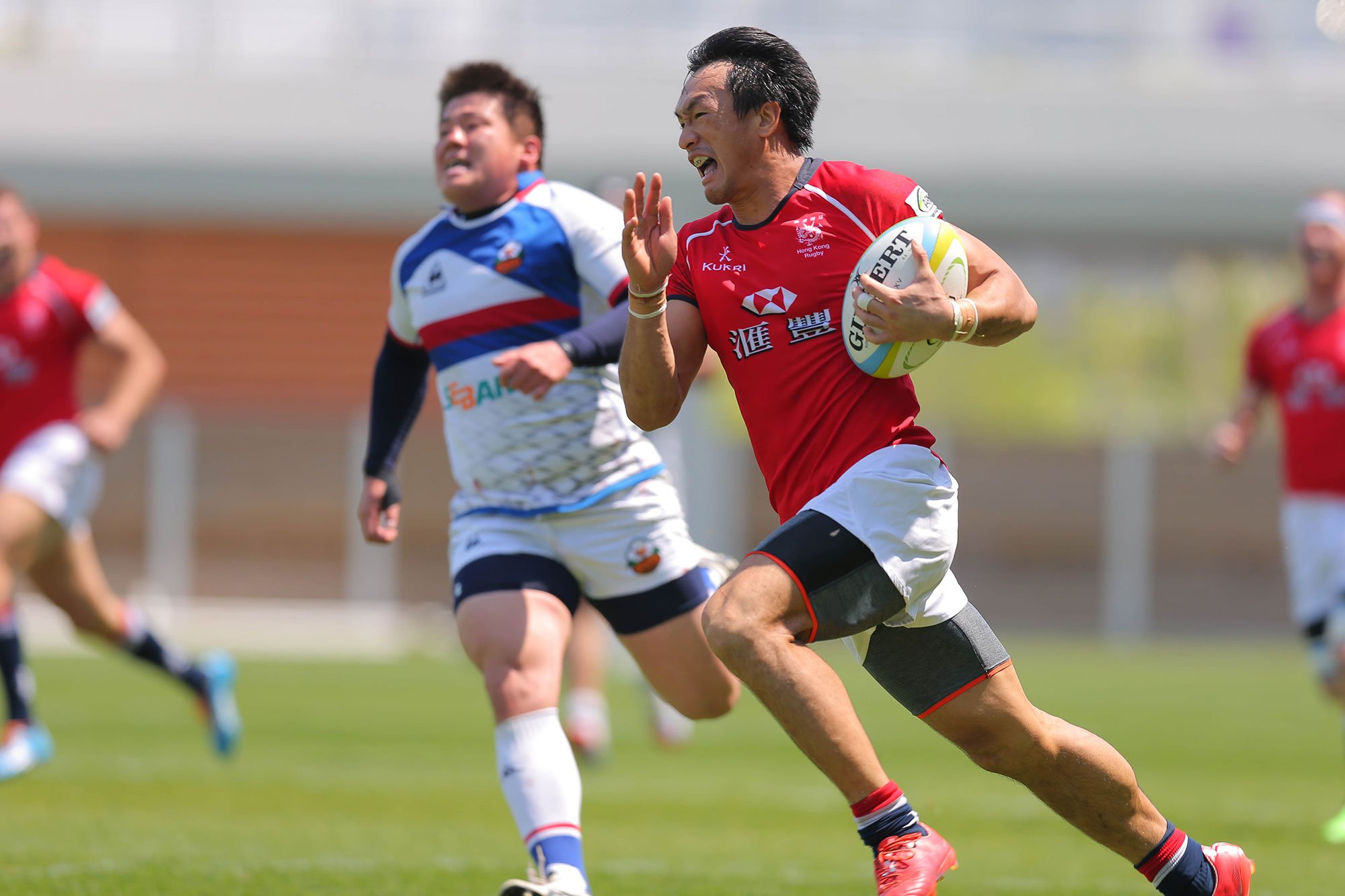
A new four team round-robin tournament will make it’s debut this November, when Portugal, Russia and Zimbabwe will travel to Hong Kong for the 15-a-side Hong Kong Cup of Nations. The World Rugby-sanctioned competition will feature six matches played over three days.

HKRFU General Manager of Performance Rugby Dai Rees is enthusiastic about the new tournament, saying, “We have been working with World Rugby for a number of years to formalise a competition for Performance 2 and 3 level unions to ensure that we play the number of annual matches recommended by World Rugby for countries that aspire to reach the Rugby World Cup. To reach the recommended seven to ten annual fixtures, we need to combine our Asia Rugby Championships campaign – which is four matches in the spring – with touring or bringing in international teams for home tests in November” said Rees.

Russia is the highest ranked team competing in the Cup of Nations, currently 19th in the World Rugby standings. Portugal is ranked 23 and Zimbabwe is 28. Hong Kong moved up two spots to 25th in the world after finishing second in the Asia Rugby Championship.

The teams invited to participate in the Cup of Nations are all ranked between 18 and 28 in the world, providing broadly competitive fixtures for Hong Kong. All four teams, including Hong Kong, advanced deep into the 2015 Rugby World Cup qualification process but ultimately didn’t qualify. We want to play against teams just outside of the Rugby World Cup rankings, which is about the top 16 or 18 teams in the world, to engage in meaningful and competitive fixtures,” Rees added.

From a scheduling standpoint, the rugby calendar will look quite good for Hong Kong with the Cup of Nations giving us another opportunity for intense competition at the beginning of our domestic season and six months on from the Asia Rugby Championship” Rees continued. “We want to push and pressurise ourselves over the coming few years. Having three teams of the calibre of Russia, Portugal and Zimbabwe coming here six months after the Asia Rugby Championship window will help us maintain intensity as we increasingly focus on our high-performance 15s programmes,” said Rees who sees these opportunities as really important for Hong Kong in preparation for the qualification campaign for Rugby World Cup 2019 in Japan.

Match schedules and venues will be announced in due course.

Lets hope that a similar women’s tournament can be arranged on the same dates!

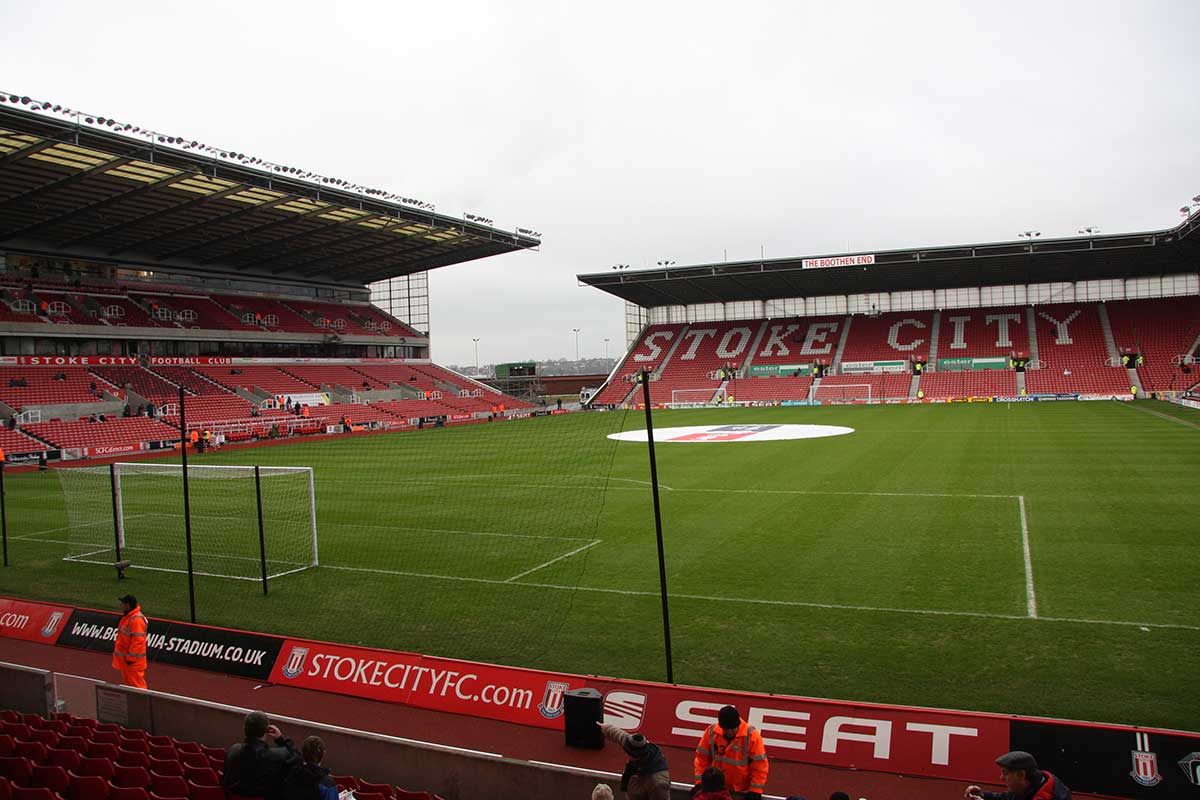
Stoke City F.C. The Academy for Future Stars?

Stoke_City_FC-web

Andrew Mountford’s potted guide to Stoke City on their debut at the Soccer 7s

On the final day of the 2014-15 Premier League season Stoke City demolished Liverpool 6-1 and ruined Steven Gerrards leaving party. For the casual fan it may have been a surprise result, but for Stoke fans it was a result that had been on the cards and long overdue.

The result gave Stoke a new club record 54 points, record number of home wins, away wins and a positive goal difference – their first in ‘The Prem’ – and a top ten finish, not a bad season.

When Stoke were promoted to The Premiership in 2008 they were widely tipped to go back down straight away, to be relegated with the fewest points ever and to be the whipping boys of the league. Bookmakers paid out on Stoke being relegated after their first game back in the top division was a 3:1 defeat at Bolton. But someone hadn’t read the script, a stubborn and tenacious bloke called Tony Pulis who had guided Stoke to promotion from the Championship supported by local businessman and lifelong Stoke supporter, Peter Coates. Pulis hadn’t been relegated no matter who he’d managed and he’s also gotten teams promoted from every division. He put together a fairly threadbare squad of the experienced (Delap), talented (Shawcross), mercurial (Fuller) and hard workers (Faye) who, instilled with confidence and backed by the vociferous and loyal Stoke fans were inspired to fight to the bitter end in every game and maintained their Premiership status pretty much against the odds.

Pulis added players like Beatie & Etherington to this mix but it is fair to say Stoke were infamous for being solid and uncompromising. Arsene Wenger (a Stoke fans favourite) called them a rugby team, most other clubs fans derided the long ball tactics and Rory Delap’s long throws (which left one goal keeper in tears) which teams struggled to cope with but wasn’t a lot of fun – unless you were Stoke.

Though Stoke made it to their first FC Cup final using two flying wingers there was little to show sustainable development. Playing in the Europa league revealed the threadbare nature of the squad. The one dimensional football left fans wondering if ‘survival’ and ‘the magic 40 points’ were all they could expect to look forward to. ‘Entertainment? – go to the circus.’ as Richie Barker an ex Stoke manager once said.

But Stoke had been found out and in his last season in charge some fans started to turn on the legend that is Tony Pulis. The football was dull, struggling to get points was dire, listening to opposition being talked up and the negative managing of expectations was taking the fun out of the game. Its OK being an anti hero, but all the time?

Stoke_City_FC logoIt should be noted too that the Coates family had financially backed Pulis to the tune of over eighty million quid – way more than other teams and certain some signings were expensive flops. At the same time The Club had invested in a state of the art training facility at Clayton Woods costing multi millions which is used by the senior side and The Academy. Why wasn’t the senior squad seeing any young, even local talent coming through? Unfortunately once again the preference of TP was for older, experienced and reliable players who could fit into his system. Something had to give.

Sacking Tony Pulis was the hardest thing Peter Coates had to do, he was a close personal friend and had managed Stokes most successful spell for 30 years. Tony had a very loyal set of supporters who recognised that he had taken Stoke from near relegation to the third tier to The Prem and they felt he deserved loyalty. Others though were tired of the style of football, the playing of clearly tired or unfit favourites and simply the lack of excitement, so whoever took the Stoke job needed to unite these groups of fans, not get relegated, develop the younger players, play exciting football and do better than TP did – or almighty hell and much wailing and gnashing of teeth would occur.

Enter Mark Hughes – tarnished after the QPR debacle it can be said that this was not the most universally admired appointment ever with some fans campaigning to get him kicked out before he’d gotten to the ground; even parking a van with ‘HUGHES OUT’ on it in the club car park.

One has to admire the guts of a manager who takes a job with so many questions hanging over it. There was discussion in the press if Stoke players would actually be able to play football on the ground and string passes together.

The last two seasons have pretty much answered all of these questions. Though some mangers state ‘We know what to expect at Stoke…’ quite clearly many haven’t noticed that things have changed. Stoke now play football that is attractive to watch (mostly), plays to their strengths of organisation and pace. Based on a strong defence with excellent goalkeepers and centre backs. But rather than hoofs up forward the ball is played out, down the channels and finally to forwards that can use feet and head to score goals. This season fans are actually wondering how much better things could have been if Bojan Kirkic & Odemwingie hadn’t been injured for most of the season.

So revolution on the pitch and in the senior squad looks to be on track. What about The Academy and who can we expect to see in Hong Kong.

Well first the squad will be of the ten allowed so Daniel Bachmann, Johnville Renee-Pringle, Bobby Mosely, Eddy Lecygne, Liam Edwards, Ryan O’Reilly, Yusuf Coban, Ollie Shenton, Tom Shepherd & Joel Taylor. Several of the young squad have already played internationally at junior level.

Boss Glynn Hodges ‘Talking to stokecityfc.com, said, “We’re going to be competitive”. Since Mark Hughes took the reigns in May 2013, there has been a shift in emphasis on youth with more players given an opportunity with both club and country. The senior professional development coach, who joined the club from QPR in July 2013 having worked with Mark Hughes for ten years or more added “Ollie Shenton trains regularly with the first team, Yusuf is a strong player, while Bachmann is an Austria U-21 international who will be meeting up with the national team after he comes back from Hong Kong. We’re sprinkled with a lot of talent”.

Of particular note is Ollie Shenton, very much ‘one of our own’, a local born lad who made his first team debut as a sub against Manchester City earlier this year. Just a few days after his mother sadly lost a long battle with cancer. Ollie is not only working hard at Stoke, he and his brother are doing considerable cancer charity work too.

So the the Hong Kong Soccer 7’s will give local Stoke fans a chance to see if Uncle Peter Coates next wish will be granted – are The Academy players to take the step up and play in the senior squad and repay some of the investment?

Hong Kong Para-rowing Team Wins 4 Gold Medals at World Indoor Rowing Championships

Tsoi Ka Ming

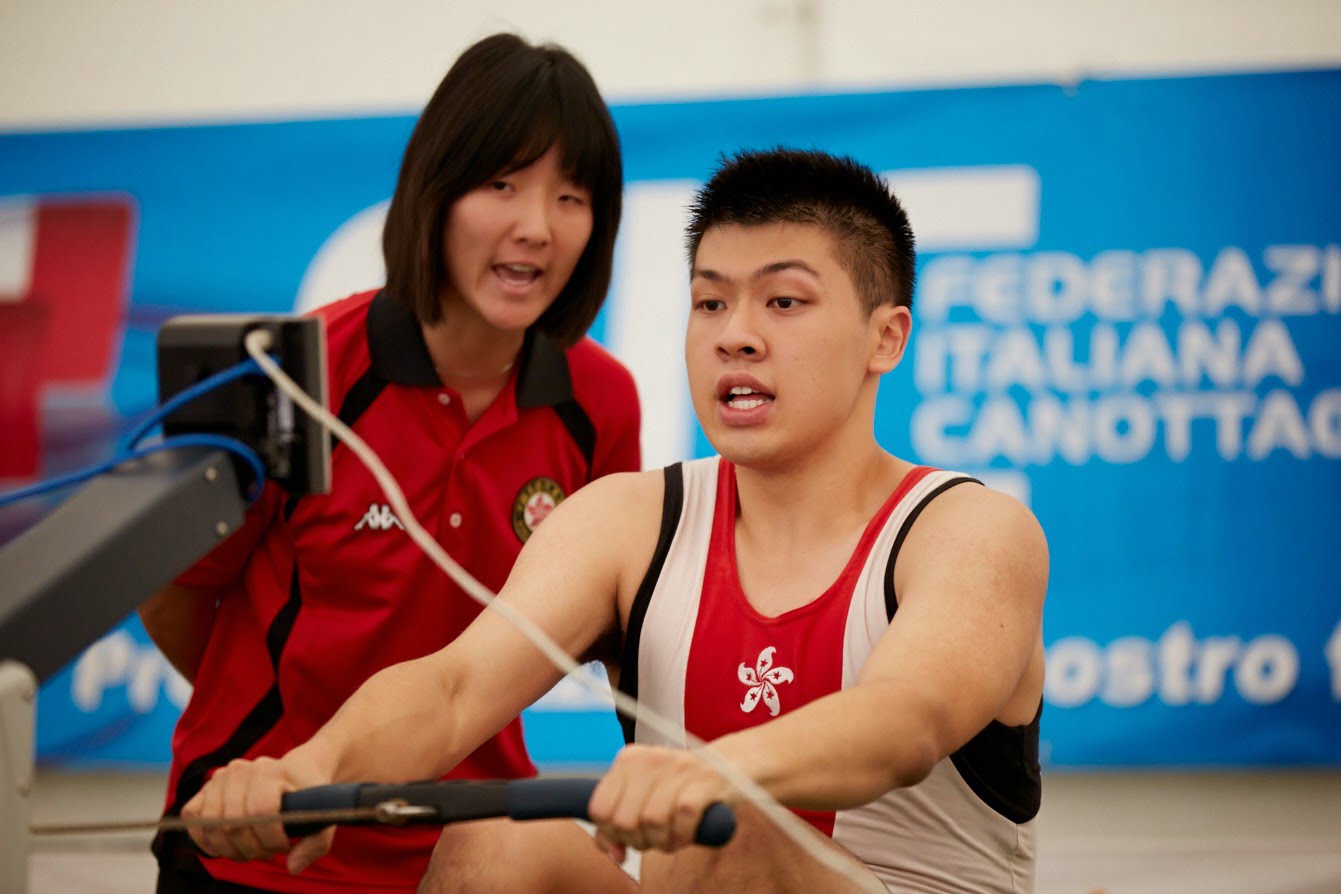
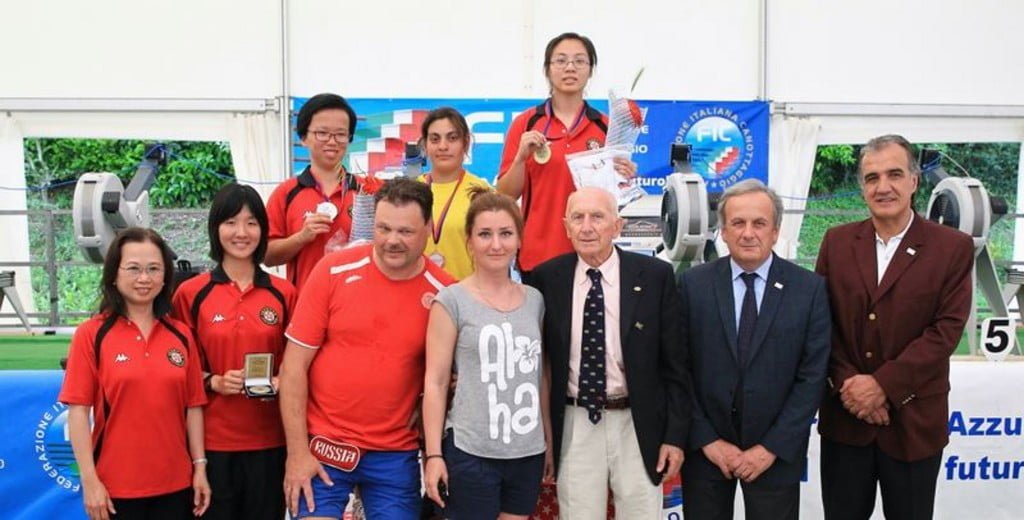
The Hong Kong Para-rowing team won 4 Gold, 3 Silver and 1 Bronze Medals at the 4th INAS World Indoor Rowing Championships, 2nd INAS International Regatta and 9th International Para-Rowing Regatta at Gavirate, Italy on the 14-17 May, 2015.

At the 4th INAS World Indoor Rowing Championships Para-rower, Tsoi Ka Ming won the Gold medal at the Men’s Individual 500m event and broke the world record in 01:29.2, he has also capture the Silver medal in Men’s Individual 1000m event. While Lee Wai Yi and Liu Wang Sin swept the 2 Gold and 2 Silver medals in the Women Individual 500m and 1000m respectively.

LTA Mixed Coxed Four  1000m_At the 2nd INAS International Regatta, after a year of hard training, Hong Kong’s Para-rowing Team (Intellectual Disabled crew) won Gold medal in LTA mixed coxed four event.

The Hong Kong Para-rowing Team (Physically Disabled crew) also attended a 10 days intensive training camp organized by the FISA (International Rowing Federation) at the same venue. The Para-rowers, Chan Ka Man and Yau Chi Choi Daniel brought home a one Bronze medal in LTA Mixed Double Sculls event while, the silver medalist in recent Sydney International Rowing Regatta, Ajmal Victor Samuel was placed fifth among 24 countries in the AS Men’s Single Sculls event.

Liu Wang Sin_Lee Wai YiSource: Hong Kong, China Rowing Association
Editing: bc magazine

Anodyne Attempt to Rewrite History

http://bcmagazine.smugmug.com/Bcene-photos/2015/Umbrella-Festival-Opening/49316366_5Ctxzg#!i=4063384701&k=fcsrMtW

The ‘Umbrella Festival’ opened today at the JCCAC in Shep Kip Mei. You’ll have noticed the inverted commas I put around the festival name, yes the festival poster is yellow and has an umbrella on it – but that’s about all the ‘festival’ has in common with 2014’s umbrella protests. When one of the festival’s curator’s Prof. Katrien Jacobs stands on stage and starts joking about making her speech notes on a post-it like on the Lennon Wall before continuing with “As a foreigner I found the protests sexy and fun and that’s what we want to do with this festival, keep the fun going…”

http://bcmagazine.smugmug.com/Bcene-photos/2015/Umbrella-Festival-Opening/49316366_5Ctxzg#!i=4063376599&k=tJJfR6G

The Umbrella Festival is an anaemic poorly conceived joke. An insult to the HongKongers who stood up for their beliefs and voiced a desire for Universal Suffrage to precipitate the removal of the morally corrupt politicians and civil servants who are destroying the Hong Kong we love and call home with their arse-licking of the mainland amidst the lining of their own pockets.

The JCCAC is an interesting space and there are mini-exhibits and photos spread over it’s 9 floors. I didn’t see the words universal suffrage anywhere, not a single mention about the underlying reasons for the protest. Not a mention of the police violence – there was one photo of the tear gas. The only comment about police violence was in a theatrical piece by FM Theatre Power (see video) that was part of the opening ceremony, but even that was tempered when the police become ‘caring mothers’ and embraced the demonstrators.

There is a mini-Lennon wall – but no explanation of the what it symbolized or how it got started… You can add you own post-it, but the ones already posted were banal and safe, as were the chalk drawings. For ‘fun’ as Professor Jacobs described it, get a poster and walk around to get ‘umbrella’ stamps at different parts of the building…

http://bcmagazine.smugmug.com/Bcene-photos/2015/Umbrella-Festival-Opening/49316366_5Ctxzg#!i=4063397027&k=GBDQS5g

Another of the curators claims as they opened the festival was to celebrate the Umbrella protests art… the protest zones were vibrant artistic and discoursive hubs with new things being created and revealed everyday. Yet almost none of that is here, why not?

There are some interesting close-up photos – but no photos which show the scale or size of the protests. In fact I couldn’t find an exhibit which even explained that there were three protest zones.

What could have been a fascinating examination of the protests and the art that emerged over the 79 days instead reeks of a government funded snow job, an attempt to rewrite one of the seminal moments in Hong Kong’s history.

http://bcmagazine.smugmug.com/Bcene-photos/2015/Umbrella-Festival-Opening/49316366_5Ctxzg#!i=4063380757&k=ZbwQphB