New Central to Hung Hom Ferry Launched

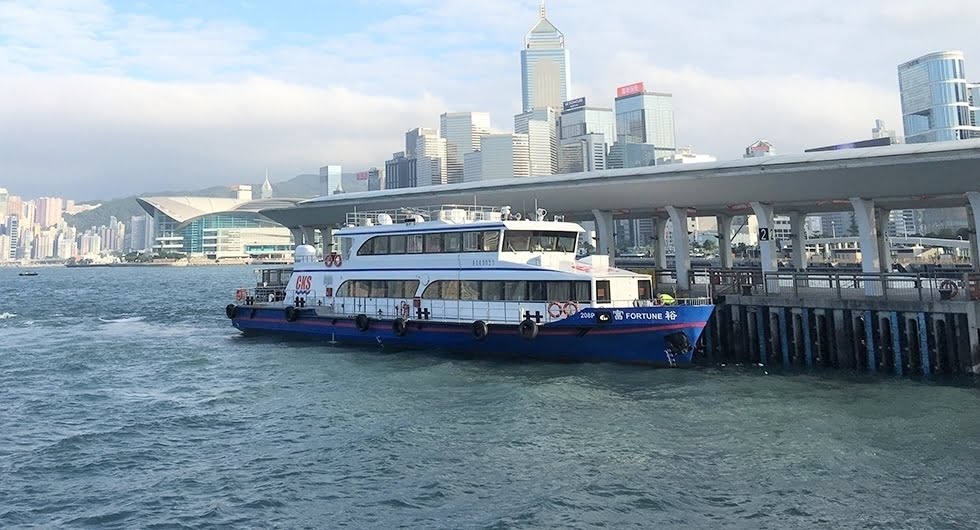
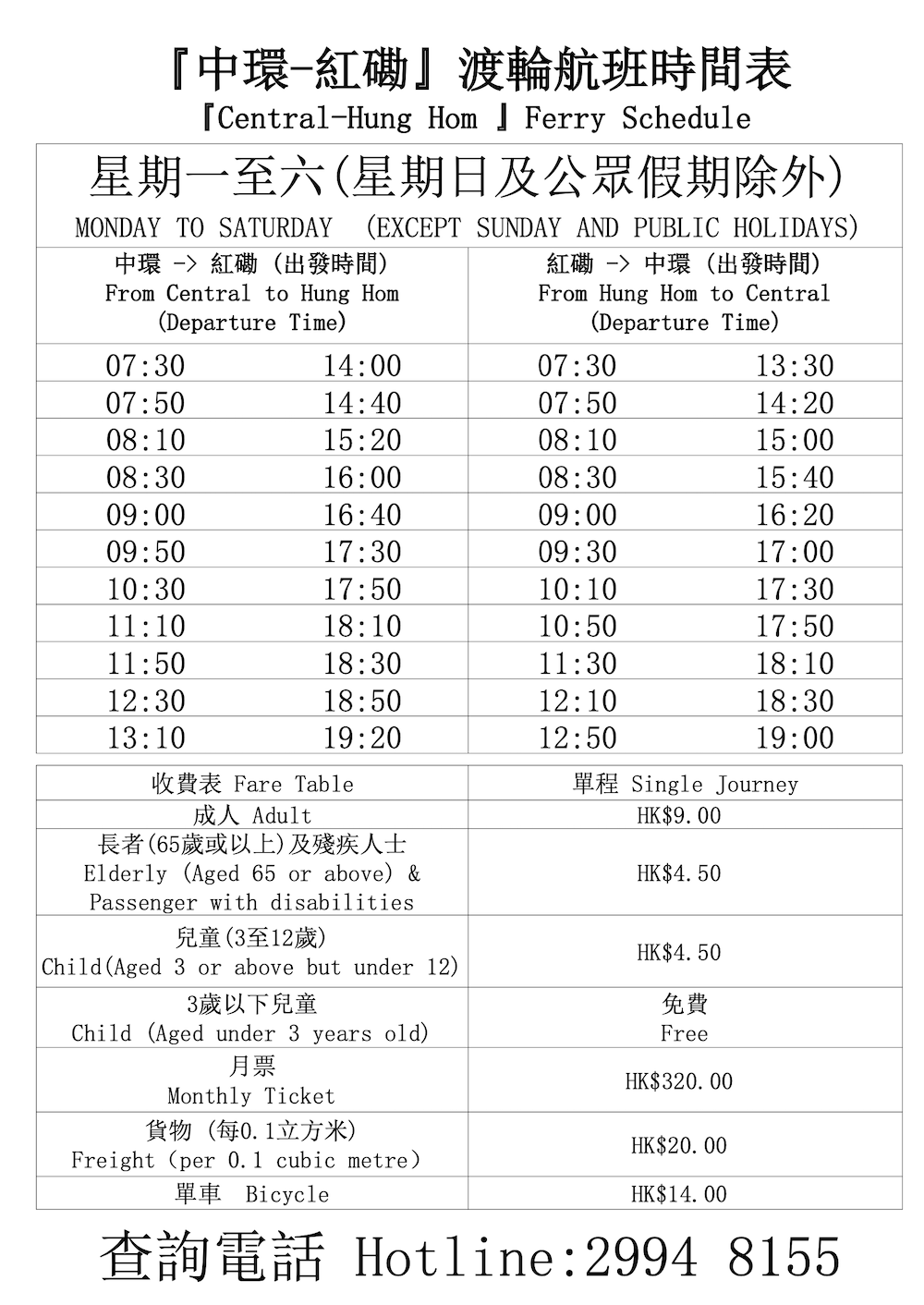
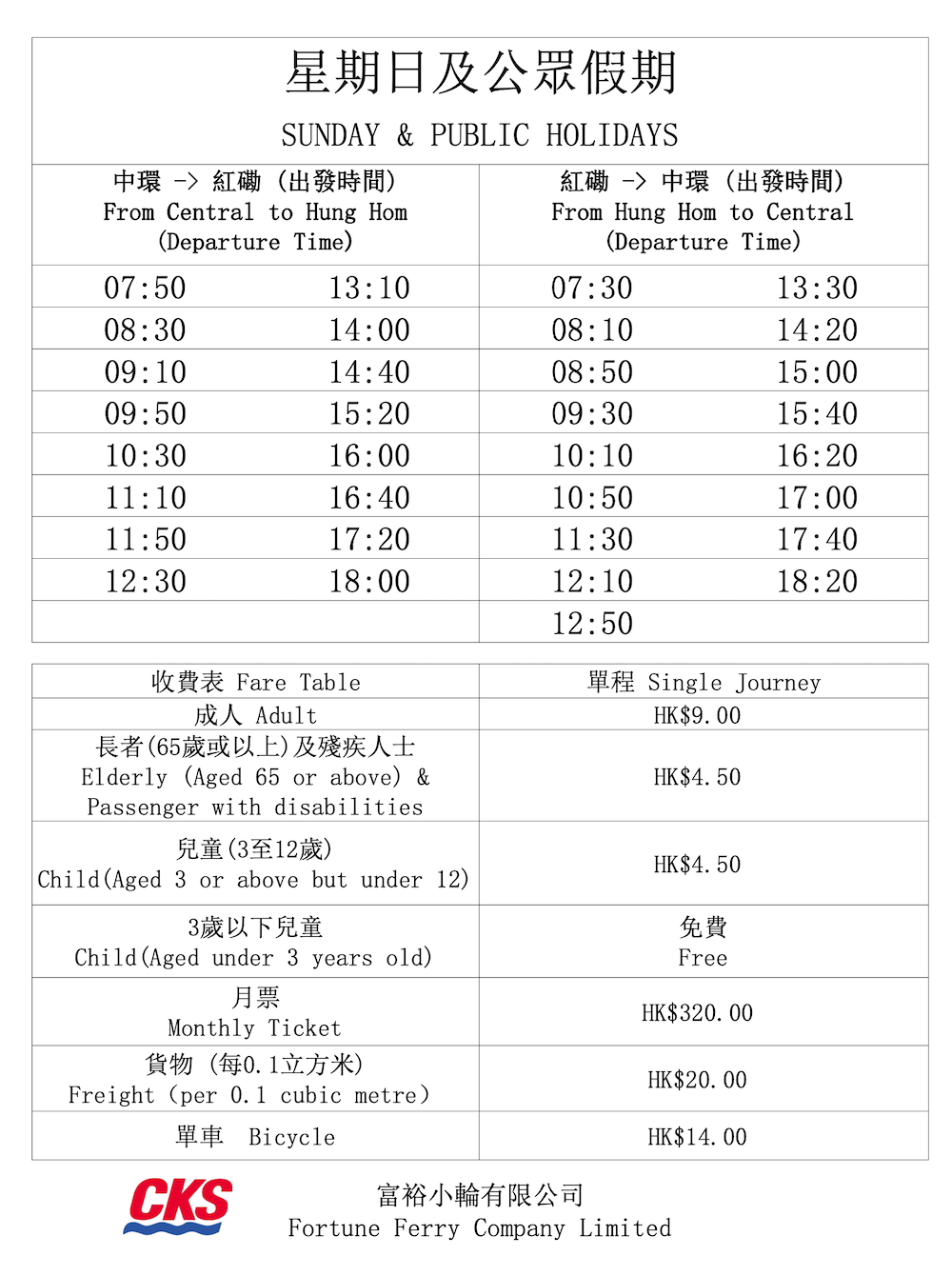
Launched on the 28 June, the new Central-Hung Hom ferry route is between the Hung Hom (South) Ferry Pier and Central Pier No. 8 (Western Berth) and costs $9 per trip.

The basic schedule is every 20 minutes during peak hours from Mondays to Saturdays; and every 30 to 50 minutes during non-peak hours, Sundays and public holidays.

Renovations at both piers by Fortune Ferry Company Limited include free wifi, fans and a luggage storage service. An app offering real-time arrival/departure information will be launched soon.

Fortune Ferry also operates the North Point-Kai Tak-Kwun Tong and Tuen Mun-Tung Chung-Sha Lo Wan-Tai O ferries.

HK Bar Association: NSL Erodes High Degree of Autonomy

Statement of the Hong Kong Bar Association:
The Law of the People’s Republic of China (“PRC”) on Safeguarding National Security in the Hong Kong Special Administrative Region (“HKSAR”)

1. The Law of the PRC on Safeguarding National Security in the HKSAR (“NSL”) was endorsed and adopted in the Mainland on 30 June 2020 and then promulgated by the Chief Executive so as to come into force in the HKSAR at 11 pm on the same day. The Hong Kong Bar Association is gravely concerned with both the contents of the NSL and the manner of its introduction.

2. Nobody in the HKSAR had seen so much as a draft or accurate summary of the NSL before its entry into force. In addition to the total absence of meaningful consultation, lawyers, judges, police and Hong Kong residents were given no opportunity to familiarise themselves with the contents of the new law, including the serious criminal offences it creates, before it came into force.

3. The NSL has so far only been published in Chinese language, rendering its contents inaccessible to many interested stakeholders. The omission of a contemporaneous authentic English version of the law is unusual given that a bilingual legal system operates in Hong Kong.

4. The NSL is a national law adopted under the Constitution of the People’s Republic of China (“PRC”) and the Basic Law. As stated in the instrument of promulgation signed by the Chief Executive, the NSL has been applied in Hong Kong under Article 18 of the Basic Law. The choice of this procedure, rather than any amendment to the Basic Law under Article 159, indicates that the Basic Law continues to operate with full force and effect. Yet the NSL contains numerous provisions that appear to be inconsistent with the provisions of the Basic Law.

5. Article 62 of the NSL states that the NSL shall prevail in the event of any inconsistency with the “local laws of the HKSAR”. This would appear to embrace all Hong Kong Ordinances, including the Hong Kong Bill of Rights Ordinance (Cap. 383), the function of which is to implement the International Covenant on Civil and Political Rights. The Basic Law itself, however, is a national law adopted by the National People’s Congress (“NPC”) under the PRC Constitution. It should be assumed that the NSL will be applied in a manner that is fully consistent with the Basic Law. How this is to be achieved, given the apparent inconsistencies between the NSL and the constitutional guarantees laid down in the Basic Law, is a matter that needs urgently to be addressed by the HKSAR Government.

6. It is incumbent upon the Chief Executive, who says that she was also in the dark about details of the law until yesterday, to clearly, fully and quickly explain to the general public how she sees the NSL working and what areas of life it may encroach upon.

7. A thorough study of the new law is needed to see how it may work and what effect it will have on existing laws and the justice system. However, the following issues and Articles of the NSL are of particular concern and it is right to address them now, albeit provisionally.

8. Where the central authorities decide to exercise jurisdiction in a given case, suspects can be removed to face trial in Mainland China. This is not extradition (where a person is removed to face trial for an offence in the receiving jurisdiction), and the usual judicial controls over extraditions appear not to apply. Mainland criminal procedures will be applied in such cases, in accordance with Articles 55-57, and this raises concern as to whether the rights of the accused to fair trial will be adequately protected or respected.

9. The power of interpretation is vested in the Standing Committee of the NPC. This has the potential to undercut the independent exercise of judicial power by the Courts of the Region (Articles 80 and 85 of the Basic Law).

10. The independence of the judiciary is undermined. The Chief Executive designates a list of approved judges for national security cases (Article 44). Appointment is on a yearly basis. Judges chosen by the executive can be removed from the list if their words or deeds endanger national security (Article 44).

11. Some people are held out to be above the reach of local law. The personnel of the Mainland National Security Agency (“NSA”) are meant to perform duties in accordance with law and not infringe the rights and interests of people and other organizations (Article 50), but the conduct of NSA and its personnel in the execution of their duties in accordance with law is not subject to local jurisdiction (Article 60).

12. The Special National Security Police Unit (“Special NS Unit”) is meant to apply the current law in carrying out its duties (Article 43), but then it enjoys a range of powers that go beyond those available under the existing laws (Article 43). Judicial control over covert surveillance is removed.

13. There is a reversal of presumption of bail (Article 42). The provision of mandatory minimum sentences strips away judicial discretion in sentencing. The right to trial by jury can be taken away by the Secretary for Justice on certain grounds without any residual discretion in this regard being left with the Courts of the HKSAR (Article 46).

14. The newly established National Security Council is said to be exempt from judicial review (Article 14).

15. Four groups of criminal offences are created. These are widely drawn and absent a clear and comprehensive array of publicly accessible guidelines and basic safeguards as to legal certainty and fair treatment, are capable of being applied in a manner that is arbitrary, and that disproportionately interferes with fundamental rights, including the freedom of conscience, expression and assembly:

(1) Secession (Article 20) can be committed with or without violence. This gives rise to concern whether this might operate to prohibit mere speech or any peaceful advocacy.

(2) Subversion (Article 22) requires the threat or use of force or “other unlawful means” (such as an unlawful assembly) to do one of the defined acts, which include serious interference with or obstruction of the authority of the HKSAR (Article 22(3)), and attacking government facilities rendering them unable to perform their functions normally (Article 22(4)). This gives rise to concern whether media criticisms or picketing might be caught under these provisions.

(3) Terrorist acts (Article 24) are vaguely defined. Supporting terrorists or terrorist activities (Article 26) is widely drawn and covers any person providing materials, labour services, transport, venue support, assistance and convenience to terrorist organisations or terrorist acts. It is uncertain whether the prosecution must prove that the accused knew that the person receiving such services is a terrorist.

(4) Colluding with foreign forces (Article 29) is vaguely defined. It covers directly or indirectly accepting a subsidy or support from a foreign organization with a view to carrying out hostile actions against the HKSAR (Article 29(4)). This gives rise to concern whether certain existing activities of academics, NGOs and media organizations which were lawful or not unlawful in the past might now be outlawed by these provisions.

16. Taken together, these and other provisions of the NSL operate to erode the high degree of autonomy guaranteed to the HKSAR under the Basic Law and the Sino-British Joint Declaration, and to undermine core pillars of the One Country Two Systems model including independent judicial power, the enjoyment of fundamental rights and liberties, and the vesting of legislative and executive power in local institutions. The Hong Kong Bar Association calls on the Chief Executive to reaffirm these foundational values of the HKSAR, and to commit her Government to applying the NSL in a manner that is fully consistent with the Basic Law and Hong Kong Bill of Rights.

Dated 1 July 2020

Hong Kong Bar Association

Book Fair Health Risks

The Hong Kong Book Fair is by far the SAR’s largest exhibition with over a million visitors attending last year looking for a bargain or three amongst the plethora of books on sale.

This year’s fair is the first ‘big’ public event in the city post Wuhan virus, and quite simply the HKTDC seem more interested in money than the safety of HongKongers attending the event.

The hygiene and social distancing measures leave a lot to be desired and there are apparently no limits on visitor numbers at the fair. A perfect super virus incubator… with no way to track or trace those who come into contact with an infected person.

The “Reading the World • Inspiring the Mind and Refreshing the Soul” themed fair offers a bit of everything from the casual reader looking for a summer/virus page-turner to the parent looking to drag their child away from a screen. Prices are cheap, and there will be lots of special items and box sets.

The new National Security Law will cause problems for sellers, at least one publisher has already decided not to sell some books at the fair. And you can surely expect a high profile smackdown during the fair of a publisher selling books some insecure twat in Beijing finds too truthful for his liking.

We at bc love the Book Fair, but this year our advice is to stay at home the health risks just aren’t worth it.

Hong Kong Book Fair
Date: 15-21 July 2020
Venue: HK Convention and Exhibition Centre
Tickets: $25
More info:
15-16 July 2020 (Wed-Thur) – 10am-10pm
17-18 July 2020 (Fri-Sat) – 10am-midnight
19-20 July 2020 (Sun-Mon) – 10am-8pm
21 July 2020 (Tue) – 9am-5pm

photos: hkbookfair

Cash Payout Registration Begins

Registration for the HK Government’s $10,000 economic stimulus payout finally begins today, 21 June, 2020.

Do you qualify for the handout?

Are you over 18 years old and a Hong Kong permanent resident as of 31 March, 2021 (yes 2021!), then yes.

If you qualify, you have until 31 December, 2021 to register.

How to Register?

There are two ways to register:
If you have a Hong Kong dollar savings or current account in your name (not a joint account) with one of these banks, you can register on your bank’s website or mobile app.

If you don’t have an HK bank account or if you do but it’s not only in your name, you can register via paper form filed through Hong Kong Post or your bank.

When will you get your $10,000?

Bank e-registration payments start on 8 July 2020. Applications made after 1 July are promised payment within 1 week.

If you don’t e-register, payments begin 20 July, with registrations after 5 July taking up to a month to process.

For more information check out the website www.cashpayout.gov.hk

General Holidays for 2021 Announced

The following list of general holidays for 2021 have been gazetted:

Holiday Date Weekday
The first day of January 1 January Friday
Lunar New Year’s Day 12 February Friday
Second day of Lunar New Year 13 February Saturday
Fourth day of Lunar New Year 15 February Monday
Good Friday 2 April Friday
Easter Saturday 3 April Saturday
Day following Ching Ming Festival 5 April Monday
Day following Easter Monday 6 April Tuesday
Labour Day 1 May Saturday
Birthday of the Buddha 10 May Wednesday
Tuen Ng Festival 14 June Monday
Hong Kong Special Administrative Region Establishment Day 1 July Thursday
Day following the Chinese Mid-Autumn Festival 22 September Wednesday
National Day 1 October Friday
Chung Yeung Festival 14 October Thursday
Christmas Day 25 December Saturday
The first weekday after Christmas Day 27 December Monday

Notes: A Government spokesman said, “As the third day of the Lunar New Year in 2021 falls on a Sunday, the fourth day of the Lunar New Year is designated as a general holiday in substitution. Furthermore, as the Ching Ming Festival in 2021 falls on a Sunday, the following day will be designated as a general holiday in substitution. However, as the day following the Ching Ming Festival and Easter Monday fall on the same day, the next day that is not itself a general holiday will be observed as an additional general holiday.

Entry Restrictions on Non-Hong Kong Residents Extended

The Hong Kong government today (6 April, 2020) extended, until further notice, the entry restrictions on non-Hong Kong residents arriving by plane.

All transit at Hong Kong International Airport will continue to be suspended until further notice.

The entry restrictions, which came into effect on the 25 March 2020, were announced by the Government on 23  March with the aim of reducing imported cases of the Wuhan virus know as COVID-19:

• All non-Hong Kong residents coming from overseas countries and regions by plane will be denied entry to Hong Kong;
• Non-Hong Kong residents coming from the Mainland, Macao and Taiwan will be denied entry to Hong Kong if they have been to any overseas countries and regions in the past 14 days;
• All transit services at Hong Kong International Airport will be suspended;
• All travellers coming from Macao and Taiwan, including Hong Kong and non-Hong Kong residents, will be subject to a 14-day compulsory quarantine, which is the same as the arrangements for people entering Hong Kong from the Mainland.

The entry restriction and suspension of transit services at the airport were at the time to be implemented tentatively for 14 days, ending on 7 April, 2020.

Exemptions to the above restrictions include:

• Crew members of aircraft who need to commute to and from foreign places in performance of necessary duties or crew members of goods vessels;
• Government officials carrying out government duties including personnel of consular posts;
• Personnel engaged in anti-epidemic work endorsed by the HKSAR Government;
• Spouses and minor children of Hong Kong residents.

All entrants to Hong Kong must complete 14-days compulsory quarantine on arrival.

Read the government press release https://t.co/WW8NKVLBqB?amp=1

More information can be found on the government’s dedicated website www.coronavirus.gov.hk

Red Outbound Travel Alert for Europe

The Hong Kong government today issued a Red Outbound Travel Alert (OTA) for 26 European countries. The alert warns against all non-essential travel to countries in the Shengen area, the part of Europe covered by an open-border travel arrangement.

“In view of the health risks arising from the outbreak of the COVID-19 in Europe, the Hong Kong Special Administrative Region (HKSAR) Government today (March 13) issued the Red Outbound Travel Alert (OTA) on certain European countries (Schengen Area), including Austria, Belgium, Czech Republic, Denmark, Estonia, Finland, France, Germany, Greece, Hungary, Iceland, Italy, Latvia, Principality of Liechtenstein, Lithuania, Luxembourg, Malta, the Netherlands, Norway, Poland, Portugal, Slovak Republic, Republic of Slovenia, Spain, Sweden, and Switzerland.”

The Red OTA urges members of the public planning to travel to the aforementioned countries to adjust travel plans and avoid non-essential travel.

After returning to Hong Kong travelers should consult a doctor promptly if experiencing a fever or other COVID-19 symptoms, and wear a surgical mask until 14 days after returning to Hong Kong.

More information can be found on the government’s dedicated website www.coronavirus.gov.hk

Where to Access Coronavirus News Without a Paywall

When it comes to coronavirus news / COVID-19, there is a mass of misinformation and charlatans looking to profit from the suffering of others.

Many of the media sources you might trust are behind paywalls – journalism after all costs money – with limited free articles.

However because of the seriousness and global nature of the pandemic many news outlets have made their COVID-19 news free to access. Here is list of major outlets with free updates and articles:

The New York Times is offering its COVID-19 coverage for free.

The Washington Post has a free email newsletter for coronavirus-related news. All articles linked in the newsletter are free.

The Los Angeles Times coronavirus liveblog is available for free.

The Wall Street Journal has created a free section for coronavirus articles.

The Atlantic is offering all coronavirus-related articles for free.

The Star is labeling free articles related to the coronavirus with a red “free digital access” label.

The Guardian has no paywall.

BBC has no paywall

Associated Press

STAT, which covers health and medicine, is offering its coronavirus coverage for free.