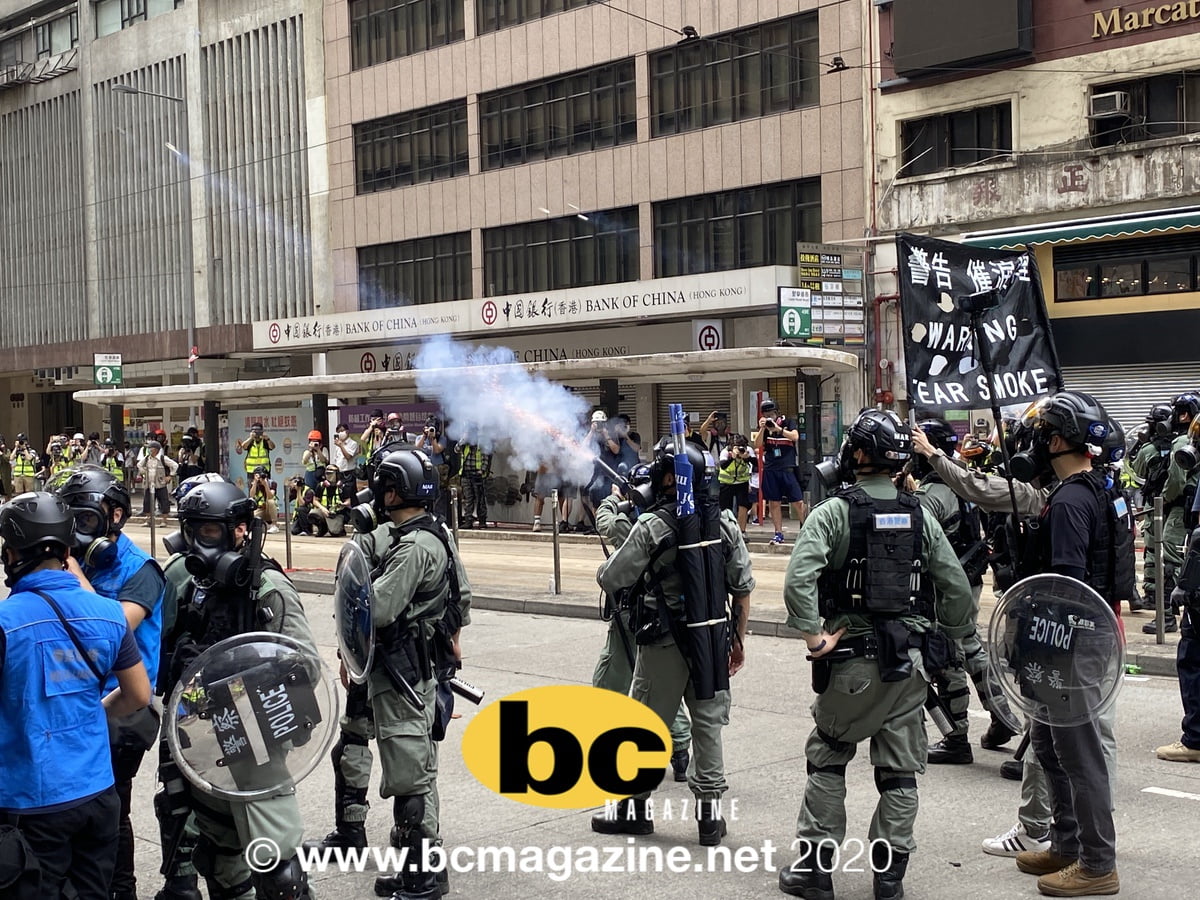
Hong Kong National Security Law: Article 43

The Implementation Rules for Article 43 of the Law of the People’s Republic of China on Safeguarding National Security in the Hong Kong Special Administrative Region (Implementation Rules) were gazetted 6 July and will take effect on 7 July 2020.

The Implementation Rules have the force of law, and details are as follows:

1. Search of Places for Evidence

The relevant rules are formulated with reference to various existing ordinances regarding the permission to conduct urgent search under exceptional circumstances, including the Firearms and Ammunition Ordinance (Cap. 238) and the Import and Export Ordinance (Cap. 60). For investigation of an offence endangering national security, a police officer may apply to a magistrate for a warrant to enter and search a place for evidence. Under exceptional circumstances (for instance, in urgent situations), a police officer not below the rank of Assistant Commissioner of Police may authorise his officers to enter the relevant place to search for evidence without a warrant.

2. Restriction on Persons under Investigation from Leaving Hong Kong

With reference to provisions under the Prevention of Bribery Ordinance (Cap. 201) which restrict a person under investigation from leaving Hong Kong, the rules authorise police officers to apply to a magistrate for a warrant to require a person who is suspected to have committed offences endangering national security to surrender his travel document, and to restrict that person from leaving Hong Kong, lest some of the persons involved in the case abscond overseas. A person who has surrendered a travel document may make application in writing to the Commissioner of Police or to a magistrate for its return and for permission to leave Hong Kong.

3. Freezing, Restraint, Confiscation and Forfeiture of Property Related to Offences Endangering National Security

The arrangements concerned are formulated with reference to the existing powers and provisions under the Organized and Serious Crimes Ordinance (Cap. 455) and the United Nations (Anti-Terrorism Measures) Ordinance (Cap. 575). If the Secretary for Security has reasonable grounds to suspect that any property is property related to an offence endangering national security, he may, by notice in writing, direct that a person must not deal with the property. The Court of First Instance may, on the application by the Secretary for Justice, order the confiscation of the property related to the offence. Anyone who knows or suspects that any property is property related to an offence endangering national security is obliged to make a disclosure to the Police Force as soon as is reasonably practicable, and must not disclose to another person any information which is likely to prejudice any investigation which might be conducted following that first-mentioned disclosure. In addition, the Secretary for Justice may make an application to the Court of First Instance for a restraint order or charging order to prohibit any person from dealing with any realisable property, or impose on any realisable property that is specified in the order a charge for securing the payment of money to the Government. Furthermore, the Secretary for Justice may also make an application to the court for confiscating the proceeds arising from an offence endangering national security and ordering the amount due be paid within a fixed period.

4. Removal of Messages Endangering National Security and Request for Assistance

If the Commissioner of Police has reasonable grounds to suspect that an electronic message published on an electronic platform is likely to constitute an offence endangering national security or is likely to cause the occurrence of an offence endangering national security, he may, with the approval of the Secretary for Security, authorise a designated police officer to request the relevant message publisher(s), platform service provider(s), hosting service provider(s) and/or network service provider(s) to remove the message; restrict or cease access by any person to the message; or restrict or cease access by any person to the platform or its relevant part(s). It is a reasonable defence if the technology necessary for complying with the requirement was not reasonably available to the publisher or relevant service provider; or there was a risk of incurring substantial loss to, or otherwise substantially prejudicing the right of, a third party.

If the publisher fails to cooperate immediately, and the relevant information on the Internet will continue to seriously affect members of the public, police officers may apply to the magistrate for a warrant to seize the relevant electronic device and take any action for removing that information as soon as practicable. Relevant officers may also apply to the magistrate for a warrant under specific circumstances to authorise police officers to request the relevant service provider to provide the identification record or decryption assistance as the case requires.

5. Requiring Foreign and Taiwan Political Organisations and Agents to Provide Information on Activities Concerning Hong Kong

If the Commissioner of Police reasonably believes that it is necessary for the prevention and investigation of an offence endangering national security, the Commissioner of Police may, with the approval of the Secretary for Security, by written notice served on a foreign political organisation or Taiwan political organisation, or a foreign agent or a Taiwan agent, require the organisation or agent to provide the Commissioner of Police with the prescribed information (including the activities, the personal particulars, as well as the assets, income, sources of income, and expenditure of the organisation in Hong Kong) in a prescribed manner within the specified period. The relevant rules are formulated with reference to the prevailing provisions of the Societies Ordinance (Cap. 151) under which Societies Officers may request the provision of information from societies.

6. Application on Authorisation for Interception of Communications and Covert Surveillance

To effectively prevent and detect offences endangering national security and protect the confidentiality of information related to national security, all applications for interception of communications and covert surveillance operations must be approved by the Chief Executive. Applications for the less intrusive covert surveillance may be made to a directorate officer of the Police Force designated by the Chief Executive. The authorising authority has to ensure that the covert operation concerned satisfies the proportionality and necessity tests before granting the authorisation. According to Article 43 of the National Security Law, the National Security Committee shall be responsible for supervising the implementation of the stipulated measures by the Police Force. On the other hand, the Implementation Rules provide that the Chief Executive may appoint an independent person to assist the National Security Committee in performing the aforementioned supervising responsibility. Furthermore, the Secretary for Security issues Operating Principles and Guidelines for the purpose of providing operating principles and guidance to officers of the HKPF regarding the making of relevant applications and the exercise of powers. Officers of the HKPF are required to comply with the provisions in the Operating Principles and Guidelines when performing any function under the relevant rules. The Operating Principles and Guidelines will be gazetted at the same time with the Implementation Rules.

7. Requirement to Furnish Information and Produce Materials

For the purpose of assisting an investigation into an offence endangering national security or the proceeds obtained with the commission of the relevant offence, the Secretary for Justice or police officers may apply to the court for an order to require the person concerned to answer questions within a specified time period, or to furnish or produce the relevant information or material. The provisions are formulated with reference to the relevant powers and provisions under the Organized and Serious Crimes Ordinance (Cap. 455) and the United Nations (Anti-Terrorism Measures) Ordinance (Cap. 575) currently.

Penalties

To ensure the effective implementation of the above relevant measures, there is also a need to provide in the Implementation Rules relevant penalties for contravention of the requirements.

For instance:

  • If a person who published a message fails to comply with the requirement of the police to remove the message endangering national security without reasonable excuse, the person is liable on conviction to a fine of $100,000 and to imprisonment for one year.
  • If a service provider fails to comply with the requirement to remove messages endangering national security, or to restrict or cease access to messages or platforms, or the request to provide assistance, the service provider is liable on conviction to a fine of $100,000 and to imprisonment for six months.
  • Furthermore, a foreign political organisation or Taiwan political organisation, or a foreign agent or a Taiwan agent, who fails to provide information as requested by the Police is liable on conviction to a fine of $100,000 and to imprisonment for six months unless it can prove that it has exercised due diligence and there have been reasons beyond its control.
  • If any information provided is false, incorrect, or incomplete, the person who provided the information is liable on conviction to a fine of $100,000 and to imprisonment for two years, unless the person has grounds to believe that the relevant information was true, correct and complete.

As for other items, the relevant offences and defence (if specified) are largely the same as the existing provisions in the laws that the Implementation Rules have made reference to.

The provision of defence provisions under appropriate circumstances provide appropriate defence for people who fail to comply with the requirements.

The above Implementation Rules are in compliance with the requirements concerned under the National Security Law and the Basic Law, including the requirements concerning the respect and protection of human rights.

Updated with the official translation 00:12, 7 July, which can be read here
HK Bar Association: NSL Erodes High Degree of Autonomy

Statement of the Hong Kong Bar Association:
The Law of the People’s Republic of China (“PRC”) on Safeguarding National Security in the Hong Kong Special Administrative Region (“HKSAR”)

1. The Law of the PRC on Safeguarding National Security in the HKSAR (“NSL”) was endorsed and adopted in the Mainland on 30 June 2020 and then promulgated by the Chief Executive so as to come into force in the HKSAR at 11 pm on the same day. The Hong Kong Bar Association is gravely concerned with both the contents of the NSL and the manner of its introduction.

2. Nobody in the HKSAR had seen so much as a draft or accurate summary of the NSL before its entry into force. In addition to the total absence of meaningful consultation, lawyers, judges, police and Hong Kong residents were given no opportunity to familiarise themselves with the contents of the new law, including the serious criminal offences it creates, before it came into force.

3. The NSL has so far only been published in Chinese language, rendering its contents inaccessible to many interested stakeholders. The omission of a contemporaneous authentic English version of the law is unusual given that a bilingual legal system operates in Hong Kong.

4. The NSL is a national law adopted under the Constitution of the People’s Republic of China (“PRC”) and the Basic Law. As stated in the instrument of promulgation signed by the Chief Executive, the NSL has been applied in Hong Kong under Article 18 of the Basic Law. The choice of this procedure, rather than any amendment to the Basic Law under Article 159, indicates that the Basic Law continues to operate with full force and effect. Yet the NSL contains numerous provisions that appear to be inconsistent with the provisions of the Basic Law.

5. Article 62 of the NSL states that the NSL shall prevail in the event of any inconsistency with the “local laws of the HKSAR”. This would appear to embrace all Hong Kong Ordinances, including the Hong Kong Bill of Rights Ordinance (Cap. 383), the function of which is to implement the International Covenant on Civil and Political Rights. The Basic Law itself, however, is a national law adopted by the National People’s Congress (“NPC”) under the PRC Constitution. It should be assumed that the NSL will be applied in a manner that is fully consistent with the Basic Law. How this is to be achieved, given the apparent inconsistencies between the NSL and the constitutional guarantees laid down in the Basic Law, is a matter that needs urgently to be addressed by the HKSAR Government.

6. It is incumbent upon the Chief Executive, who says that she was also in the dark about details of the law until yesterday, to clearly, fully and quickly explain to the general public how she sees the NSL working and what areas of life it may encroach upon.

7. A thorough study of the new law is needed to see how it may work and what effect it will have on existing laws and the justice system. However, the following issues and Articles of the NSL are of particular concern and it is right to address them now, albeit provisionally.

8. Where the central authorities decide to exercise jurisdiction in a given case, suspects can be removed to face trial in Mainland China. This is not extradition (where a person is removed to face trial for an offence in the receiving jurisdiction), and the usual judicial controls over extraditions appear not to apply. Mainland criminal procedures will be applied in such cases, in accordance with Articles 55-57, and this raises concern as to whether the rights of the accused to fair trial will be adequately protected or respected.

9. The power of interpretation is vested in the Standing Committee of the NPC. This has the potential to undercut the independent exercise of judicial power by the Courts of the Region (Articles 80 and 85 of the Basic Law).

10. The independence of the judiciary is undermined. The Chief Executive designates a list of approved judges for national security cases (Article 44). Appointment is on a yearly basis. Judges chosen by the executive can be removed from the list if their words or deeds endanger national security (Article 44).

11. Some people are held out to be above the reach of local law. The personnel of the Mainland National Security Agency (“NSA”) are meant to perform duties in accordance with law and not infringe the rights and interests of people and other organizations (Article 50), but the conduct of NSA and its personnel in the execution of their duties in accordance with law is not subject to local jurisdiction (Article 60).

12. The Special National Security Police Unit (“Special NS Unit”) is meant to apply the current law in carrying out its duties (Article 43), but then it enjoys a range of powers that go beyond those available under the existing laws (Article 43). Judicial control over covert surveillance is removed.

13. There is a reversal of presumption of bail (Article 42). The provision of mandatory minimum sentences strips away judicial discretion in sentencing. The right to trial by jury can be taken away by the Secretary for Justice on certain grounds without any residual discretion in this regard being left with the Courts of the HKSAR (Article 46).

14. The newly established National Security Council is said to be exempt from judicial review (Article 14).

15. Four groups of criminal offences are created. These are widely drawn and absent a clear and comprehensive array of publicly accessible guidelines and basic safeguards as to legal certainty and fair treatment, are capable of being applied in a manner that is arbitrary, and that disproportionately interferes with fundamental rights, including the freedom of conscience, expression and assembly:

(1) Secession (Article 20) can be committed with or without violence. This gives rise to concern whether this might operate to prohibit mere speech or any peaceful advocacy.

(2) Subversion (Article 22) requires the threat or use of force or “other unlawful means” (such as an unlawful assembly) to do one of the defined acts, which include serious interference with or obstruction of the authority of the HKSAR (Article 22(3)), and attacking government facilities rendering them unable to perform their functions normally (Article 22(4)). This gives rise to concern whether media criticisms or picketing might be caught under these provisions.

(3) Terrorist acts (Article 24) are vaguely defined. Supporting terrorists or terrorist activities (Article 26) is widely drawn and covers any person providing materials, labour services, transport, venue support, assistance and convenience to terrorist organisations or terrorist acts. It is uncertain whether the prosecution must prove that the accused knew that the person receiving such services is a terrorist.

(4) Colluding with foreign forces (Article 29) is vaguely defined. It covers directly or indirectly accepting a subsidy or support from a foreign organization with a view to carrying out hostile actions against the HKSAR (Article 29(4)). This gives rise to concern whether certain existing activities of academics, NGOs and media organizations which were lawful or not unlawful in the past might now be outlawed by these provisions.

16. Taken together, these and other provisions of the NSL operate to erode the high degree of autonomy guaranteed to the HKSAR under the Basic Law and the Sino-British Joint Declaration, and to undermine core pillars of the One Country Two Systems model including independent judicial power, the enjoyment of fundamental rights and liberties, and the vesting of legislative and executive power in local institutions. The Hong Kong Bar Association calls on the Chief Executive to reaffirm these foundational values of the HKSAR, and to commit her Government to applying the NSL in a manner that is fully consistent with the Basic Law and Hong Kong Bill of Rights.

Dated 1 July 2020

Hong Kong Bar Association

Book Fair Health Risks

The Hong Kong Book Fair is by far the SAR’s largest exhibition with over a million visitors attending last year looking for a bargain or three amongst the plethora of books on sale.

This year’s fair is the first ‘big’ public event in the city post Wuhan virus, and quite simply the HKTDC seem more interested in money than the safety of HongKongers attending the event.

The hygiene and social distancing measures leave a lot to be desired and there are apparently no limits on visitor numbers at the fair. A perfect super virus incubator… with no way to track or trace those who come into contact with an infected person.

The “Reading the World • Inspiring the Mind and Refreshing the Soul” themed fair offers a bit of everything from the casual reader looking for a summer/virus page-turner to the parent looking to drag their child away from a screen. Prices are cheap, and there will be lots of special items and box sets.

The new National Security Law will cause problems for sellers, at least one publisher has already decided not to sell some books at the fair. And you can surely expect a high profile smackdown during the fair of a publisher selling books some insecure twat in Beijing finds too truthful for his liking.

We at bc love the Book Fair, but this year our advice is to stay at home the health risks just aren’t worth it.

Hong Kong Book Fair
Date: 15-21 July 2020
Venue: HK Convention and Exhibition Centre
Tickets: $25
More info:
15-16 July 2020 (Wed-Thur) – 10am-10pm
17-18 July 2020 (Fri-Sat) – 10am-midnight
19-20 July 2020 (Sun-Mon) – 10am-8pm
21 July 2020 (Tue) – 9am-5pm

photos: hkbookfair

Laurel Chor Honoured by IWMF

Congratulations to Hong Kong women’s rugby international Laurel Chor who was named an honoree in the 2020 Anja Niedringhaus Courage in Photojournalism Award.

Chor has been given an honourable mention in the International Women’s Media Foundation’s (IWMF)awards for her coverage of the Hong Kong protests and showing the region’s struggle for democracy, freedom and human rights.

The award was created to celebrate the courageous work of female photojournalists. Learn more about this year’s awardees on website.

image: hkrugby

+ 1, Lest We Forget

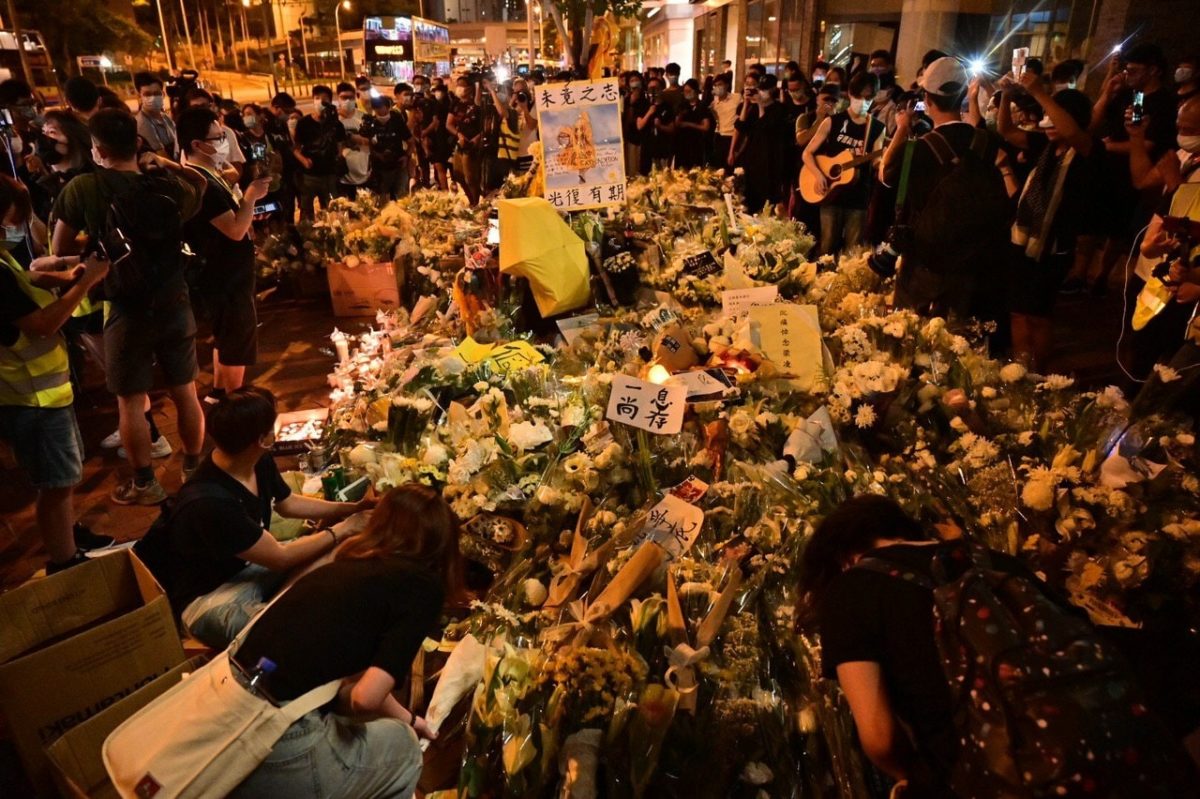
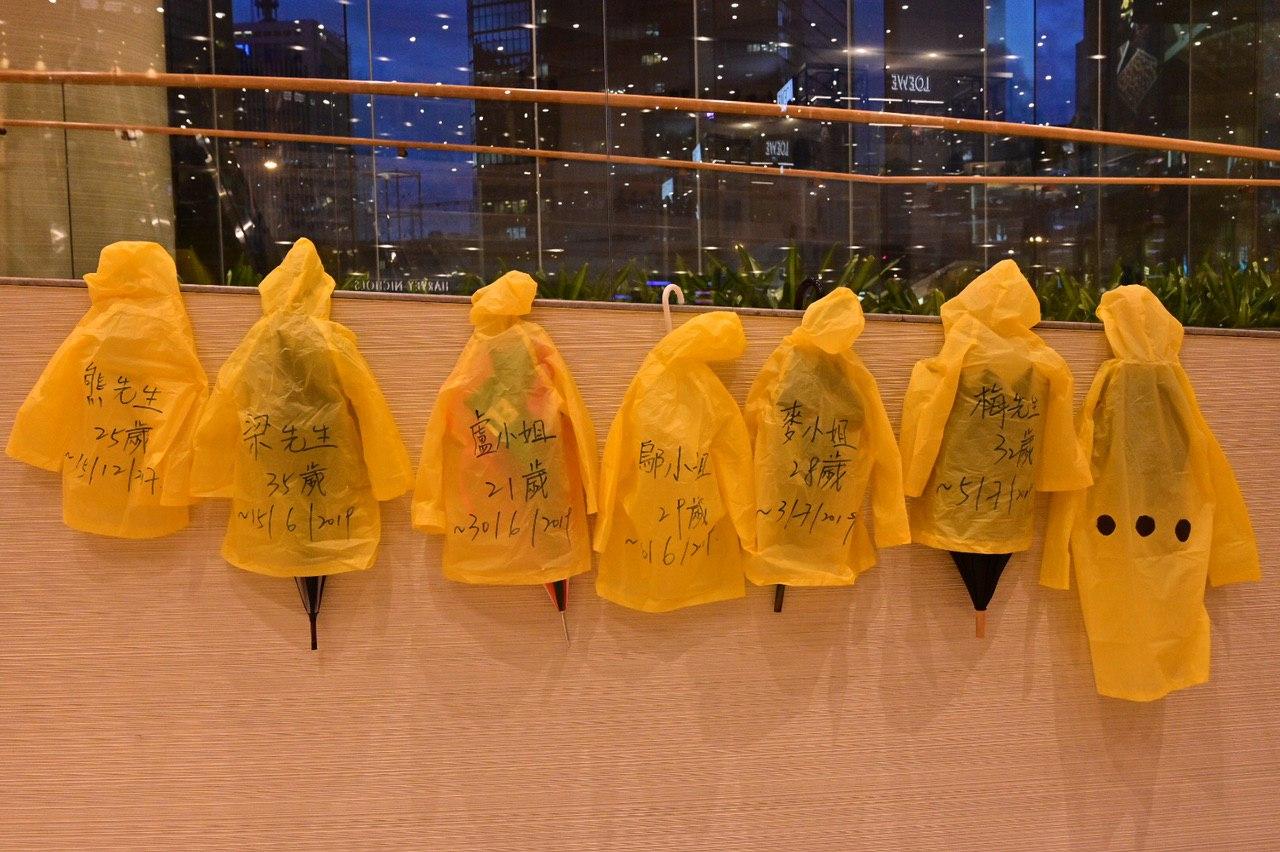
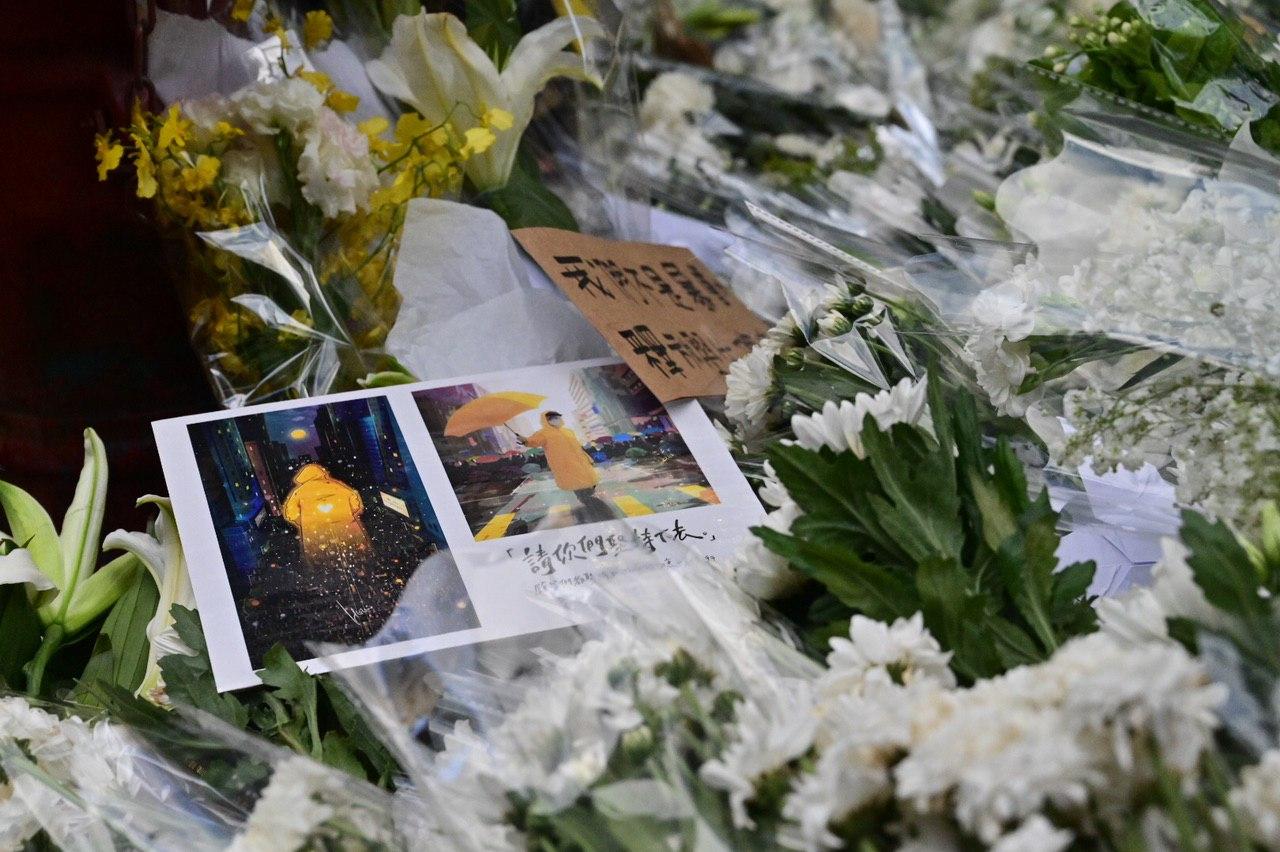
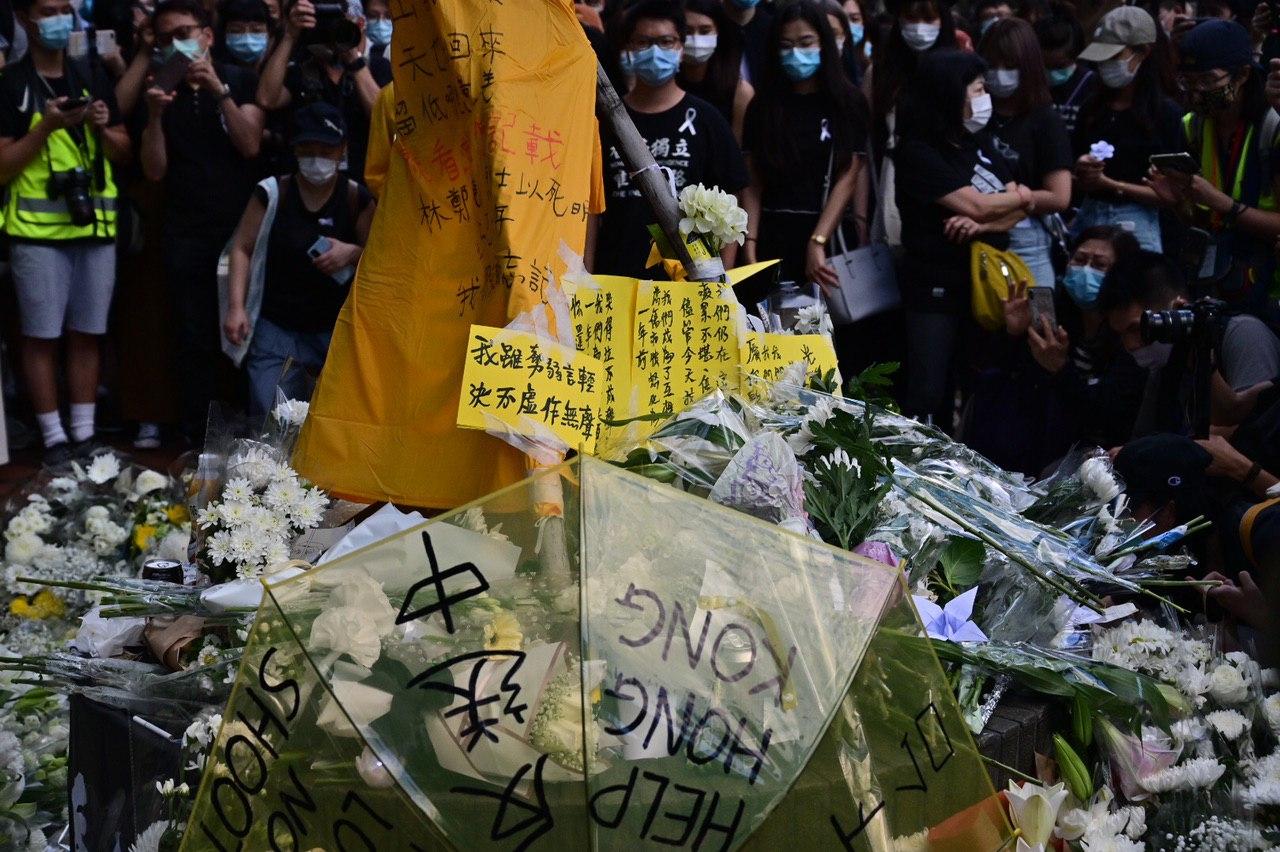
Thousands of Hongkongers queued peacefully for hours in Admiralty on the first anniversary of Marco Leung Ling-kit death during the antiELAB protests wearing a yellow raincoat bearing the Chinese words “Carrie Lam kills Hong Kong; the police are cold-blooded”.

The solemn memorial for the first person killed, on the 15 June 2019, during the antiELAB demonstrations saw people lay flowers offer prayers and numerous renditions of Glory to Hong Kong.

After six hours of peaceful remembrance as the last of the massive line of mourners laid their flowers the police, needing to intimidate rather than police, marched up in riot gear banging shields and shining bright lights.

photos: internet

Joint Statement from the UK, Australia, Canada, and United States on Hong Kong

Joint statement by UK Foreign Secretary Dominic Raab, Australian Foreign Minister Marise Payne, Canadian Foreign Minister François-Philippe Champagne, and US Secretary of State Michael Pompeo responding to China’s proposed new security law for Hong Kong.

Signatories to this statement reiterate our deep concern regarding Beijing’s decision to impose a national security law in Hong Kong.

Hong Kong has flourished as a bastion of freedom. The international community has a significant and long-standing stake in Hong Kong’s prosperity and stability. Direct imposition of national security legislation on Hong Kong by the Beijing authorities, rather than through Hong Kong’s own institutions as provided for under Article 23 of the Basic Law, would curtail the Hong Kong people’s liberties, and in doing so, dramatically erode Hong Kong’s autonomy and the system that made it so prosperous.

China’s decision to impose the new national security law on Hong Kong lies in direct conflict with its international obligations under the principles of the legally-binding, UN-registered Sino-British Joint Declaration. The proposed law would undermine the One Country, Two Systems framework. It also raises the prospect of prosecution in Hong Kong for political crimes, and undermines existing commitments to protect the rights of Hong Kong people – including those set out in the International Covenant on Civil and Political Rights and the International Covenant on Economic, Social and Cultural Rights.

We are also extremely concerned that this action will exacerbate the existing deep divisions in Hong Kong society; the law does nothing to build mutual understanding and foster reconciliation within Hong Kong.

Rebuilding trust across Hong Kong society by allowing the people of Hong Kong to enjoy the rights and freedoms they were promised can be the only way back from the tensions and unrest that the territory has seen over the last year.

The world’s focus on a global pandemic requires enhanced trust in governments and international cooperation. Beijing’s unprecedented move risks having the opposite effect.

As Hong Kong’s stability and prosperity are jeopardised by the new imposition, we call on the Government of China to work with the Hong Kong SAR Government and the people of Hong Kong to find a mutually acceptable accommodation that will honour China’s international obligations under the UN-filed Sino-British Joint Declaration.

This statement was published on the UK Government website on 28 May, 2020.

Hong Kong Protests – Wanchai – 24 May, 2020

After Beijing’s announcement of the unilateral imposition of a ‘National Security’ law on Hong Kong the first post Wuhan virus protest demonstration occurred, after the police rejected an application for a march, on 24 May, 2020.

Thousands of people walked peacefully from Causeway Bay towards Wanchai to register their protest against Beijing’s actions. The streets resonating to the strains of what has become Hong Kong’s unofficial national anthem Glory to Hong Kongincluding a plaintive mouth-organ version.

And as with the marches and demonstrations in 2019, attendees were peaceful – until hundreds of police dressed in riot gear and armed to the teeth with all their new ‘toys’ arrived to create tensions where none existed before.

Looking to annoy and irritate for no reason:
Blocking shoppers from using the escalator to access the bridge from Pacific Place to the Admiralty MTR and forcing people to climb the stairs outside.

30 or so police charging up onto the pedestrian bridge at Wanchai MTR threatening people going to the station, blocking the entrance for five minutes – until the about twenty people trying to use the bridge had descended the stairs to walk to use another entrance/cross the road before they ran off…

Launching rounds of tear gas down Hennessy Road, when the road was empty…

Intimidating reporters through stop and search, spraying them with pepper spray.

Apparently a couple of ‘protester’s broke the windows of a store in Causeway Bay – but there are so many plainclothes police deployed now, who have (sadly) been seen caught and charged with initiating violence and criminal damage, that it’s impossible to describe them as anything other than persons dressed in black until further information, is known.

https://bcmagazine.smugmug.com/Bcene-photos/2020/Hong-Kong-Protests-Wanchai-24-May-2020/i-DmRRvXw

What was caught on video (credit @WilliamYang120) was a policeman in riot uniform walking into a convenience store and stealing a bottle of water. Why hasn’t he been arrested and charged? If it was a member of the public, they would have been. After the video emerged on twitter, police (media liaison officers?) went to the shop to pay for the water.

https://bcmagazine.smugmug.com/Bcene-photos/2020/Hong-Kong-Protests-Wanchai-24-May-2020/i-rdCT8RF

Under Beijing’s new law, likely you would not be able to read this article. The press would not be allowed to take photos and videos of the many acts of violence the police have perpetrated on HongKongers over the last year.

If the police have nothing to hide why do they actively try to stop the media from recording arrests and enforcement actions?

https://bcmagazine.smugmug.com/Bcene-photos/2020/Hong-Kong-Protests-Wanchai-24-May-2020/i-jSF7Kkh

More images here

https://bcmagazine.smugmug.com/Bcene-photos/2020/Hong-Kong-Protests-Wanchai-24-May-2020/i-krVQsm4/A