What to wear
Wear shoes, or trainers no sandals
Wear shorts or trousers, no skirts, no dresses.
Wear clothes without distinguishing motifs or logos.
Weather permitting, wear, long sleeve shirts or hoodies.
What to bring
Your telephone with a good battery recharger.
Camera, with a large clean memory card + spare
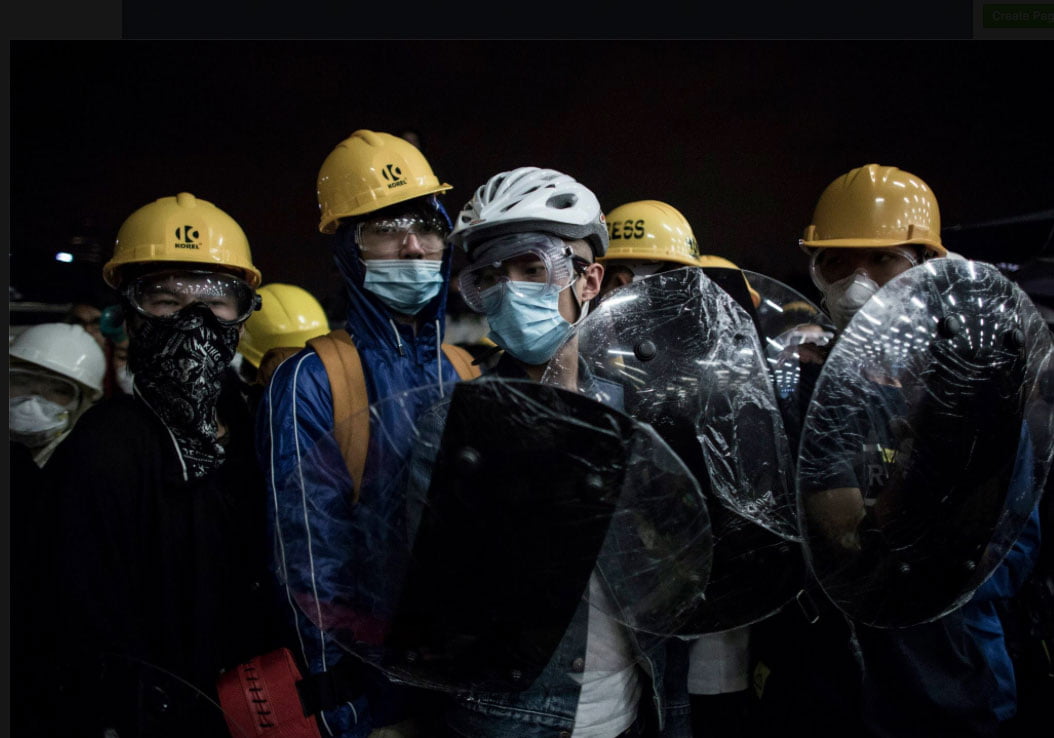
Goggles / protective glasses to cover your eyes.
Mask to cover your face.
A pack of saline solution to help people who have been pepper sprayed.
If you can afford it, buy a body camera.
Don’t carry anything that may be misconstrued as a weapon. (Example scissors)
Don’t carry anything that could incriminate you with illegal activity. (Example, plans, notes or lists.)
Before you leave
Inform your family or friends before going to any protest.
Encrypt your phone with a good access code. You can easily encrypt your phones with a six figure lock, not the usual four digits. This is much more secure. Do not tell ANYONE you don’t trust your phone code at any time for any reason.
Make sure your phone locks after one minute of inactivity.
Create an Emergency Plan
Your Emergency Plan will kick in if you are assaulted or arrested. Share this with your close buddies and discuss at length what to do.
Your buddies will know your Emergency Plan and will be responsible for getting you a lawyer, or attend your social media if you can not.
Be mentally prepared for what you are facing. Protesting in Hong Kong now is not a joke. Both the police and communist forces wish you ill.
Accessing the protest site
If possible, don’t access any protest sites from the nearest MTR exit. Take alternate exits where possible, or better still, come in from different routes.
Check trusted Twitter, Facebook and other social media feeds for up-to-date information on what’s going on at the protest site before you arrive.
Don’t subjugate to HKID checks unnecessarily. Be polite, but ask why you’re being checked, or what crime they suspect you of committing. The police will cite the immigration ordinance, ask them if they suspect you of breaking immigration law.
If possible, sit on the floor. Say you feel faint. If they are insistent that an ID check is necessary, if you are brave enough, go to the police station to reveal your ID. If every police ID check needs to be transferred to the station this will be a huge drain on critical police resources. It’s a hassle to go to the police station, but see it as your contribution to the overall protest on the day.
Always be polite and accommodating in your actions, but you do not need to yield to an ID check and bag search easily. Technically, the police powers for ID checks and searches are granted so the police can a) apprehend people they have good reason to believe have committed or will commit a crime. b) people who have broken immigration laws. As a protester you are none of these, so you have no reason to make their unreasonable request for ID checks simple and fluid.
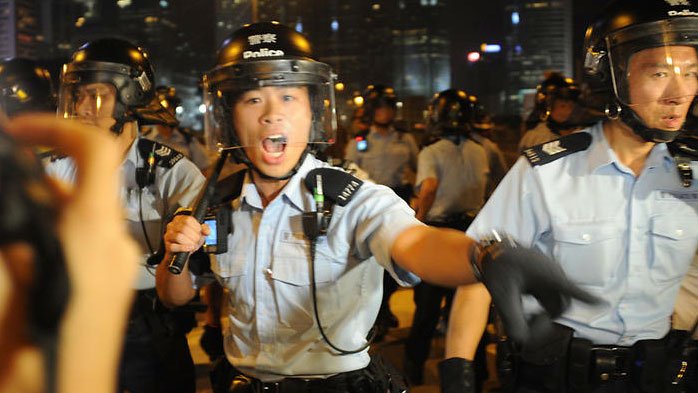
 Gangs of black cops hang around nearby MTR exits and like to intimidate individuals by swarming them into a corner. Make their jobs pointless and use different exits. Once you have been picked out for an ID check, you may as well try and soak up as many police as possible. So, be courteous but slow and methodical in your actions. Someone will be filming, to make sure the police don’t overstep their powers. Most of all be brave.
Although surgical masks are a way to try and conceal your identity they also highlight you as a potential protester, who the police will target for searches on the perimeters of protests. If you want to wear a mask, best to put it on as soon as you reach the protest area and not before exiting the MTR.
There’s no point wearing a mask if you are also wearing a distinctive design T-shirt too. Police use identifying marks on hats and shirts to ID people. Go to the shops and buy yourself some black T-shirts for protests if you truly want to look anonymous.
Camera, Video
Use your camera! Video the police, especially if they are attacking to arresting someone. Your video may save that person from jail by showing the police lied about what happen. Video blue ribbon and pro-Bejing supporters if they try to incite violence by aggressive shouting or actions.
Upload and share you video publicly to fb groups and news sites, your video is no good to anyone stuck on your home computer.
Make backups and duplicates on different hard drives.
At the protest
Caged off protest areas are in fact a form of illegal crowd control. The police use them as an excuse for protecting protesters and facilitating pedestrian flow but, in fact, their greatest function it to restrict your liberty at critical times. Let the protest superstars and group flags set up in these areas. As a supporting protester, it is best to orbit these areas slowly and calmly. Keep moving if the police ask you, don’t cause a blockage but refrain from entering these cages as they are traps.
If the police build a line, move past it as quickly as possible. Never face-off a police line. Move and probe, move and probe. Police tactics are based on containment. As a protester you should be like water and move out as soon as you feel you’re being contained or restricted.
Police like plans and like to create control areas and police lines to control crowds into small restricted areas. When arriving on site, try to work out roughly what the police control area is and expand it into other areas. Look for unconventional exits and routes to other areas. Congregating just one street outside the control area puts the police off balance and under pressure. Once you see that they have adapted to your new area, find another area, or go back to the original control area. There may now be a weakness in their plan as they become over-extended. Most police and security guards know little about what’s going on. They are in terrible fear of making a mistake and fear crowds that are highly fluid.
The police want everything to go as planned. They are under enormous pressure not to lose control. As a direct action protester, your role is to make the police feel like they’re losing control, even if they’re not. When this happens, they make mistakes. When police make operational mistakes they usually turn to violence to compensate. Needless violence has the potential to mobilize more protesters either on the day or in the future.
Police hate to move. As a protester, movement is your greatest weapon. During the Occupy, protests often suffered from a lack of mobility. It is no longer tactically worthwhile to get into long, tense stand-offs with police over irrelevant areas. There are no sacred sites to protest in Hong Kong. If police amass force, go somewhere else. You are not losing face. Police hate to move into a new area they’re unprepared for and their plans always collapse. They are effectively a bunch of Yes-men leading a group of idiots. They don’t deal with spontaneity and fast moving groups.
If you don’t want to be arrested, don’t shout or engage in heated conversations with the police. Many arrests simply come from police frustration and anger.
As a protester, just being there is a powerful statement. You do not need to verbally confront the police or communists to make your voice heard more.
Getting arrested
If you have been targeted for arrest: Don’t fight. Don’t resist. The best policy is as soon as you are being accosted by two or more police let them drop you to the floor and assume an unresponsive state. Military special forces train their operatives to be passive, but hyper-alert when captured. If you fight and resist it will only inflame the officers aggression towards you and you could be looking at assaulting a police officer charges. They want this. The police know they have the power and they want to use it to fuck you up in any way they can. Not just physically in the arrest but for months and months afterward.
Many times, most of the arresting police will have no clue as to why you have been targeted for arrest. They are essentially an organized gang, conditioned to pile in on any protesters who gets targeted.
Most times the only charge they can pin on you is resisting arrest, obstructing a police officer or assaulting a police officer. There is often no instigating charge as to why you were originally chosen for arrest. Don’t give them the opportunity to increase their violence level. Stay down, pretend to be semi-conscious, hurt and unresponsive but hyper alert to everything that is going on. Feign sickness, feign injury but make it convincing. Absorb as much time, manpower as possible in a passive, non-violent way.
Once they try to move you, then you need to shout out your name and importantly demand to know, why you’re being arrested and that you want your rights read to you there and then.
Shout – WHY AM I BEING ARRESTED? READ ME MY RIGHTS NOW!
Many people will be recording your arrest on video. Police should not detain anyone’s liberty without first telling them exactly why they are doing it and what are their rights. The police almost always ignore this important arrest step under the erroneous notion that it is not operationally practicable at the time. Therefore, you must make sure that you give the police this opportunity as soon as they try to move you. It will serve you well when being charged or in court.
Do not shout out political slogans, this is a total waste of time. Police can use this against you and say you were acting noncompliant and resisting arrest.
If you can speak English well, then definitely shout out in English and demand all communication in English. The police can not dictate to you what language you wish to communicate in.
Try to remember the uniform numbers of the police who arrest you and what they faces look like.
Once you’ve been arrested
Once you’ve been arrested, this is not the time to act like a tough guy. The police will be looking to take their frustration out on you with physical and verbal violence. Again, even the toughest SAS operatives are trained not to be confrontational when captured, and instead look weak. If you show strength, it will invite violence. The Hong Kong’s police force, behind its First World outer image, is a Third World, dictatorship guard force, they WILL use violence against you.
Once in the police van, keep you head down, don’t make eye contact, don’t speak, don’t rise to any provocations. The police will verbally and physically attack you while in the van. Most of the front line PTU guys are sub-intelligent, high school drop-outs, who can only express their frustrations at the political situation which they don’t understand, through violence. Give them as little opportunity as possible to increase the violence. They will be looking to do this at every opportunity.
Once at the police station
Repeatedly ask what crime you have committed whenever you get a chance. This is the only thing you should push with determination.
Every time the police want to talk to you, ask them what you have been charged with and push it further if it’s not clear.
You have the right to request a lawyer. Keep bugging them if they are stalling you.
Do NOT tell them your phone encryption. You are under no obligation to do this. It will not make things better for you if you give them your phone access code. In fact it will make it worse, in the long-term.
You only need to provide info on your ID card and a mailing address. The police will demand that you give them more information. You are under no obligation to give them anything, and it will not make your time in the police station any better, no matter what they say.
If you are holding a foreign passport, ask for an interpreter or consulate contact. If you look Chinese, then they will almost certainly say no, but you have the right to insist on consulate protection.
During any interviews or if they ask you to make a statement. Just say ‘nothing to say.’
Reply to all of their questions with ‘nothing to say.’ Don’t forget, in the current common law system, the burden of proof is ‘supposed’ to be on them to prove your guilt. They will start to build a case based on what you say as invariably the arresting police officers have almost no decent recollection of why you were arrested. So say NOTHING. Let them make the case, don’t help them in any way.
Repeatedly ask for lawyer.
Ask for water and toilet breaks as many times as you want.
They will write a statement and ask you to sign, DO NOT SIGN!
You can sign a copy that is ‘Right to Arrestee’. But not any statement or the interview record.
They will take away your phone, ask them why. They will say, for evidence. You should protest this through your lawyer often. Being arrested for illegal assembly and taking your phone do not correlate. You are not a terrorist, even though many in the police force would like to see you treated as one.
You will most likely have to stay in custody for many hours, or even days. It’s very boring, but you can go to toilet as many times as you want. Try to keep yourself cheerful. It’s not as bad as it seems. The officers will try to use the long, boring hours to soften you up so they can get something from you to help secure a conviction. The less you give them, the better it is for you. Remember, any questions say, “I have nothing to say.”
Be extra nice to the police who are in charge of your custody. They are usually nicer than the pumped-up PTU that arrested you. They can also mess with your food up or stall your toilet break if you’re rude to them. Again, remember, once you’ve been arrested it is not time to act like the tough guy. You are completely at their mercy. Make your visit to the cells as boring as possible.
If you’re not starving, don’t eat their food, they could tamper with it.
CID will also interrogate you. They will invariably use violence against you if you are a male If you are a female, a madam will play the good cop role. Don’t fall for it. No one in the police station has your best interest at heart. Every police officer you encounter would like to see you go to prison, even if you’re not guilty of anything.
They will ask you if you have been to Occupy Central, your answer should be, “nothing to say or Occupy Central never happened”.
If they beat you up, tell your lawyer and ask for a medical check-up as soon as possible.
At the hospital
Doctors or nurses might also ask you why you were at the protest, don’t answer, treat them the same as if they are police officers. Anything you say can be recorded by the accompanying police officer and used against you in court at a later date.
Remember where you go for the check-up. Emergency room or medical clinic?
Remember your doctor and nurse’s name.
Remember the time.
While visiting the hospital, the police may try to be nice to you and extract information as evidence against you. Don’t tell them anything.
The police will take away your medical record. This is why it’s important to remember the details so you can retrieve it from the hospital at a later date. (Not sure if the police have right to do this, but they do)
After you’re released
1) Try to approach Progressive Lawyers Group or similar organizations.
2) Appeal your bail condition if they’re unreasonable.
3) Apply for legal aid.
4) Talk to your lawyer often. Tell him/ her your difficulties
5) The legal process fucks you up and brings emotional problems. Talk to people. You are not alone.
6) Record all your expense because of the case. Tell the court you want to claim it if you are judged innocent
7) Bring your paper and pen to record the judgment from the magistrate. Magistrate statement is not uploaded on the website.
8) Inform your lawyer if you have any new evidence. Don’t surprise your lawyer.
9) Ask for the statement from the prosecutor. You will need to go through the duty lawyer office for that. And pay for the copies. But get the statement from the cops and study them to find loopholes (which are everywhere because they fucking lie)
10) Duty lawyer office is on your side and helping you. Be nice to them so you don’t get screwed by bureaucracy
Dealing with police violence
CS Gas
The only effective way to deal with CS gas is to move out of its way as quickly as possible.
If you have taken in a lot of gas, stay calm, don’t panic, keep moving away from the gas.
You can flush your eyes with water.
The military teaches soldiers to stand in the wind, put your arms out and let the burning sensations pass.
Don’t rub or scratch any burning sensations.
If you continue to feel shortness of breath after the attack, seek medical help.
Pepper Spray
The most effective way to deal with pepper spray is saline solution.
Water, although temporarily soothing doesn’t help.
As a protester, you should try to carry some vials of saline solution on you at all times.
If you have been pepper sprayed, stay calm, stay still and wait for help to come to you. Lie on the ground if safe to do so.
In a confusing situation, you may not be noticed very quickly if you stumble around, blind in the crowd.
If you lay on the floor, you will be more noticeable as a casualty and medics can seek you out to help you.
If you get hit directly in the eyes, you can expect to have all but no vision until someone comes and washes out your eyes with saline solution. Water doesn’t clear it
The burning sensation can last for hours. But don’t worry, after the initial shock the sensation is manageable.
If you have been in the close vicinity of a pepper spray attack, remember, when you get home, to rinse your head under the shower by leaning forward to wash away any residue. Keep your eyes closed.
Baton charges
On 28th September, the police employed CS Gas on a large crowd of people and caused a huge international backlash. On the day of the Admiralty Escalation, at the end of Occupy, pumped-up PTU used baton charges twice and dispersed almost the same amount of protesters without even close to the same backlash. Since then, batons are the weapon of choice for the police.
In fact, hitting unarmed civilians with reinforced sticks is probably the most brutal form of street suppression next to shooting them, but the HK Police Force does not care about image anymore. They only care about what works to satisfy their communist masters.
If you get enough aggressive police wielding batons at people who are essentially non-violent, then nothing can stop the crowd routing other than retaliatory levels of extreme violence. On the day of the Admiralty Escalation, PTU officers didn’t even carry shields when they attacked the crowds, this is how confident they were that they would not be attacked back. What kind of police force attacks a crowd without shields? The answer is easy, a very cocky confident one. As the HKPF know that the Hong Kong public are not yet ready to employ such retaliatory violence, they will continue to use baton strikes as their preferred means of crowd dispersion into the future.
Even helmets and shields are no match for an aggressive baton charges. The best way to deal with a baton charge is;
a) Don’t stay in one place long enough to allow the police time to carry out one.
b) Get out the way as quickly as possible. Remember, if the protest is like a wall, then hitting it hard with a baton has maximum effect. If the protest is like water then is has no effect.
Most of all, stay safe, keep moving. You can’t out violence the police force as they have AR-15s and if that doesn’t work the PLA have tanks.
But you can out maneuver them constantly and make them lose control.
This is your greatest weapon as a non-violent, direct action protester.
Agent Provocateurs
All police forces use agent provocateurs. The HKPF is no different. It is in their interest to make protests look chaotic and disorderly. It plays to their communist master’s narrative and helps them get big budgets to buy more gear to oppress people. However, the police’s desire to create disorderly protests is always trumped by their overriding desire to keep general order and control of the whole situation. Meaning that agent provocateurs have an interest in making trouble where there are a lot of police nearby to contain it. Likewise, agent provocateurs are rarely interested in relocating to places where there are fewer police or acting spontaneously outside of designated protest areas. Be wary of people who seem unafraid of large groups of police. They’re either stupid or cops.
Hong Kong undercovers are often very easy to spot. A G-Shock watch is always a giveaway. What kind of adult wears G-shocks other than the police in HK? If you suspect, someone is an agent provocateur, talk to them and find out why they’re at the protest. Ask them political questions. Any real protesters will be happy to express their opinions on the specific reason they’re there. Most police have very little clue about why people are protesting and are reluctant to express any opinions.
Distinguishing, Spontaneous Protesters from Agent Provocateurs
Spontaneous Protester are looking to exploit any weakness quickly. They may call on you to act fast and move quickly to achieve a goal. If there are little or no police around, you can be fairly confident they’re Spontaneous Protesters and not agent provocateurs. As stated before, agent provocateurs, like to stir up trouble when the police are there to contain it. By way of example, if the police gear up in front of protesters, agent provocateurs will tell you to stay and face the police off, Spontaneous Protesters will tell you to leave and regroup somewhere else.
After the protest
Upload and share your video and photo. If you saw something happen write down what you saw while the memory is still fresh. Share and tag what you saw happen. You would want that help if something happened to you, make sure your images are there to help others.