Tin Mei Avenue – 12 June, 2015

http://bcmagazine.smugmug.com/Bcene-photos/2015/Tin-Mei-Avenue-12-June-2015/49900290_h6S2fm#!i=4127552918&k=TxZ52qr

Over the last 6 months the Tin Mei Avenue protest site has grown and evolved, there’s a kids area, library, art area, recycling, church, art installations, solar power to provide electricity… Tomorrow or so the rumour goes the police will look to clear the tents and everything else under the premise that the goods have been abandoned by their owners. An interesting skirt around the law, which has taken the government lawyers six months come up. Some of the tents do look pretty manky, but others are very well cared for and obviously inhabited by protestors.

http://bcmagazine.smugmug.com/Bcene-photos/2015/Tin-Mei-Avenue-12-June-2015/49900290_h6S2fm#!i=4127542890&k=vFggndZ

The earlier ‘clearances’ were carried out backed by questionable court injunctions and the police displayed an obvious relish in destroying peoples property – sometimes without even checking if a tent was empty. So a question for our lawyer readers, do the police have a duty to exercise care and attention when removing ‘property they claim is abandoned’ or can they just destroy and damage it with impunity? Guess we’ll find out.

Click on any photo to access the full gallery of images

http://bcmagazine.smugmug.com/Bcene-photos/2015/Tin-Mei-Avenue-12-June-2015/49900290_h6S2fm#!i=4127553640&k=t9WsZN7

http://bcmagazine.smugmug.com/Bcene-photos/2015/Tin-Mei-Avenue-12-June-2015/49900290_h6S2fm#!i=4127559124&k=PTJpXTS

http://bcmagazine.smugmug.com/Bcene-photos/2015/Tin-Mei-Avenue-12-June-2015/49900290_h6S2fm#!i=4127545165&k=6k5xRvV

http://bcmagazine.smugmug.com/Bcene-photos/2015/Tin-Mei-Avenue-12-June-2015/49900290_h6S2fm#!i=4127561391&k=4M8bNQh

http://bcmagazine.smugmug.com/Bcene-photos/2015/Tin-Mei-Avenue-12-June-2015/49900290_h6S2fm#!i=4127552096&k=4qkxWDV

http://bcmagazine.smugmug.com/Bcene-photos/2015/Tin-Mei-Avenue-12-June-2015/49900290_h6S2fm#!i=4127554233&k=FBhrxtZ

http://bcmagazine.smugmug.com/Bcene-photos/2015/Tin-Mei-Avenue-12-June-2015/49900290_h6S2fm#!i=4127555644&k=phGNQR3

26 Anniversary Tiananmen Square Vigil @ Victoria Park – 4 June, 2105

http://bcmagazine.smugmug.com/Bcene-photos/2015/June-4-Tiananmen-SquareVigil/49717605_gNfHkr#!i=4107482741&k=Z2sVgBL

http://bcmagazine.smugmug.com/Bcene-photos/2015/June-4-Tiananmen-SquareVigil/49717605_gNfHkr#!i=4107483310&k=gh4CGPw

Over 100,000 people gathered in Victoria Park to remember those murdered by Chinese troops in Beijing 26 years ago.
Click on any photo to access the full gallery of images

http://bcmagazine.smugmug.com/Bcene-photos/2015/June-4-Tiananmen-SquareVigil/49717605_gNfHkr#!i=4107474619&k=zLWG6fF

http://bcmagazine.smugmug.com/Bcene-photos/2015/June-4-Tiananmen-SquareVigil/49717605_gNfHkr#!i=4107493536&k=q78KC7n

http://bcmagazine.smugmug.com/Bcene-photos/2015/June-4-Tiananmen-SquareVigil/49717605_gNfHkr#!i=4107474202&k=XQMpD2d

http://bcmagazine.smugmug.com/Bcene-photos/2015/June-4-Tiananmen-SquareVigil/49717605_gNfHkr#!i=4107492990&k=X6FMnwL

http://bcmagazine.smugmug.com/Bcene-photos/2015/June-4-Tiananmen-SquareVigil/49717605_gNfHkr#!i=4107472208&k=m3QNkVW

http://bcmagazine.smugmug.com/Bcene-photos/2015/June-4-Tiananmen-SquareVigil/49717605_gNfHkr#!i=4107471762&k=8R6vV7p

http://bcmagazine.smugmug.com/Bcene-photos/2015/June-4-Tiananmen-SquareVigil/49717605_gNfHkr#!i=4107416476&k=j2J8QpX

http://bcmagazine.smugmug.com/Bcene-photos/2015/June-4-Tiananmen-SquareVigil/49717605_gNfHkr#!i=4107475684&k=jt2VwdQ

http://bcmagazine.smugmug.com/Bcene-photos/2015/June-4-Tiananmen-SquareVigil/49717605_gNfHkr#!i=4107469500&k=jbF8c2N

Radio Beijing Broadcast – 3 June, 1989

https://soundcloud.com/james-t-griffiths/radio-beijing-broadcast-june-3

A rare broadcast recorded by G. Jack Urso working the overnight shift at WQBK-1300 AM on 3 June, 1989. It is dignified and speaks for itself. It is also remarkable because it came from China’s official radio outlet, Radio Beijing the precursor to what is now China Radio International.

According to Urso the announcer’s name is Yuan Neng and he was transferred from his job for broadcasting the report. The script was by Wu Xiaoyong, Deputy Director of the English Language Service at Radio Beijing. His father, Wu Xueqian, at the time was a Senior Council Vice-President. According to reports, Wu was put under house arrest for two to three years and later moved to Hong Kong.

Transcript: This is Radio Beijing. Please remember June the third, 1989. The most tragic event happened in the Chinese capital, Beijing.
Thousands of people, most of them innocent civilians, were killed by fully armed soldiers when they forced their way into the city. Among the killed are our colleagues at Radio Beijing.
The soldiers were riding on armored vehicles and used machine guns against thousands of local residents and students who tried to block their way. When the army convoys made a breakthrough, soldiers continued to spray their bullets indiscriminately at crowds in the street.
Eyewitnesses say some armored vehicles even crushed foot soldiers who hesitated in front of the resisting civilians.
Radio Beijing English Department deeply mourns those died in the tragic incident and appeals to all its listeners to join our protest for the gross violation of human rights and the most barbarous suppression of the people.
Because of this abnormal situation here in Beijing, there is no other news we could bring you. We sincerely ask for your understanding and thank you for joining us at this most tragic moment.

Here’s the story of how the broadcast survived http://www.aeolus13umbra.com/2012/05/lost-voice-of-radio-beijing.html


26th Anniversary of June 4

http://bcmagazine.smugmug.com/Bcene-photos/2014/Tiananmen-25th-Anniversary/41425488_4FHBHt#!i=3292634297&k=6w7tNML

The first ‘June 4’ since the ‘birth’ of the Umbrella Movement sees a wide range of commemorative vigils being held across Hong Kong. Their is increased awareness among HongKongers of the need for accountable government locally. That the Chief Executive CY Leung is more interested in pleasing those in Beijing than the people he was ‘elected’ to represent.

HongKongers still believe that they should be advocating the development of democracy on the Chinese mainland, the mantra of the June 4 vigil in Victoria Park. What has changed since last year is the awareness of the suffocation of Hong Kong by Beijing, the lack of accountability of government officials, rampant nepotism, the death of one country-two system and the stealthy transformation of Hong Kong from the city they love and are proud to call home to ‘just another Chinese city’.

Candlelight Vigil for the 26th Anniversary of June 4
Organized by: The Hong Kong Alliance in Support of Patriotic Democratic Movements in China
Venue: Hong Kong Victoria Park Football Field, Causeway Bay – 8pm
More: Started in 1990, the largest and longest-running commemorative event for June 4, over 180,000 attended last year.

Hong Kongers’ June Fourth Rally
Organized by: Civic Passion
Venue: Hong Kong Cultural Center, Tsim Sha Tsui – 8pm
More: Started in 2013, over 3,000 attended last year

June Fourth Commemoration
Organized by: Hong Kong University Students’ Union
Venue: Sun Yat-sen Place, University of Hong Kong, Sai Ying Pun – 7:30 pm.

Memorials for the Tiananmen Square protests of 1989
Organised by: Proletariat Political Institute, Civic Passion and other localism groups will be Venues:

Hong Kong Island
– Siu Sai Wan Estate Bus Terminus (19:00-21:00)
– Shau Kei Wan MTR Station Exit A3 (19:00-21:00)
– Hing Fat Street Entrance, Victoria Park, Causeway Bay (16:00-18:00)

Kowloon East
– Kai Tin Shopping Centre, Lam Tin (Outside) (16:30-18:30)
– Yue Man Square Park, Kwun Tong (17:00-19:00)
– Ngau Tau Kok Road Flyover Rest Garden, Kowloon Bay (19:00-21:00)

Kowloon West
– Fat Tseung Street MTR Exit, Un Chau Shopping Centre, Sham Shui Po (19:30-21:30)
– Prince Edward MTR Station Exit B1 (20:00-21:30)
– Clock Tower, Tsim Sha Tsui (19:00-22:30)
– Mei Foo MTR Station Exit A (19:00-21:00)

New Territories East
– Shatin MTR Station Exit A (17:30-19:30)
– Tai Wai MTR Station Exit A (18:00-20:00)
– City One MTR Station Exit D (19:00-21:00)
– University Railway Station Bus Terminus (19:00-21:00)
– Tai Po Market MTR Station Exit A (19:00-21:00)
– Sheung Shui MTR Station Exit C (19:00-21:00)

New Territories West
– Tai Ho Road, Citywalk, Tsuen Wan (Open Ground) (18:30-20:00)
– Kwai Chung Shopping Centre, Kwai Fon (Outside) (19:00-21:00)

On the 26th Anniversary of Tian’anmen Massacre – an Open Letter to Fellow Students in Mainland China

On the 26th Anniversary of Tian’anmen Massacre – an Open Letter to Fellow Students in Mainland China

By a group of overseas Chinese students, letter penned by Gu Yi, published: May 27, 2015

This letter, written in Chinese, has been circulating through email groups and on social media since May 20. Yesterday the Chinese Communist Party-run Global Times gave it a free publicity push – double strength (here and here). – China Change

We are a group of Chinese students born in the 1980s and 1990s and now studying abroad. Twenty-six years ago on June 4th, young students, in life’s prime with innocent love for their country just as we are today, died under the gun of the People’s Liberation Army in Beijing’s streets. This part of history has since been so carefully edited and shielded away that many of us today know very little about it. Currently outside China, we have been able to access photos, videos and news, and listen to the accounts of survivors, unfettered. We feel the aftershocks of this tragedy across the span of a quarter century. The more we know, the more we feel we have a grave responsibility on our shoulders. We are writing you this open letter, fellow college students inside China, to share the truth with you and to expose crimes that have been perpetrated up to this day in connection with the Tian’anmen Massacre in 1989.

Around 9:30 on the night of June 3rd, 1989, gun shots tore the tense streets of Beijing. On that day, troops enforcing martial law opened fire on students and residents who had protested peacefully for nearly two months. The demonstrations were initiated by college students but people from all walks of life participated, numbering over 300,000 at the peak. The center area of the peaceful sit-in was in Tian’anmen Square. It was a time when the nation had been encouraged by the relatively freer and more open political atmosphere throughout the 1980s, people had had trust in the Communist Party and held expectations of a government that called itself “the people’s government.” At a time when economic crisis threatened and corruption worsened, students and residents wanted to have a dialogue with the nation’s leaders to make the country a better place. Never for a moment did the peaceful demonstrators dream that a planned massacre was awaiting them.

Per orders from Deng Xiaping, Li Peng and other Chinese leaders, the PLA forced its way toward Tian’anmen Square to clear out the student occupiers. They drove tanks with machine guns mounted on top, and they shouted “I will not attack if I am not attacked” while opening fire on civilians. On its route at Muxidi (木樨地), several hundreds of unarmed civilians fell in streaming blood shouting “Fascists!”, “Murderers!” Among them was Yan Wen (严文), a 23-year-old mathematics student at Peking University, shot dead by bullets to his thigh. He was there with a camera to record history. Another was the 17-year-old high school student Jiang Jielian (蒋捷连) who had been determined to go to the Square to be with older brothers and older sisters there. 19-year-old Wang Nan (王楠) was yet another who fell, and the bullet-holed helmet he wore is now on display in Hong Kong. The 21-year-old Wu Xiangdong (吴向东)had with him a death notice that read, “For democracy and freedom, for the fate of the nation, every ordinary person has a responsibility.” According to witness accounts, the troops that had entered the Square beat clusters of students with batons even though the two sides had already agreed on the student withdrawal; at Liubukou (六部口), tanks chased, and ran over, a column of students who had left the Square and were walking back to their campuses. Fang Zheng, a senior at Beijing Sports University, lost his legs to speeding tank tracks. There had been unconfirmed reports that pockets of protesters were encircled and executed en mass. Around June 4th, massacres also occurred in Chendu, Sichuan province, and elsewhere.

In mid and late June that year, the government issued three versions of a “report on quashing the riots.” It portrays the civilians as a rioting mob and presents precise numbers of dead and wounded among the troops and the loss of vehicles, but at the same time, it is vague and contradictory on the number of civilian deaths. Questions remain: why were the weaponized troops unable to defend themselves [if there was indeed a riot]? If they were unable to defend themselves, how did they break through the blockade of hundreds and thousands of civilians? What caused the people of the nation to gather in the streets of the capital to prevent the troops from moving forward? The report claims that the civilian deaths were few. If so, why repeatedly alter the number of death and never publish an accurate count? If the report is to be believed, the civilians attacked the soldiers first. If so, why was the first death among soldiers not reported until more than three hours after the troops opened fire and blood bathed Muxidi? During the protest, police once confided to Zhou Fengsuo (周锋锁), one of the student leaders in the Square, that “Beijing’s public order has never been so good” as the last two months of “disruption” and “riot.” According to the memoir of Hou Dejian (侯德健),[the Taiwanese poplar singer] who stayed until the last moment in the Square, students insisted on non-violent principles even at the last moment of forced withdrawal and threw away any possessions that could be used to attack.

Meanwhile, the atrocities of the troops were recorded in photos of bleeding wounded and stacked bodies, videos of shooting civilians, hospitals’ body identification notices and body counts, shocking reportage by Wu Xiaoyong (吴晓镛)of Central People’s Radio Broadcast, not to mention the persistent questioning of Tiananmen Mothers over the last twenty-six years. If all of these are lies as the government claims they are, what is making these parents, now white-headed and frail, seek justice for so many years while sacrificing a normal life?

Last year on Capitol Hill in Washington, DC, this writer met with some of the survivors of the massacre. The MC read aloud a partial list of the dead, and people proceeded in a long line to pay respects with flowers. From hundreds to thousands, there have been different numbers and we might never know exactly how many died that year in Beijing. But people witnessed many shocking crimes, and perhaps many more occurred at unknown corners without witnesses. Some witnesses have grown old, others have passed away, and still others dare not speak even though they now live safely overseas. The Chinese government has never dared to publicize the exact number of deaths, and in dealing with a historical event of such magnitude, it first portrayed it, solemnly, as an “anti-revolutionary riot,” and then over the time it downplayed it as a “political ripple,” systematically erasing it from the collective memory of a generation. June 4th has become a “sensitive” time each year, an unmentionable date. Such an enforced taboo is a reverse proof that the atrocities against civilians in 1989 are something the Communist Party would rather keep mum about, although this is a Party with a murderous history of civil war, anti-rightist movements, and the Cultural Revolution.

A classmate of this writer believes that the events from twenty-six years ago are too far back, today’s China is getting better and better, and he lives a very happy life.  As I walked on the Avenue of Eternal Peace two years ago, I saw no trace of blood or bullets but skyscrapers and the bustling of people and cars. We live in prosperity, but what kind of prosperity it is – our imagination is constantly challenged by the astonishing scale of high and low ranking officials, the marriage of power and money that the students opposed twenty-six years ago has become the prevalent model of the state economy. Xi Jinping’s regime waves the banner of anti-corruption, but ordinary people are thrown in jail as trouble makers for holding signs asking officials to disclose their assets.  The clans of Deng Xiaoping and Li Peng, whose hands were stained with the blood of students, have become filthy rich. We are shocked to discover that we are governed by officials whose family members live abroad. In other words, we are ruled by a bunch of foreigners, and China is merely the goose that lays golden eggs for them.

Twenty-six years ago, students wanted freedom of the press; and twenty-six years later, all media are still controlled by the Party’s Propaganda Department, and journalists and lawyers are being put in jail for invented crimes. Gao Yu’s crime was leaking state secrets, or the ruling party’s latest ideological guidelines. Some of my friends are of the opinion that those who draw the Party’s ire do so because they are famous and conspicuous. We, on the other hand, are mere ordinary people who don’t care about politics. But are ordinary people safe from harm? Think about Xia Junfeng (夏俊峰), Xu Chunhe (徐纯合), and the daughter of Tang Hui (唐慧). No one is safe in a dictatorial system.

When North Korean soldiers crossed the border and killed innocent Chinese, and when Burmese bombers bombed Chinese territory, this government merely “protested.” Come to think about it, the PLA’s only military victory in the last thirty years was the bloodbath in Beijing’s streets on June 4th, 1989!

This is fragile and distorted prosperity. Stability maintenance expenses are as big as the military budget; the Great Fire Wall is being stacked ever higher. They all indicate that, at any moment, truth can come to broad daylight, and the prosperity can collapse.

A voice inside China that says, the Tian’anmen Massacre was unfortunate, but the Chinese Communist Party has learned a lesson, and we don’t want to obsess over it. But the suppression has never stopped: the truth about June 4th is still covered up, the dead still do not have closure, some survivors have served long prison terms, Tian’anmen Mothers are prevented by security police from paying visits to their children’s burial sites. Last year, a group of scholars was detained for having a home seminar to remember that day, and a female student at the Beijing International Studies University was disappeared for proposing a technology to spread the truth about the Tian’anmen Movement.

Meanwhile, the man who made the decision to open fire on students and civilians has been admired and extolled as the chief designer [of China’s economic rise], and neither officers nor soldiers who directed the killings have been tried in a court of law. Do not expect this regime to plead guilty. Nor will they confess to errors as they did after the Cultural Revolution ended, because they know all too well that, once they acknowledge their crimes, they will likely be engulfed by the people’s wrath. They claim they have the ownership of a “universal truth,” but they have built high walls on the Intenet, and they hide in dark rooms to delete news as well as comments. Such is their “confidence in guiding theories” and their “confidence in the path chosen.”

This is the killer’s regime. The gun fire on June 4th shot dead their legitimacy, and what they have accomplished since June 4th is not important. We do not ask the CCP to redress the events of that spring as killers are not the ones we turn to to clear the names of the dead, but killers must be tried. We do not forget, nor forgive, until justice is done and the on-going persecution is halted.

This writer and the signers of this letter know very well that there are consequences in writing and signing this letter. But this is our responsibility, and we hope fellow students inside China know this part of history, and reexamine the violence and atrocities since the Communist Party’s beginning in 1921. From Jingangshan (井冈山, one of CCP’s early bases in Jiangxi province) to Tian’anmen Square, millions of innocent people have died, and we must remember them, but also reflect on wave after wave of sufferings. We have no right to dictate your minds or ask you to do something, but we do have a dream: we dream that, in a future not too far from now, each one of us can live in a country free of fear where history is restored and justice realized. This is the China Dream we have – we, a group of Chinese students studying abroad.

Written by:
Gu Yi (古懿, University of Georgia, [email protected])

Co-signed by:
Feng Yun (封云, University of Central Lancashire)
Chen Chuangchuang (陈闯创, Columbia University)
Zheng Dan (郑丹, Adelphi University)
Chen Bingxu (陈炳旭, Missouri State University)
Jin Meng (金萌, Northwest Missouri State University)
Lu Yan (卢炎, University at Albany, SUNY)
Wang Xiaoyue (王宵悦, University at Albany, SUNY)
Wang Jianying (王剑鹰, University of Missouri)
Meng Li  (St. John’s University)
Wu Lebao (吴乐宝, Melbourne, Australia)

You can sign it too:
https://docs.google.com/forms/d/1mXmqrVd-rmeahW9j8lrBMwupdfIaS3KE2bbKfW5r2sY/viewform

Translated by China Change
Chinese origina《海外中国留学生六四26周年致国内同学的公开信》

Anodyne Attempt to Rewrite History

http://bcmagazine.smugmug.com/Bcene-photos/2015/Umbrella-Festival-Opening/49316366_5Ctxzg#!i=4063384701&k=fcsrMtW

The ‘Umbrella Festival’ opened today at the JCCAC in Shep Kip Mei. You’ll have noticed the inverted commas I put around the festival name, yes the festival poster is yellow and has an umbrella on it – but that’s about all the ‘festival’ has in common with 2014’s umbrella protests. When one of the festival’s curator’s Prof. Katrien Jacobs stands on stage and starts joking about making her speech notes on a post-it like on the Lennon Wall before continuing with “As a foreigner I found the protests sexy and fun and that’s what we want to do with this festival, keep the fun going…”

http://bcmagazine.smugmug.com/Bcene-photos/2015/Umbrella-Festival-Opening/49316366_5Ctxzg#!i=4063376599&k=tJJfR6G

The Umbrella Festival is an anaemic poorly conceived joke. An insult to the HongKongers who stood up for their beliefs and voiced a desire for Universal Suffrage to precipitate the removal of the morally corrupt politicians and civil servants who are destroying the Hong Kong we love and call home with their arse-licking of the mainland amidst the lining of their own pockets.

The JCCAC is an interesting space and there are mini-exhibits and photos spread over it’s 9 floors. I didn’t see the words universal suffrage anywhere, not a single mention about the underlying reasons for the protest. Not a mention of the police violence – there was one photo of the tear gas. The only comment about police violence was in a theatrical piece by FM Theatre Power (see video) that was part of the opening ceremony, but even that was tempered when the police become ‘caring mothers’ and embraced the demonstrators.

There is a mini-Lennon wall – but no explanation of the what it symbolized or how it got started… You can add you own post-it, but the ones already posted were banal and safe, as were the chalk drawings. For ‘fun’ as Professor Jacobs described it, get a poster and walk around to get ‘umbrella’ stamps at different parts of the building…

http://bcmagazine.smugmug.com/Bcene-photos/2015/Umbrella-Festival-Opening/49316366_5Ctxzg#!i=4063397027&k=GBDQS5g

Another of the curators claims as they opened the festival was to celebrate the Umbrella protests art… the protest zones were vibrant artistic and discoursive hubs with new things being created and revealed everyday. Yet almost none of that is here, why not?

There are some interesting close-up photos – but no photos which show the scale or size of the protests. In fact I couldn’t find an exhibit which even explained that there were three protest zones.

What could have been a fascinating examination of the protests and the art that emerged over the 79 days instead reeks of a government funded snow job, an attempt to rewrite one of the seminal moments in Hong Kong’s history.

http://bcmagazine.smugmug.com/Bcene-photos/2015/Umbrella-Festival-Opening/49316366_5Ctxzg#!i=4063380757&k=ZbwQphB

Umbrella Festival @ JCCAC – 17 May, 2015

http://bcmagazine.smugmug.com/Bcene-photos/2015/Umbrella-Festival-Opening/49316366_5Ctxzg#!i=4063370553&k=n5V8CMV

The Umbrella Festival opened at the Jockey Club Creative Arts Centre in Shep Kip Mei
Click on any image to see the full gallery of images

http://bcmagazine.smugmug.com/Bcene-photos/2015/Umbrella-Festival-Opening/49316366_5Ctxzg#!i=4063366462&k=2Pf2vB7

http://bcmagazine.smugmug.com/Bcene-photos/2015/Umbrella-Festival-Opening/49316366_5Ctxzg#!i=4063372125&k=dbW8s8d

http://bcmagazine.smugmug.com/Bcene-photos/2015/Umbrella-Festival-Opening/49316366_5Ctxzg#!i=4063394343&k=DqWBBv4


http://bcmagazine.smugmug.com/Bcene-photos/2015/Umbrella-Festival-Opening/49316366_5Ctxzg#!i=4063367559&k=CtGPL4b

http://bcmagazine.smugmug.com/Bcene-photos/2015/Umbrella-Festival-Opening/49316366_5Ctxzg#!i=4063367706&k=dZFv4fm

http://bcmagazine.smugmug.com/Bcene-photos/2015/Umbrella-Festival-Opening/49316366_5Ctxzg#!i=4063382705&k=crmQQSP

http://bcmagazine.smugmug.com/Bcene-photos/2015/Umbrella-Festival-Opening/49316366_5Ctxzg#!i=4063379376&k=3JSvfDH

http://bcmagazine.smugmug.com/Bcene-photos/2015/Umbrella-Festival-Opening/49316366_5Ctxzg#!i=4063371681&k=CXZDw9P

http://bcmagazine.smugmug.com/Bcene-photos/2015/Umbrella-Festival-Opening/49316366_5Ctxzg#!i=4063392153&k=9TqQQg5

http://bcmagazine.smugmug.com/Bcene-photos/2015/Umbrella-Festival-Opening/49316366_5Ctxzg#!i=4063390822&k=9S8pgz2

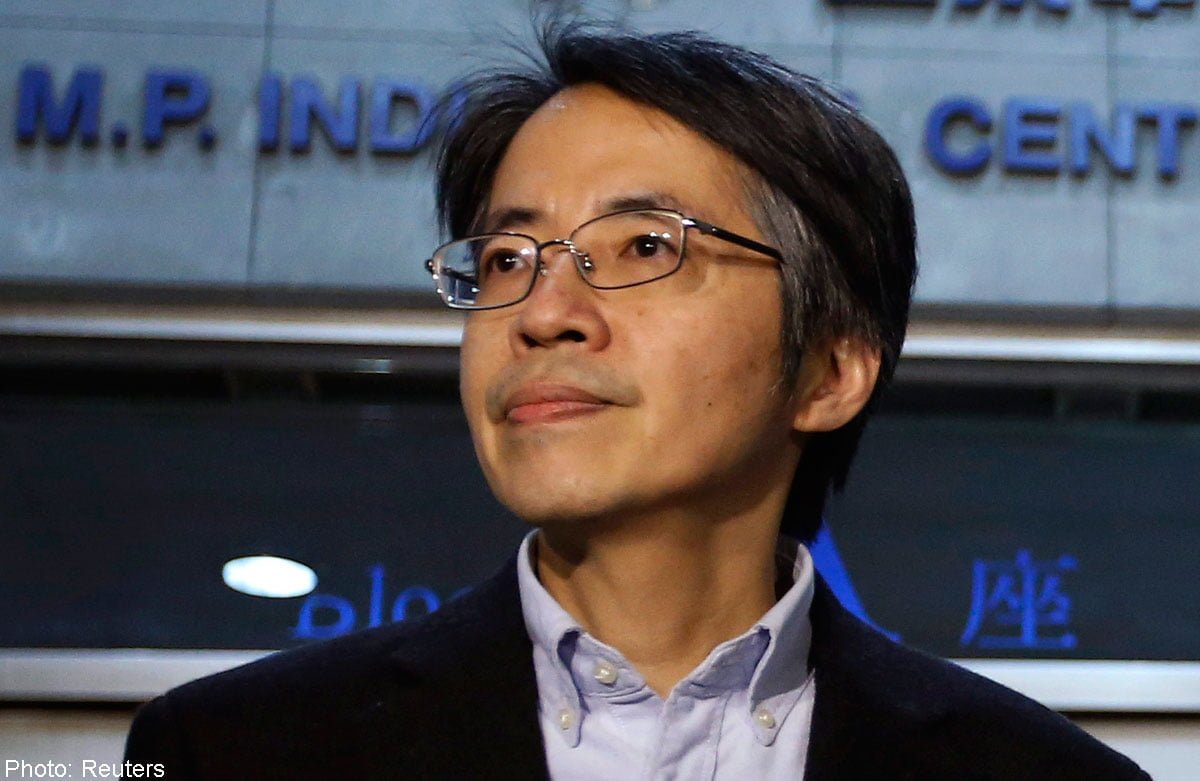
Attacked Ming Pao Journalist Kevin Lau speaking at the Human Rights Press Awards

Attacked Ming Pao Journalist Kevin Lau speaking at the Human Rights Press Awards

Journalist Kevin Lau spoke at the Human Rights Press Awards annual luncheon on 9 May, 2015 about being attacked in February 2014. The attack, by chopper wielding assailants who hacked at his legs, took place not long after Lau was sacked as the Editor of Ming Pao, and left him bleeding on the pavement.

Here is his address on why “Now is the worst time – and best time – to be a journalist in Hong Kong.”

Dear Guests and Friends,

In the past two years, people have frequently asked whether press freedom in Hong Kong was under threat. Now I think the answer is crystal clear. It is. In this sense, now is the worst time to be a journalist in Hong Kong.

For those of you who still have any doubts about this, who still believe that the Hong Kong press still enjoys the same freedoms it used to have, let me ask you a few questions.

1. How often do you see the proprietor of a highly popular newspaper coming out to admit publicly that Mainland corporations including major banks are withholding advertisements for political considerations?

2. How often do you see the owner of a highly popular news website coming out to admit publicly that he was closing down his news operation for fear of political reprisal?

3. How often do you see a commercial broadcaster shutting up a highly popular current affairs program host by suddenly terminating her contract?

4. How often do you see over a hundred reporters, editors and news anchors of a major television station signing a joint public statement to criticize the news handling decision of their news controller?

5. How often do you see a veteran journalist who had been the chief editor of an influential newspaper being brutally attacked with a
chopper outside a public park in broad daylight?

When these unbelievable things all happened within a time span of twelve to fifteen months, do you think it is pure co-incidence? For every single incident mentioned here, one might say that perhaps it was an isolated case, that perhaps it was not directly related to press freedom. However, when they came one after another like dominos, the effect on public perception and public confidence was debilitating.

I have stayed in this field for 25 years. I know the climate changes when I see the signs.  This is not the first time. Back in 2003 to 2004, when we had a similar situation of an unpopular Chief Executive trying to sell an unpopular policy to the public, we would see powerful people stretching their muscles to try to stamp out any critical voices in the mainstream media. Last time the unpopular policy was national security legislation. This time it is universal suffrage with a nomination screening mechanism. History is repeating itself.

If you need more evidence, to prove that press freedom in Hong Kong is really under threat, I would refer you to the numerous statements and reports published by the Hong Kong Journalists Association, the Foreign Correspondents Club and other professional organizations. The alarm bell has been rung again and again. You may also look at the findings of journalism professors at local universities on media self-censorship, which has gone up, and media credibility, which has gone down.

The latest signal of this worrying trend is the government decision not to prosecute a criminal suspect who was alleged to have assaulted two television journalists performing their duty of reporting in a public gathering. The apparent reason was that the suspect and the actors were allowed to wear hats and masks covering most of their faces in the identification parade, which rendered the victim’s task of identifying the attacker impossible.

Recently I was asked by some young journalism students whether they should join the news profession in light of all these unfavourable developments. I told them all the inconvenient truths. The sad reality is that in many respects now is probably the worst time to be a journalist in Hong Kong. But, nonetheless, I advised them to go ahead and become journalists if they are really interested in news reporting. Why? Because in other respects now is also the best time to become a journalist in Hong Kong with an eye on the future.

Hong Kong will maintain its role as an international financial centre. This is a simple fact recognized by everyone, including the authorities in Beijing. The Chinese leaders may have a different view from the local community regarding democratic development in Hong Kong. But there is no dispute on HK’s role as an international financial centre. During the Occupy Movement last year, Beijing gave the green light for the cross-market stock purchases program between Shanghai and Hong Kong. The timing of the decision surprised many people. It reflected a strong determination to keep HK’s stock market vibrant and useful for Mainland enterprises to raise capital.

As we all know, a truly international financial centre must maintain an environment where there is a free flow of information. You cannot shut Bloomberg down. You cannot ban Facebook or Twitter or Youtube. Last year when the Apple Daily’s highly popular news website was paralyzed by hackers, apparently coming from the north, they decided to upload all their digital news onto Facebook and Youtube. Unless you could shut down the entire internet, you could not stop them from publishing their stories. As a result, the attacks stopped.

Digital news is a totally new ball game. In the past, we, the editors in charge of the news rooms of mainstream media outlets, dictated what the public could read or watch. We the editors decided which item went on the front page and became headline news. Now the game has changed. In the digital world, the crowd decides which piece of news they prefer to read and to share. This crowd judging and crowd sharing has changed the balance of power between the editors and the readers. The accumulated hit rate and online viewership of any news item depends on the crowd, not the editors.

Also, the 24 hours real time functioning nature of the highly transparent digital news world renders media self-censorship extremely difficult. If a news room chief in Hong Kong decides to ban a piece of newsworthy digital material from publication, he or she may soon find the material spreading like wildfire on the Internet, and the decision to censor it will quickly become a news story in itself.

For young people who grew up in the digital age, they can acquire the invaluable communication skills necessary in the new era much more quickly than their senior news managers or executives. They know how to push the gist of the news to their readers’ smartphones apps or their social networks. They know how to make it sticky and catchy. In just a few years, they would have accumulated online news making and spreading experiences that cannot be matched by traditional journalists, even those with 20 years of experience.

Diving into the digital news world might be a risky business for some media organizations. Subscriptions are hard to find. Until recently, advertising revenue was thin. But the scene is quickly changing. Online advertising has been growing at a double digit year on year since 2013. Readership migration from traditional to digital is unstoppable. In the coming few years, digital first will no longer be a slogan. It will become a business necessity. Young journalists have nothing to lose if they dive into this trend right now.

So, in this respect, now is the best time to be a journalist of the new media in Hong Kong.

Source: www.humanrightspressawards.org
Editing: bc magazine