
New Quarantine Hotel List Announced: 20 February – 20 April, 2021

An updated list of 36 designated quarantine hotels for the period 20 February to April 20 (second cycle) was released today.

27 per cent of the total number of rooms (~2700 rooms) in the second cycle will cost less than $500/night almost double that of the first cycle.

Hotels which have declined to continue participating in the ‘designated hotel program’ are: Luxe Manor, O’ Hotel, Eco Tree Sai Ying Pun, Mojo Nomad Aberdeen

The list of designated hotels in the second cycle and related details such as room rates have been uploaded to www.designatedhotel.gov.hk.

Or download the pdf [gview file=”https://www.bcmagazine.net/wp-content/uploads/2021/01/designated-hotel-list-v2_en.pdf”]

South Lantau Marine Park Draft Map Available for Public Inspection

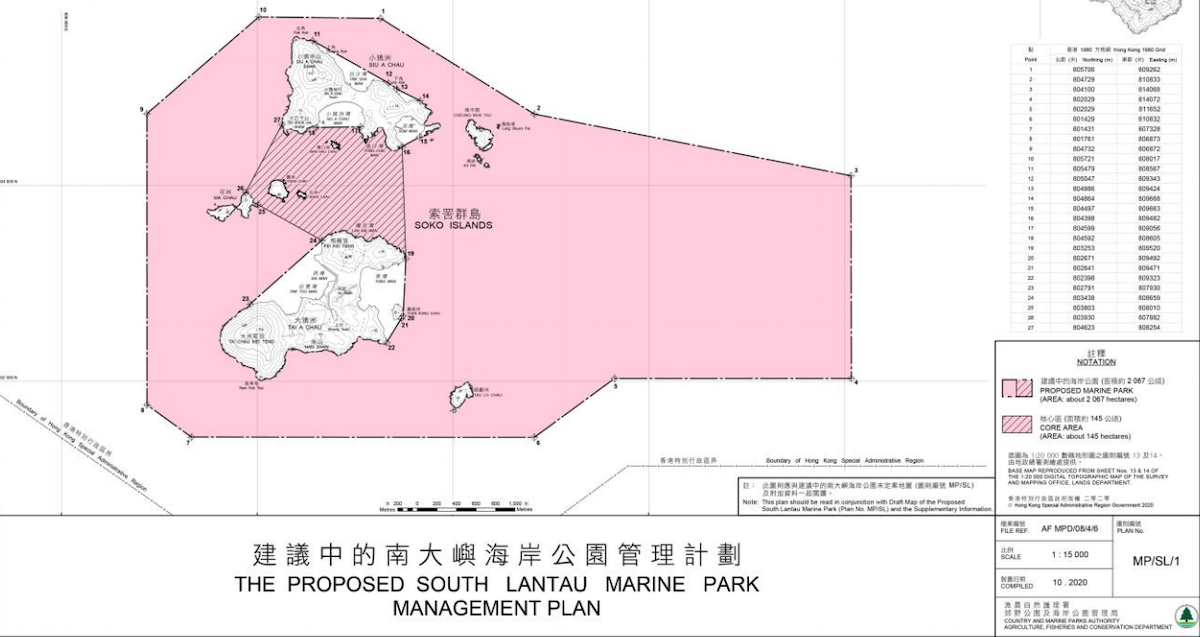
To better protect the ‘pink’ dolphin and other marine habitats, the Government is proposing to create a South Lantau Marine Park (SLMP) in the waters surrounding the Soko Islands and between the Soko Islands and Shek Kwu Chau.

The draft map of the proposed 2,067 hectares SLMP has been prepared by the Country and Marine Parks Authority in accordance with the Marine Parks Ordinance (Cap. 476) and released for public inspection and comment within 60 days (28 Feb, 2021) of its 31 December 2020 publication. Details are available on the AFCD’s website: www.afcd.gov.hk/english/country/cou_vis/cou_vis_mar/cou_vis_mar_wha/mp_sl_draftmap.html.

The waters south of Lantau are important habitats for the Chinese white dolphin, the finless porpoise and other marine life. After the designation of the SLMP, the area of protected marine habitats will be significantly increased, which will be conducive to maintaining the marine biodiversity and its sustainability” said a spokesperson for the Agriculture, Fisheries and Conservation Department (AFCD).

A Core Area of about 145 hectares between the Soko Islands as shown pink hatched black on the proposed SLMP map will be demarcated for further conservation of marine and fisheries resources there. Fishing activities will not be permitted within the Core Area.  While artificial reefs will be deployed within the Core Area to provide shelter for marine life. 

Unfortunately, the released proposal contains no details or recommendations on how the SLMP will be protected and the fishing restrictions etc enforced.

“Any person who intends to oppose the draft map may, within the period of 60 days after the notice is published in the Gazette, submit a written statement of objection, stating the nature of and reasons for the objection, and proposed alterations to the draft map, if any, to the Authority at the headquarters of the AFCD,” the spokesman continued.

Penumbral Lunar Eclipse in Hong Kong on November 30

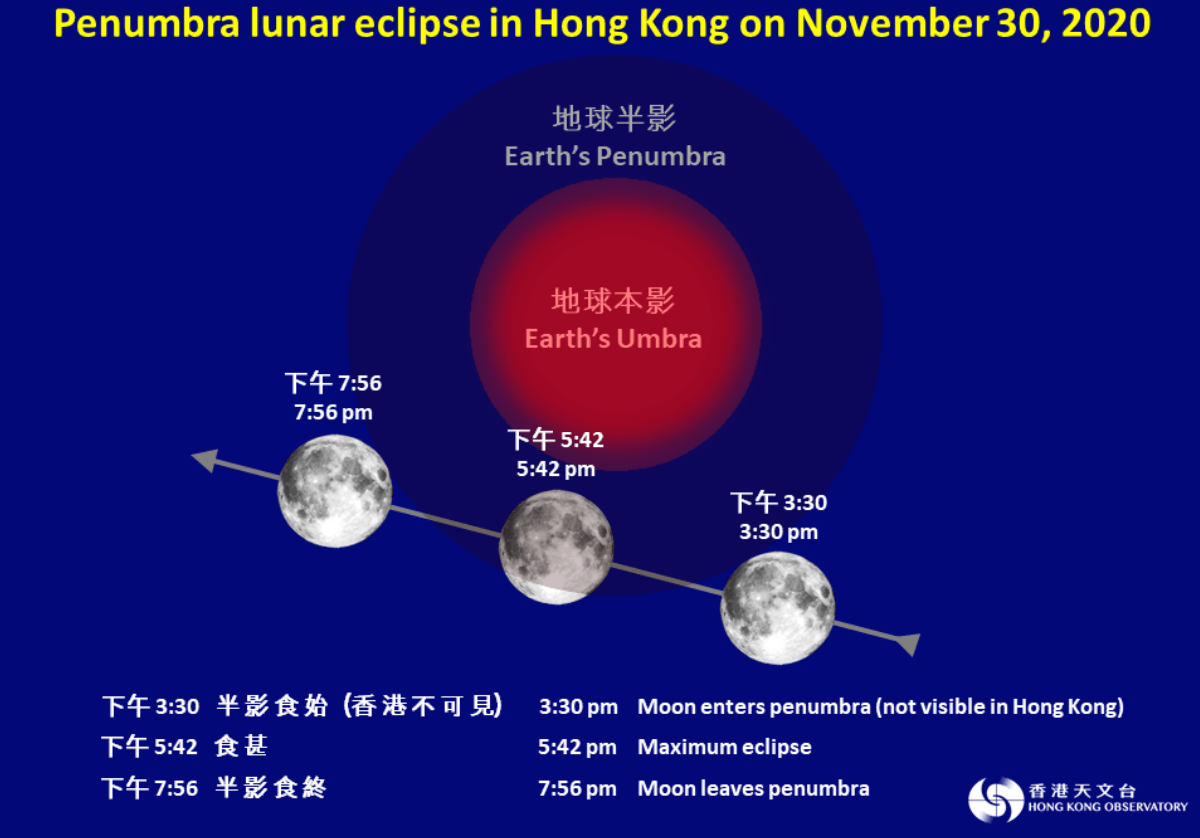
This year’s third penumbral lunar eclipse will occur in Hong Kong on the afternoon of 30 November. A penumbral lunar eclipse occurs when the Moon only enters the penumbra of the Earth but not the umbra. During the event, the Moon will become slightly dimmer. A special feature of the coming lunar eclipse is that the eclipse will begin before moonrise.

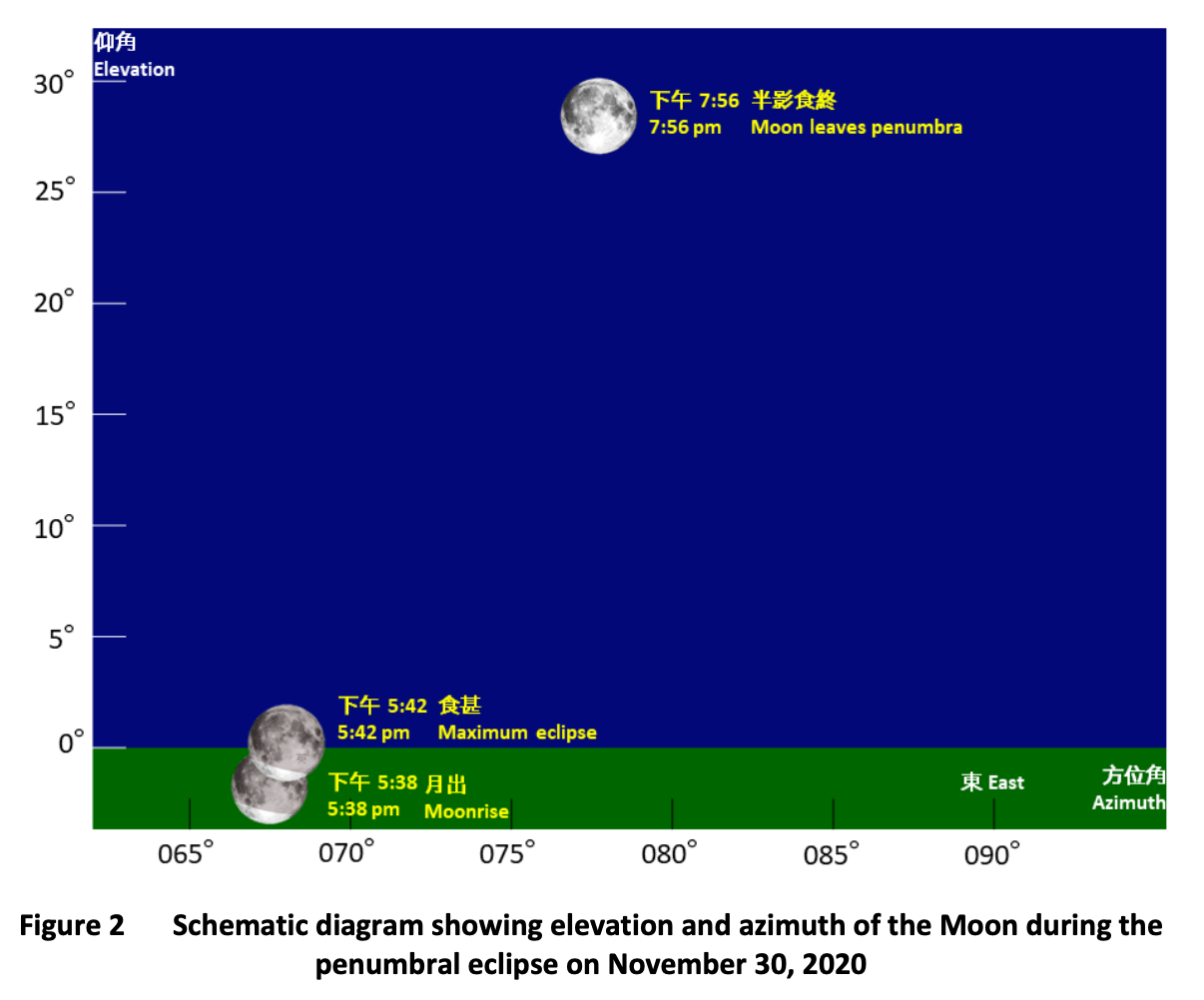
The eclipse will begin at 3.30pm and end at 7.56pm, with the maximum eclipse occurring at 5.42pm, which will be four minutes after moonrise. The whole process (from moonrise to the moon leaving the penumbra) will last for two hours and 18 minutes.

As the elevation of the Moon will be rather low in the sky during the eclipse, it’s best observed from somewhere with an unobstructed view towards the east and northeast horizon.

The next lunar eclipse observable in Hong Kong will be a total lunar eclipse on May 26, 2021.

images: HK Observatory

Royal British Legion Poppy Appeal, 7 November, 2020

They died for our freedom and we should never forget..
At the going down of the sun…
And in the morning…
We shall remember them

Volunteers young & old, were selling poppies on the streets of Central on 7 November, 2020.

Poppies can be obtained at the following location:
Temporary Poppy Depot at Room 3505, The Landmark Edinburgh Tower, Landmark Atrium, 15 Queen’s Road Central, Hong Kong (Tel : 2713 3315).
Opening hours: Mondays-Fridays 9am-5pm

https://bcmagazine.smugmug.com/Poppy-Appeal-7-November-2020/i-b9VtNq5

https://bcmagazine.smugmug.com/Poppy-Appeal-7-November-2020/i-4Z9GKMS

https://bcmagazine.smugmug.com/Poppy-Appeal-7-November-2020/i-xw3b78Z

https://bcmagazine.smugmug.com/Poppy-Appeal-7-November-2020/i-W7LgLdn

Images: Royal British Legion Hong Kong

Mars Upclose…

The European Space Agency (ESA) has released a trove of almost 100,000 images of the red planet. Captured by the Visual Monitoring Camera (VMC) onboard the Mars Express orbiter the images were taken between 2007 and 2020.

There are also images of the release of the Beagle 2 lander in 2003. While the images have been released for scientific study, the public can browse them as well.

The image archive has hundreds of photos of Mars taken from orbit, showing the huge range of geographical features and diverse formations found on the planet. In the collage of images here, you can see everything from dust and water over the north pole (first image, top row), to an unusual cloud formation called the Arsia Mons Elongated Cloud (second image, top row), to a double cyclone raging over the planet’s north pole (fourth image, top row), to the enormous structures of the Tharsis Volcanoes and Olympus Mons (third image, second row), to the Valles Marineris canyon system (third image, third row).

The VMC was originally intended to observe the release of the British Beagle 2 lander, transported to Mars by ESA in 2003. However the lander disappeared after its deployment and its exact fate remained unknown until 2015, when NASA’s Mars Reconnaissance Orbiter’s HiRISE camera captured its location. From the images, engineers could see that Beagle 2 landed safely but failed to deploy two of its solar panels, meaning it was not able to communicate with Earth.

Despite the failure of the Beagle 2 mission, the VMC was repurposed in 2007, and has been used to capture images for various scientific papers about Mars.

Note that the images have been adjusted for sensor ‘noise’ and variations in pixel sensitivity and the results are stunning.

Image: ESA Planetary Science Archive

India by the Bay: A Digital Series

The Sixth India by the Bay, postponed from February, has become a slimmed-down online festival entitled India by the Bay: A Digital Series running from 15-18 October, 2020

The virtual festival features four free events and offers HongKongers an insight into Indian culture and history through film, food, yoga and conversation. The events are:

Yoga as a Way of Life | 15 October, 7pm
Yoga philosopher Daniel Simpson will present a specially designed session on the benefits of Yoga in these difficult times

Zaika: Food, Creativity and Lockdown | 16 October, 7pm
Romy Gill and Rahul Gomes Pereira in conversation with Vir Sanghvi

East West – A Legacy | 17 October, 7pm
Shubhendra Rao, disciple of Pandit Ravi Shankar celebrates the centenary of his Guru’s birth.

Churchill: Hero or Anti Hero | 18 October, 7pm
Shashi Tharoor in conversation with Mukulika Banerjee on the life and legacy of Winston Churchill, one of history’s most complex figures.

India by the Bay 2020
Date: 15-18 October, 2020
Venue: Asia Society Hong Kong Center
Tickets: free

FCC Opposes New Hong Kong Police Accreditation Process for Journalists

The FCC issued the following statement in regards to the new restrictions imposed by the police on journalists in Hong Kong. If the HK Police have nothing to hide, then they should not fear media scrutiny of their actions.

Sadly, in numerous recent court cases, video evidence from journalists has proved that the HK Police have submitted factually inaccurate statements under oath to the court in attempts to convict innocent HongKongers.

Here is the FCC statement in full, including a letter from the HK Police to the FCC.

The Foreign Correspondents’ Club, Hong Kong, is firmly opposed to a restrictive new accreditation policy for journalists in the city as detailed in a 22 Sept. letter from the Hong Kong Police. This move is another step in the erosion of Hong Kong’s once cherished press freedom as it would give the police — rather than reporters and editors — the power to determine who covers the police.

The changes are not referred to as an accreditation system, but rather a redefinition of who is a journalist in the Police General Orders with the aim of “allowing frontline officers to efficiently and swiftly verify the identity of media representatives.” The letter says the police force will “amend the definition of ‘media representatives’ under the Police General Orders.” Yet the practical impact is the same as accreditation or licensing.

The new rule says police will only recognise as media those who have registered with the Government News and Media Information Service, or members of “internationally recognised and reputable” foreign media outlets. The goal, according to police spokesmen, is to weed out so-called “fake reporters,” who they claim — without offering evidence — have obstructed police operations and even assaulted police officers on duty.

The FCC stands firmly against the system detailed in the Hong Kong Police Force’s letter for the following reasons:

* It undercuts the local journalist organisations whose membership cards have been routinely recognised and respected, the Hong Kong Journalists’ Association and the Hong Kong Press Photographers Association. These organisations conduct rigorous vetting of candidates before issuing membership cards, and this move by the police would take the power to determine who is a legitimate journalist out of the hands of journalists’ groups and place it in the hands of a government entity. That in itself is a serious erosion of press freedom and independence.

* The new scheme would give police officers the power to decide what foreign media outlets are “internationally recognised and reputable.” How would that be determined? With the proliferation of new media outlets around the world, how can the police on the ground determine which ones are “internationally recognised” and deserving to be treated as legitimate? What about media that do not publish or broadcast in English, or that are not widely known outside of their home countries or immediate regions — are they not to be considered real journalists?

* The policy would be a serious blow for freelancers and student reporters — two groups of journalists who have provided some of the most compelling reporting from last year’s protests and police actions. Many journalists now operate as freelancers, some working regularly for specific organisations, and many others offering their stories and videos to multiple outlets “on spec”. News outlets have come to rely on freelancers due to the changing economics of the industry. But most of them cannot obtain registration because of their freelance status.

Student journalists, likewise, have been integral to the reporting on — and public understanding of — last year’s protest movement. Student reporters have faced the same dangers as veteran journalists, and some have been injured.

But this is about more than access to events and invitations to the inside of the police cordon. Journalists who are not recognised under this new policy could face the real possibility of arrest for unlawful assembly or rioting.

Before this new policy, Hong Kong had already dropped to an ignominious 80th place on the Reporters Without Borders annual press freedom index of 180 countries, down from 48th place in 2009. And that was before the 10 August police raid on the headquarters of Apple Daily and the arrest of its founder, Jimmy Lai.

The Hong Kong police in their letter say they “always respect press freedom and their rights of journalists.” If that is the case, they should welcome free and unfettered access to their operations and should encourage open reporting instead of trying to restrict the number of journalists covering its operations. A force that is proud of its discipline and confident its officers follow established protocols and guidelines should have nothing to fear from the spotlight journalists shine on it.

Source: https://www.fcchk.org/fcc-opposes-hong-kong-police-accreditation-process-for-journalists/

10th HK International Deaf Film Festival

The 10th Hong Kong International Deaf Film Festival and the 2nd International Conference on Deaf Cinema will be held online from the 2-11 October, 2020.

“Over the past ten years, we have continuously assembled Deaf Film from across the world in an attempt to present sign language and Deaf culture through films that tell stories fo the Deaf and created by Deaf people. We do not see Deaf as disabled, but affirm that Deaf people are a community with their own language, culture and history”

Opening Ceremony & Programme 1

Programme 2: The Art of Sign Language

Programme 3: Hong Kong Deaf Film 1

Programme 4: Hong Kong Deaf Film 2

Programme 5: CODA (A Child of Deaf Adults)

Programme 6: Deaf Funny and Stories

Programme 7: Deaf Advocacy

The Opening Ceremony & Programme 1: Hong Kong Deaf Film and all conference sessions are free of charge. The online screening film programmes 2 -7 are $65 and tickets are available at www.putyourself.in

10th HK International Deaf Film Festival
Date: 2-11 October, 2020
Venue: online
Tickets: $65