Asia Rugby Championship 2015: South Korea 37-38 Hong Kong

Salom-Yiu-Kam-Shing

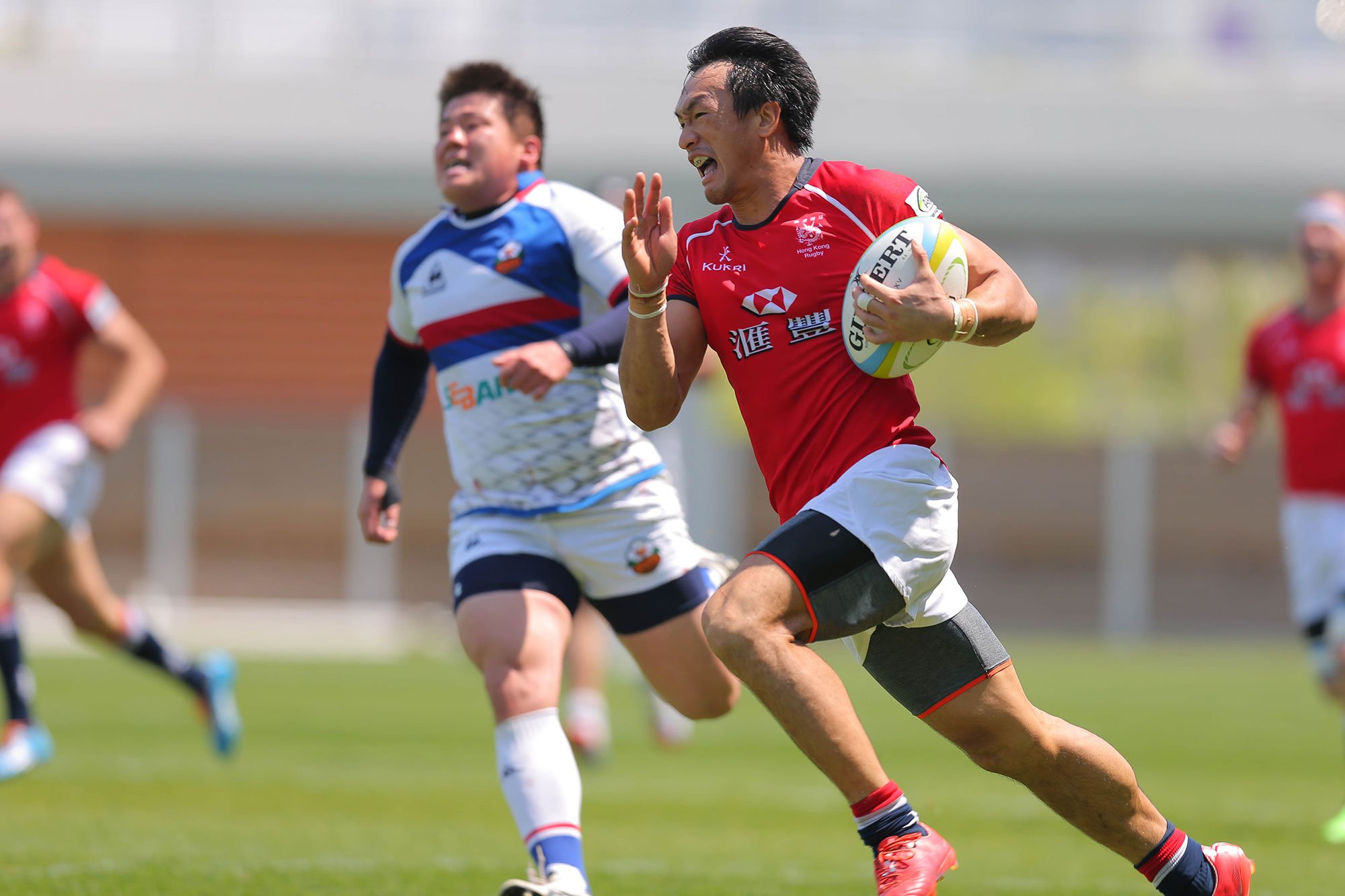
A last-gasp try from Salom Yiu Kam-shing earned Hong Kong a narrow 38-37 victory over 13-man South Korea in Incheon on Saturday to keep alive their hopes of finishing second in the inaugural Asia Rugby Championship.

Winger Yiu crossed over in extra-time to score his second try of the match under the posts and the successful conversion by Niall Rowark enabled Hong Kong to snatch victory over their opponents who had played the last 30 minutes with 14 men after a red-card was shown to tighthead prop Kim Kwang-sik for a shoulder charge on John Aikman.

The home team finished with 13 men on the park when centre Kim Nam-uk was sin-binned for an off-the-ball incident and the two-man advantage gave Hong Kong a renewed burst of hope as they grabbed their chance with Hong Kong lock forward Adrian Griffiths delivering the try-scoring pass to Yiu who covered 40 metres to score.

“It was a courageous performance from the guys. We made too many errors and dug a hole for ourselves but they showed a lot of heart to fight back,” said pleased head coach Andy Hall. “That last try certainly changed my post-match talk. But it was a lot of character which got us through in the end,” Hall added.

Korea, who had won the opening leg 33-26 last month at the Hong Kong Football Club, looked well on the way to securing another win as they stretched their 19-12 lead at halftime to 29-12. Roving flanker and captain Kim Jeong-min grabbed a brace in the first half, his second coming with Hong Kong down to 14 men with prop Jack Parfitt in the sin-bin for a shoulder charge. Korean right winger Bin Jegal also scored from a snappy move by the backs but Hong Kong reduced the deficit with Yiu going over from close range after taking a lovely inside pass from fly-half Ben Rimene.

A driving maul led to a try from flanker Toby Fenn as Hong Kong finished the first half on the ascendancy and trailing just by seven points. The second half began disastrously for the visitors when a loose pass from Lachlan Chubb was intercepted by Korean left winger Chang Yong-heung who ran 70 metres to score untouched.

Korea lost prop Kim Kwang-sik to a red card ten minutes into the second half but that did not deter the rest of the forwards who turned on the pressure giving fly-half Oh Youn-hyung plenty of time to knock over a drop-goal from 20 metres out.

Hong Kong cut the deficit to 29-17 when Tyler Spitz, who had come in for centre Jamie Hood in the first half, crossed over but Korea kept play inside the Hong Kong 22 and went further ahead, 32-17 with a penalty. Lock Paul Dwyer scored Hong Kong’s fourth try to cut the deficit again, 32-24, but the feisty Koreans refused to lie down with centre Kim Nam-uk going over to stretch the lead to 37-24.

Hong Kong skipper Hewson who had been in the thick of the action all day, gave his team renewed hope when he went over with two minutes on the clock to make it a one score match, 37-31. And when Kim Nam-uk was sin-binned right at the death, it gave Hong Kong a fresh burst of energy and they kept moving the ball around in the last passage of play before Yiu spotted the gap to score the winning try.

“The guys showed a lot of heart to win that match,” Hall said.

Both Hong Kong and Korea have eight points – Korea earning two bonus points despite the loss for scoring four tries or more and finishing within a seven-point margin – and the second-placed spot will only be decided after next Saturday’s final encounter between Hong Kong and Japan. Japan who have already been crowned champions will be favourites to remain unbeaten in the competition having beaten Hong Kong 41-0 in Tokyo. “Second-place will be down to points differential. But right now we are not thinking of that. We just want to savour this result,” Hall added.

Hong Kong have a +29 points differential on South Korea but will need to work hard to maintain that edge when the ever-dangerous Japan visit Aberdeen Stadium on Saturday (16.00, 23 May).

That match will be preceded by the final match in the Asia Rugby Women’s Championship when Hong Kong host Japan at Aberdeen (13.00). Kazakhstan lead the ARWC on 6 points over Japan on 5 points but Japan have a match in hand and an away win in Hong Kong would see them claim Asia’s women’s fifteens title next weekend.

LGBT Workplace Inclusion

lbgt Index_Logo

With the announcement of the Inaugural Hong Kong LGBT Workplace Inclusion Awards, bc magazine  spoke with Fern Ngai about the awards and the Hong Kong LGBT Workplace Inclusion Index.

The LBGT index… can you explain what it is?
The Hong Kong LGBT Workplace Inclusion Index is the first and only benchmark in Asia on corporate policies and practices for creating inclusive workplaces for lesbian, gay, bisexual and transgender (LGBT) employees. A pioneering initiative by Community Business, the index will for the first time enable companies in Hong Kong to benchmark, drive progress and promote their efforts on LGBT inclusion. The Hong Kong LGBT Workplace Inclusion Index is based on the recommendations in Community Business’ leading publication: Creating Inclusive Workplaces for LGBT Employees in Hong Kong – A Resource Guide for Employers, designed to drive the adoption and promotion of best practice for LGBT workplace inclusion.

The Index is intended to be run on a regular basis, giving companies time to address existing challenges and take steps to drive real progress in their organisations in Hong Kong. Drawing on global best practice and validated from a Hong Kong perspective, the Index is structured around the following 8 categories:

1) Equal Opportunity Policies
2) Diversity Training
3) Diversity Strucutre
4) Benefits
5) Corporate Culture
6) Market Positioning
7) Monitoring
8) Community and Advocacy

The Index is designed to be simple and straightforward to complete and is supported by clear Guidance Notes. To ensure the credibility of the assessment several questions require Supporting Information in the form of further information or evidence.

As a part of the Index, companies are also invited to submit nominations for the following 3 awards and will receive additional points for doing so:

LGBT Network of the Year Award
LGBT Inclusion Champion of the Year Award
LGBT Executive Sponsor of the Year AwardLGBT_Campaign_logo_small

In addition, companies are encouraged to nominate an LGBT initiative for: LGBT Community Impact of the Year Award sponsored by Goldman Sachs. The Index is open for submissions from 12 November 2014 to 27 February 2015. All questions in the Index and awards refer to the period 1 January 2014 – 31 December 2014.

What are you hoping to achieve through the index?
We hope the Index can:

  • Provide a driver and catalyst for the adoption of best practice with regard to LGBT workplace inclusion in Hong Kong.
  • Provide companies with a credible and robust tool by which to assess and communicate their progress on LGBT workplace inclusion in Hong Kong.
  • Recognise and acknowledge those companies that are leading the way.

The index has been running for a few months now, what has the feedback been? The take-up with local companies?
We now have 36 companies confirmed participating in the Index. When we initially consider conducting an Index roughly 5 years ago, only 2 companies showed an interest in participating. While Hong Kong still has a way to go towards full workplace inclusion, this progress demonstrates the rapid pace of change and commitment from the business community towards creating inclusive workplaces for the LGBT community in Hong Kong.

For progress to made, it is critical that local companies also participate in the Index. We recently partnered with the Equal Opportunities Commission (EOC) to hold an LGBT workshop to introduce the importance of creating inclusive workplaces and why this is critical for businesses in Hong Kong.

http://bcmagazine.smugmug.com/Bcene-photos/2014/Diversity-Inclusion-in-Asia/45668123_RznjKL#!i=3690108114&k=xXzpMkR

How can smaller firms participate?
All companies in Hong Kong, regardless of size or industry, are encouraged to participate. There are different levels of engagement depending on the abilities and interests of each participant. Companies can choose to join our Basic, Professional or Leadership engagement package. These packages offer a range of benefits and services tailored to the needs of the business community in Hong Kong.

First of all, the submission itself is a good exercise for companies to review their footprint so far and consolidate the information. It’s also a good way to engage key stakeholders in the organisation to ensure joint commitment to the LGBT inclusion efforts. For those smaller firms that you referred to, which have not yet focused their resources on or solidified their plan with regard to LGBT inclusion, it’s a good opportunity to do so.

Some companies may hesitate to participate only because that they worry about not having done enough and may score poorly and hence look bad. This will not happen as the Index is not competitive in nature. It is a benchmark for every company by which they may assess where they are in terms of LGBT inclusion by comparing with other companies in HK, communicate their progress and learn from best practice. Individual company scores will not be published and will only be shared with the respective company. We will only announce the top 10 companies with highest weighting on each assessment criteria. It’s important for companies to get into the Index so they have the baseline to plan their roadmap for the years to come.

Some of them may not get on board immediately but the participation of their peers in similar size or same industry will open the door for them and for us too. But for those who can see the first mover advantage and want to grab the opportunity of being the pioneer or leader in their respective domains, we look forward to seeing them on board.

More information can be found online at: www.communitybusiness.org/hklgbtindex/participate

As individuals, what should people be aware of in their own workplace inter-actions?
It is essential that individuals understand their own bias and take active steps to mitigate it as they begin to foster more inclusive workplaces. Generally, bias is very natural. We all possess it, as it allows us to rapidly process the world around us and the hundreds of thousands of inputs that we are processing every second make decisions and function on a daily basis. Most of this is what we refer to as “unconscious.” For example, getting into your car everyday appears to be a relatively straightforward, non-event, but in reality it is a seamless, string of complex actions and decisions that we making every moment but has become so ingrained, that we barely notice it, making it an unconscious action.

Similar to the analogy of the car, every day we make assumptions and decisions at work, which allow us to move through the day fairly seamlessly and get ahead. However, some of these decisions and assumptions have a much more significant impact than we consciously realize. It is these subtle decisions that affect who gets considered for a promotion, who is included in a client meeting, and ultimately the degree to which an environment at work is inclusive of all individuals.

It’s important that individuals understand that bias is natural, so it’s not a question of whether or not one has them. Instead it’s a matter of making the unconscious, conscious by beginning to take active steps towards acknowledging bias and mitigating it in the workplace.

The terms ‘inclusion’ and ‘diversity’ are the current buzz words internationally, in practical terms what do they mean locally?
Diversity embraces, respects and values the differences between individuals, while inclusion focuses on creating an environment where all individuals can contribute regardless of their differences. Some of the diversity issues that are top of mind with many of the companies that we work with include gender, LGBT, and disability. However our research has begun to highlight many other dynamics of diversity that resonate more locally including language, education, overseas exposure and communication styles. Companies are working to create environments where individuals have equal access to opportunities and advancement mindful of these dynamics and mitigating any biases that may arise as a result.

Surely the sexuality of an employee is irrelevant to their job performance, why do you feel that employers should positively discriminate towards LBGT employees?Companies that create a workplace where individuals can bring their whole selves to work are good for business, period. Research from Stonewall in the UK shows that that concealing one’s sexual orientation at work can reduce productivity by 30%. In research conducted by Community Business (Hong Kong LGBT Climate Study 2011-12), we found that 71% of individuals have had to lie about their personal life at work as result of working in a non-LBGT inclusive workplace, resulting in 54% of respondents finding it difficult to build authentic relationships with colleagues and 53% reporting feeling exhausted, depressed or stressed having to pretend to be someone they are not. Additionally 51% of our survey respondents stated that they wasted energy at work worrying about what will happened when people find out about their sexual orientation and/or gender identity.

Creating an LGBT inclusive workplace doesn’t just affect the estimated 5-10% of the working population that identifies as LGBT. It also has a positive impact on friends, allies, Gen Y/millennials, customers and other key stakeholders. Research shows an increase of 7%-16% in overall employee engagement scores in companies with LGBT inclusive workplaces. Our research has also shown that 63% of LGBT employees who are ‘out’ or ‘open’ in the workplace say they are able to build closer, more authentic relationships with colleagues.

Finally, creating inclusive workplaces allows companies to begin to position themselves not just as an employer of choice but also as businesses of choice within the LGBT community. In the U.S. the value of “pink money,” or the spending power of the LGBT population, is estimated to be worth US $835 billion dollars (2011). As the LGBT population in Asia becomes increasingly visible in the community, this is will be a key consumer demographic for companies seeking to gain an advantage in Asia’s ever competitive marketplace.

If an individual or a company wants to get more information / become involved / institute an inclusion/diversity programme what advice would you give them?
For those individuals or companies looking to learn more about the LGBT Workplace Inclusion Index for Hong Kong, I would suggest that they visit us online at: www.communitybusiness.org/hklgbtindex/index

For those companies seeking to learn more about starting their own their own Diversity and Inclusion programme, particularly in the area of LGBT inclusion, we suggest that companies refer to our LGBT Online Resource Guide www.communitybusiness.org/LGBT/index

If a company is looking at developing an LGBT inclusion strategy, or expanding its current programme, Community Business is keen to be involved. We would be very happy to explore how we can help and work together to achieve their goals. They can contact us to schedule a time to have a more in-depth discussion.

For more information about Diversity & Inclusion or to become a member of Community Business’ Diversity & Inclusion in Asia Network, please visit Community Business at www.communitybusiness.org

Who is Community Business?
Community Business is a not-for-profit organisation whose mission is to lead, inspire and support companies to have a positive impact on people and communities. Recognised as a thought leader in corporate responsibility in Asia, Community Business conducts research, facilitates networks and events, leads campaigns and provides consultancy and training. Its major areas of focus include: Community Investment, Diversity & Inclusion, Work- Life Balance and Corporate Responsibility Strategy. Founded in 2003 and based in Hong Kong, Community Business works with companies of all sizes and from diverse industries across Asia, harnessing the power of business to drive social change. For more information, www.communitybusiness.org.

Megabites: Food News – 12 May, 2015

coloured-carrots

Vive la France
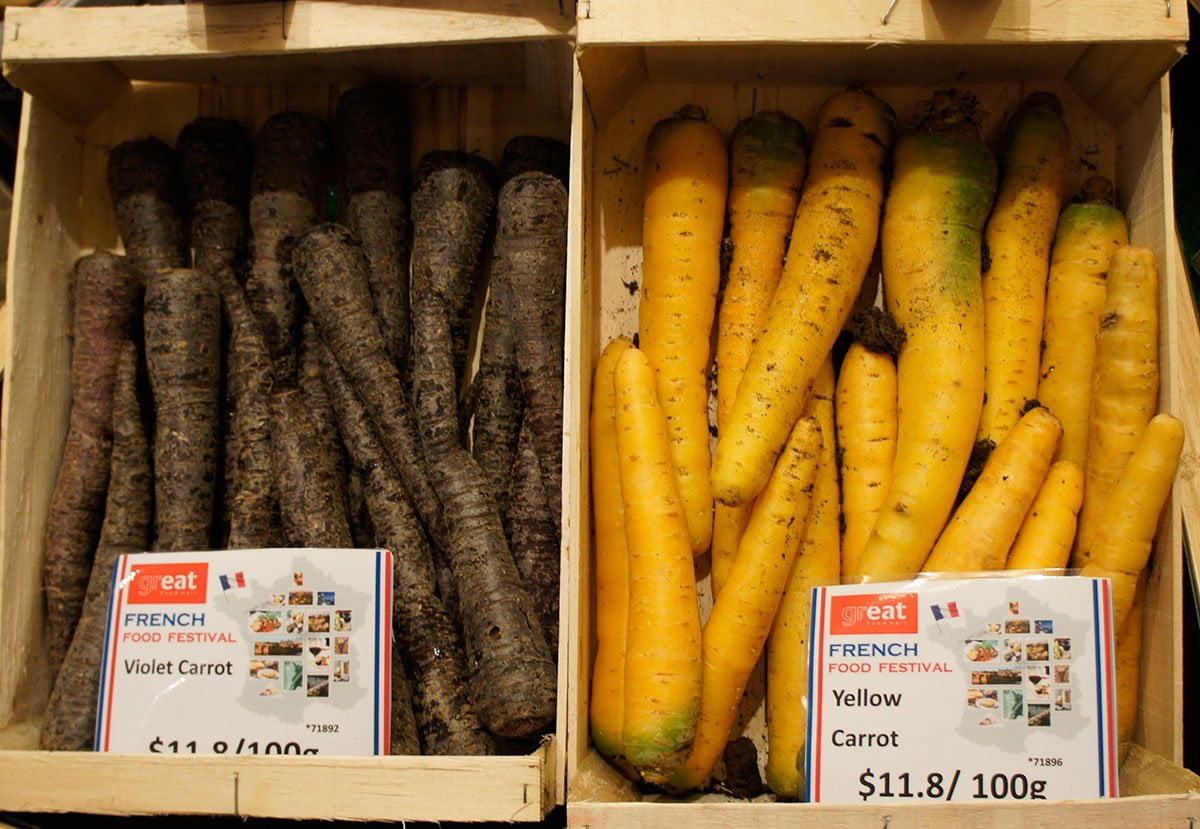
There’s lots of great wet and produce markets spread across the SAR – but what about the vegetables they don’t sell… That’s where supermarkets can step in. As part of the Le French GourMay Great in Pacific Place is running a French food promotion through May. As well as some wonderfully tasty new products they’ve signed up with a new fresh produce consolidator to bring an expanded range of fresh seasonal European vegetables. Among those new on the shelf in May are yellow, red and white carrots – yes, you did read that correctly, not all carrots are orange. A fresh multi-coloured carrot salad is easy on the eye, healthy and very tasty. Other vegetables that come in colours you’re not used to seeing include beetroot and tomatoes. Locally we’ve got used to seeing and eating cherry and ‘regular’ tomatoes but there are many different varieties of tomatoes – Great had sixteen different types the day we were exploring. All with different colours, shapes, textures and flavours, mixing a few different varieties can enhance any ‘dull’ tomato salad.

bleu-de-severac

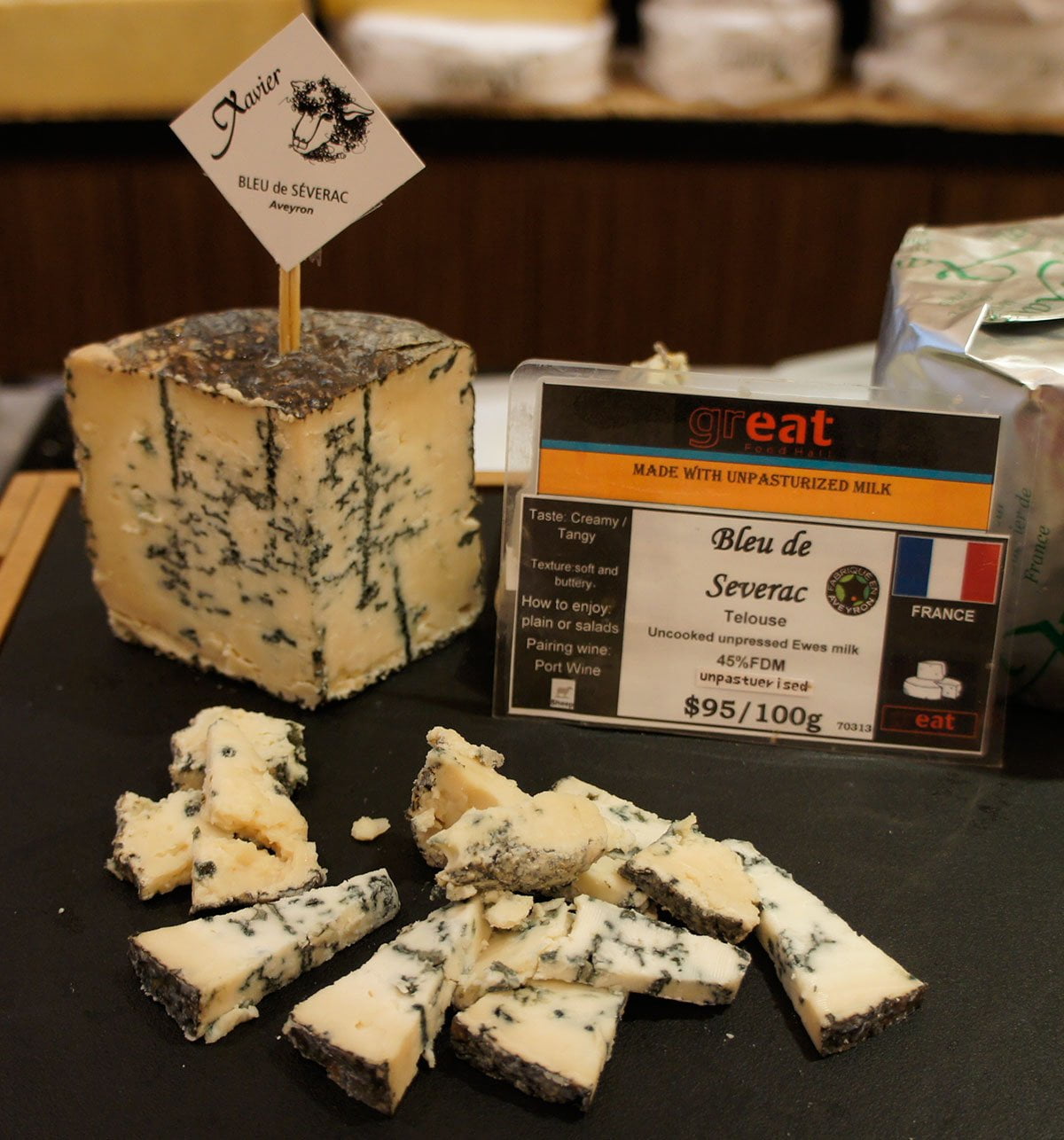
France is renowned for it’s cheese and among the new varieties in the Great cheese room is the delicious Bleu de Severac ($95/100g) which could be confused with a Roquefort cheese as is made from unpasteurised ewes’ milk and follows the identical method of production. The only difference is that it’s not matured in the prestigious cellars of Combalou. The uncooked, unpressed soft cheese with veins of blue mould is firm, creamy and smooth with a sublime tangy, slightly spicy/acidic flavour.

For many years now Hong Kong has gone rouge, blanc et blue in May. Originally Le French May was about raising awareness and appreciation of French music, art and culture, but 8 years ago Le French GourMay was launched to enhance the appreciation of French food and wine – perfect for a city full of hedonists. Check out the website to explore the wide range of promotions and dinging offers www.frenchgourmay.com

CheesebyTom
cheesebytomIn Europe cheese is an everyday food item and it’s common to have several types in the fridge all the time. Locally however cheese, like ice-cream, has been and continues to be priced as a luxury item. Architect/Entrepreneur Tom Higgins is looking to change that with his new cheese delivery website www.cheesebytom.com The Lamma based site currently offers Brie, Double Gloucester, Emmental, Cheddar, Gruyere and Manchego and delivers across Lamma and also to Hong Kong island once a week. We ordered the Cheddar ($35/250g) and the Brie ($50/250g) both are good solid very edible cheeses, perfect to be enjoyed at anytime. Yes, you can find finer cheeses around but cheesebytom returns cheese to everyday item it should be – at a price accessible to all HongKongers.

Tsim Sha Tsui East
TST East is one of those areas just off the main arteries that’s thronged with tourists who sleep there and office workers – consequently there’s a lot of restaurants and bars with many places offering outdoor seating and views of across the harbour. Among those is the Italian restaurant Spasso (Empire Centre, 68 Mody Road. Tel: 2730 8027) who celebrate the start of summer with a new promotional menu and the ‘opening’ of their terrace.

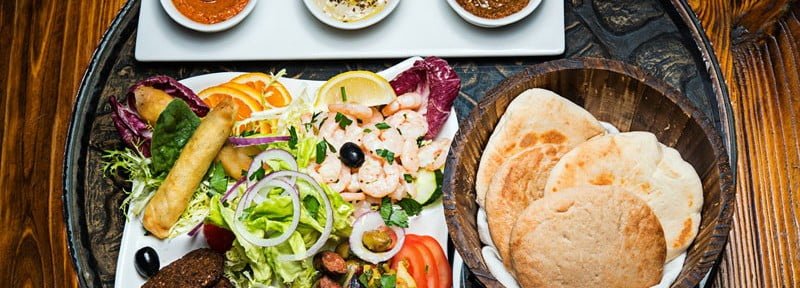
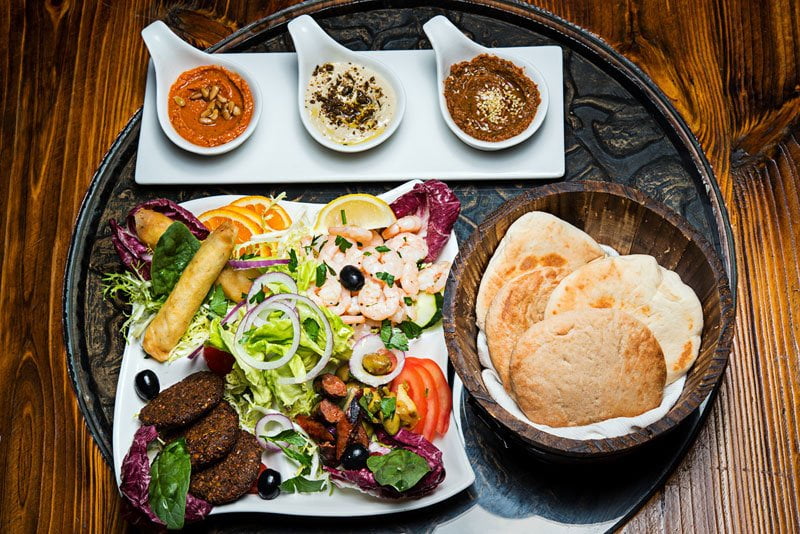
ra-webAlso in the area is the wonderful Middle Eastern restaurant Ra (Wing On Plaza, Tel:  2721 3600) which offers a mix of Moroccan and Egyptian cuisine and for those who like it some of the best shisha in Hong Kong. A perfectly relaxing way to spend an evening.

Hong Kong Collapse – Namibia Win by 114 runs

Hong Kong Collapse – Namibia Win by 114 runs

Namibia’s national team cruised to a convincing win over Hong Kong during their first encounter at this year’s International Cricket Council’s (ICC) Intercontinental Cup in Windhoek on Wednesday.

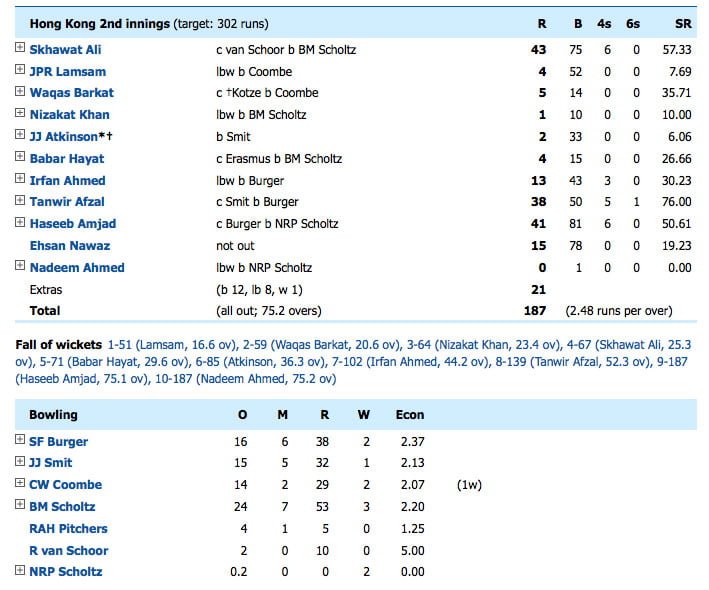
Namibia went into the final day in a commanding position, needing to prevent Hong Kong from scoring 303 runs, but Hong Kong got off to a very good start, and were 48/0, before the young and talented Christopher Coombe was able to make the break through. Shortly after Coombe took another wicket, Bernhard Scholtz stepped into action with two more quick wickets as Hong Kong’s middle order collapsed. Wickets continued to fall at regular intervals, as Scholtz grabbed another one, Burger snatched up two and JJ Smit one of his own.

With eight wickets down by tea time and only 139 runs on the board. It appeared that Namibia had the match done and dusted. However, there was to be a last fight from the Hong Kong, as Haseeb Amjab and Eshan Nawaz made life difficult for the Namibians.

The Namibians were throwing everything at Hong Kong, until Namibia’s captain Nikolaas Scholtz took things into his own hands. After he scored a fantastic 85 not out in the first innings, as well as a quick fire 29 not out in the second innings, Scholtz proved that he is the kind of captain that can lead from the front, as he took two wickets from his first two balls, leading Namibia to victory, and giving the team their first intercontinental victory of the season.

On Friday the two teams will be tackling each other in the first 50 over match of the World Cricket league

Hong Kong Set 302 to Win

hk2

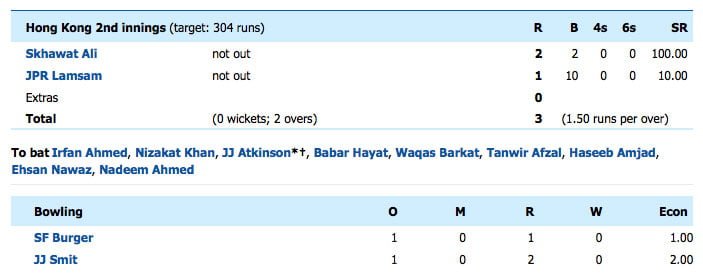
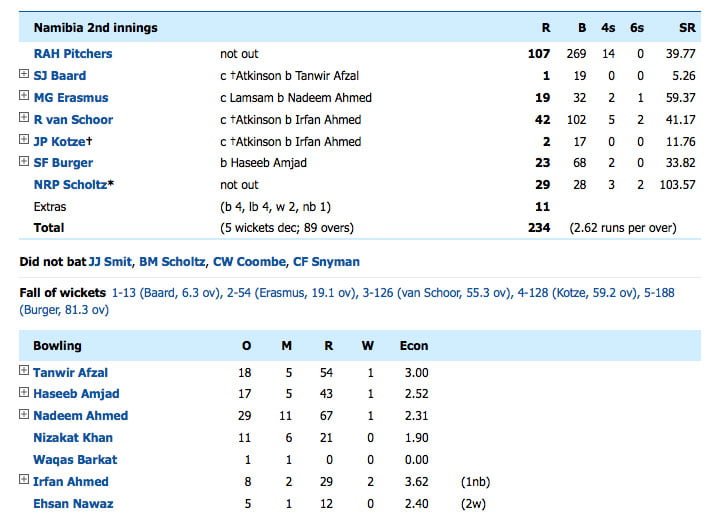
After adding just one run to their overnight score Hong Kong were dismissed for 203 in their first innings. They then endured a long tough day in the field as Namibia built their lead with opener RAH Pitchers scoring 107 not out. Namibia declared just before the close of play on the third day to set Hong Kong 302 to win this first match in the ICC Intercontinental Cup.

Match Status
Namibia 272 & 232/5d
Hong Kong 203 & 3/0 (2.0 ov)
Hong Kong require another 299 runs with 10 wickets remaining

namibia2

Rugby Sevens Asia Regional Qualifier for Rio 2016 Olympic Games – 7-8 November, 2015

Rugby Sevens Asia Regional Qualifier for Rio 2016 Olympic Games – 7-8 November, 2015

Rugby sevens will make its Olympic Games debut on 6 August, 2016 after the Rio 2016 Organising Committee released the daily competition schedule to mark 500 days to go.

The men’s and women’s competitions will both feature 12 teams. World Rugby has announced that the top four teams in the respective men’s and women’s World Rugby Sevens Series standings will qualify automatically – Fiji, South Africa and New Zealand have qualified with England or Australia set to join them. Brazil as hosts will also feature in both tournaments.

A men’s and a women’s team will qualify from each of the six regional Olympic qualification tournaments, that will take place between June and November 2015. The men’s Asia Rugby Sevens Regional Qualifier for Rio 2016 Olympic Games will take place in Hong Kong on the weekend of the 7-8 November.

The Asia women’s representative will be decided via a two leg qualifier – the first leg in Hong Kong on the 7-8 November and the second leg at the Tokyo Women’s Sevens tournament on 28-29 November 2015.

The 12th and final place in both the men’s and women’s Olympic Games rugby sevens competitions will be determined via a repechage tournament which will take place before the end of June 2016 (date and location to be confirmed).Rugby Sevens Asia Regional Qualifier for Rio 2016 Olympic Games – 7-8 November, 2015

Tickets of Rio 2016 can be purchased China Travel Service (Hong Kong) Limited – the authorised ticket reseller for Hong Kong. Visit the Rio 2016 website for more information – www.rio2016.com/spectators.

Attacked Ming Pao Journalist Kevin Lau speaking at the Human Rights Press Awards

Attacked Ming Pao Journalist Kevin Lau speaking at the Human Rights Press Awards

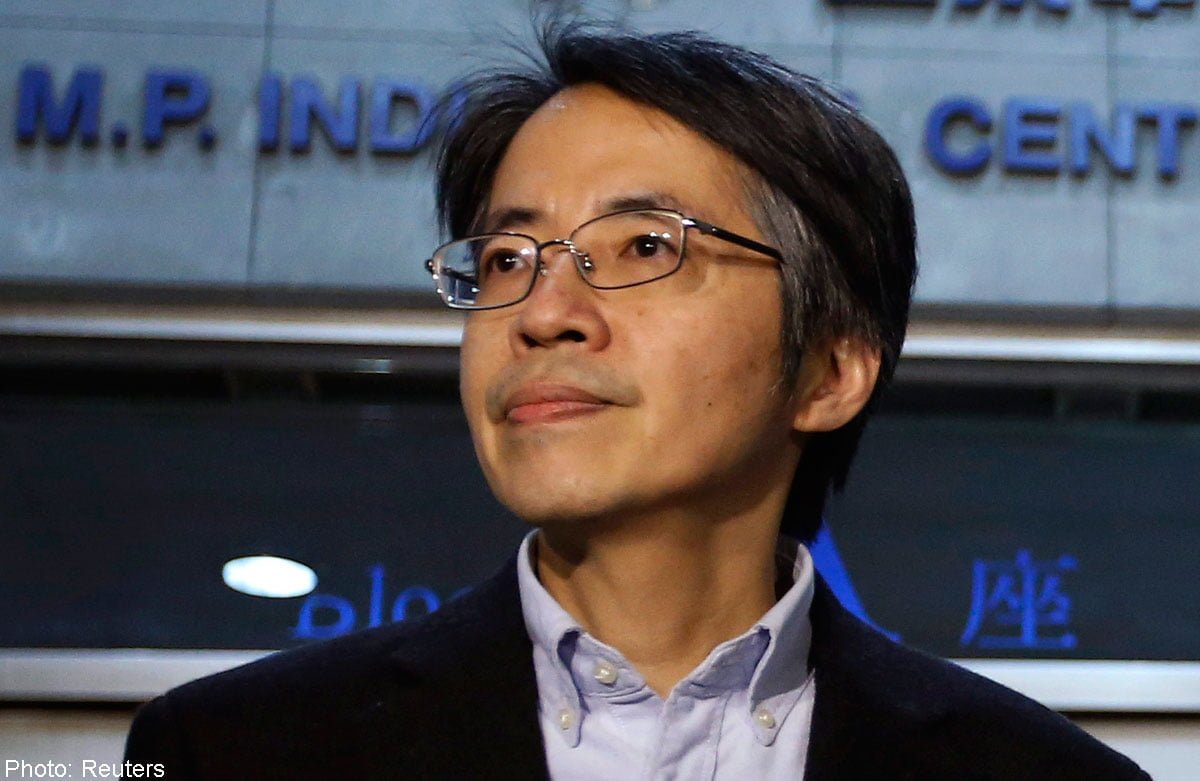
Journalist Kevin Lau spoke at the Human Rights Press Awards annual luncheon on 9 May, 2015 about being attacked in February 2014. The attack, by chopper wielding assailants who hacked at his legs, took place not long after Lau was sacked as the Editor of Ming Pao, and left him bleeding on the pavement.

Here is his address on why “Now is the worst time – and best time – to be a journalist in Hong Kong.”

Dear Guests and Friends,

In the past two years, people have frequently asked whether press freedom in Hong Kong was under threat. Now I think the answer is crystal clear. It is. In this sense, now is the worst time to be a journalist in Hong Kong.

For those of you who still have any doubts about this, who still believe that the Hong Kong press still enjoys the same freedoms it used to have, let me ask you a few questions.

1. How often do you see the proprietor of a highly popular newspaper coming out to admit publicly that Mainland corporations including major banks are withholding advertisements for political considerations?

2. How often do you see the owner of a highly popular news website coming out to admit publicly that he was closing down his news operation for fear of political reprisal?

3. How often do you see a commercial broadcaster shutting up a highly popular current affairs program host by suddenly terminating her contract?

4. How often do you see over a hundred reporters, editors and news anchors of a major television station signing a joint public statement to criticize the news handling decision of their news controller?

5. How often do you see a veteran journalist who had been the chief editor of an influential newspaper being brutally attacked with a
chopper outside a public park in broad daylight?

When these unbelievable things all happened within a time span of twelve to fifteen months, do you think it is pure co-incidence? For every single incident mentioned here, one might say that perhaps it was an isolated case, that perhaps it was not directly related to press freedom. However, when they came one after another like dominos, the effect on public perception and public confidence was debilitating.

I have stayed in this field for 25 years. I know the climate changes when I see the signs.  This is not the first time. Back in 2003 to 2004, when we had a similar situation of an unpopular Chief Executive trying to sell an unpopular policy to the public, we would see powerful people stretching their muscles to try to stamp out any critical voices in the mainstream media. Last time the unpopular policy was national security legislation. This time it is universal suffrage with a nomination screening mechanism. History is repeating itself.

If you need more evidence, to prove that press freedom in Hong Kong is really under threat, I would refer you to the numerous statements and reports published by the Hong Kong Journalists Association, the Foreign Correspondents Club and other professional organizations. The alarm bell has been rung again and again. You may also look at the findings of journalism professors at local universities on media self-censorship, which has gone up, and media credibility, which has gone down.

The latest signal of this worrying trend is the government decision not to prosecute a criminal suspect who was alleged to have assaulted two television journalists performing their duty of reporting in a public gathering. The apparent reason was that the suspect and the actors were allowed to wear hats and masks covering most of their faces in the identification parade, which rendered the victim’s task of identifying the attacker impossible.

Recently I was asked by some young journalism students whether they should join the news profession in light of all these unfavourable developments. I told them all the inconvenient truths. The sad reality is that in many respects now is probably the worst time to be a journalist in Hong Kong. But, nonetheless, I advised them to go ahead and become journalists if they are really interested in news reporting. Why? Because in other respects now is also the best time to become a journalist in Hong Kong with an eye on the future.

Hong Kong will maintain its role as an international financial centre. This is a simple fact recognized by everyone, including the authorities in Beijing. The Chinese leaders may have a different view from the local community regarding democratic development in Hong Kong. But there is no dispute on HK’s role as an international financial centre. During the Occupy Movement last year, Beijing gave the green light for the cross-market stock purchases program between Shanghai and Hong Kong. The timing of the decision surprised many people. It reflected a strong determination to keep HK’s stock market vibrant and useful for Mainland enterprises to raise capital.

As we all know, a truly international financial centre must maintain an environment where there is a free flow of information. You cannot shut Bloomberg down. You cannot ban Facebook or Twitter or Youtube. Last year when the Apple Daily’s highly popular news website was paralyzed by hackers, apparently coming from the north, they decided to upload all their digital news onto Facebook and Youtube. Unless you could shut down the entire internet, you could not stop them from publishing their stories. As a result, the attacks stopped.

Digital news is a totally new ball game. In the past, we, the editors in charge of the news rooms of mainstream media outlets, dictated what the public could read or watch. We the editors decided which item went on the front page and became headline news. Now the game has changed. In the digital world, the crowd decides which piece of news they prefer to read and to share. This crowd judging and crowd sharing has changed the balance of power between the editors and the readers. The accumulated hit rate and online viewership of any news item depends on the crowd, not the editors.

Also, the 24 hours real time functioning nature of the highly transparent digital news world renders media self-censorship extremely difficult. If a news room chief in Hong Kong decides to ban a piece of newsworthy digital material from publication, he or she may soon find the material spreading like wildfire on the Internet, and the decision to censor it will quickly become a news story in itself.

For young people who grew up in the digital age, they can acquire the invaluable communication skills necessary in the new era much more quickly than their senior news managers or executives. They know how to push the gist of the news to their readers’ smartphones apps or their social networks. They know how to make it sticky and catchy. In just a few years, they would have accumulated online news making and spreading experiences that cannot be matched by traditional journalists, even those with 20 years of experience.

Diving into the digital news world might be a risky business for some media organizations. Subscriptions are hard to find. Until recently, advertising revenue was thin. But the scene is quickly changing. Online advertising has been growing at a double digit year on year since 2013. Readership migration from traditional to digital is unstoppable. In the coming few years, digital first will no longer be a slogan. It will become a business necessity. Young journalists have nothing to lose if they dive into this trend right now.

So, in this respect, now is the best time to be a journalist of the new media in Hong Kong.

Source: www.humanrightspressawards.org
Editing: bc magazine

Joshua Wong: Speaking Notes for the Standing Committee on Foreign Affairs and International Development of the House of Commons of Canada

Joshua Wong: Speaking Notes for the Standing Committee on Foreign Affairs and International Development of the House of Commons of Canada

Honourable Chair and honourable members of the Standing Committee,

I am Joshua Wong, Convenor of Scholarism, a 18-year-old University Student now. Thanks for the Canadian Parliament’s invitation, giving me the opportunity to be one of the Hong Kong representatives to share here.

Today, from a student’s perspective, I hope that I can share my experience and exposure in these social movements since my age of 14, illustrating how the Central Government of China oppress the future of the next generation in the aspects of political systems and education. I hope my sharing will help to enhance the international concern about Hong Kong’s democratic progress.

On July 1st 2003, there were 500 thousand Hong Kong people walking out on the street to protest against the Article 23 of Basic Law which oppressed freedom of speech. In addition, the People also strive for the realization of the Universal Suffrage. The huge participation in that incident did not only cause the stepping down of Tung Chee Hwa who was then the Chief Executive, but also the withdraw of Article 23 on Basic Law.

Since then, we can observe that the Central Government began to have a strong feel about a need to strengthen the Hong Kong people’s identity recognition to China or the Chinese Communist Party. As a result, focusing at the identity issue of the young people and students, in 2011, the Education Department announced that all Primary and Secondary schools in Hong Kong must launch the subject of National Education in their curriculum.

In that National Education subject, there were quite many parts emphasizing the student’s need to establish the obedience as well as the pride towards the Chinese Communist Government, with the standards such as students were expected to feel touched with tears in front of the National Flag during the ceremony. That means, the National Education subject was in fact more than education subject, but a brain washing tool!

If the nature of the Education was to develop the young people’s independent thinking capability, this National Education subject definitely violated this education principle. It illustrated that the Central Government just viewed Hong Kong as a ruled obedient, without any respect towards the youth and students’ right to attain a proper citizenship, including the right to criticize the government.

Since then, I had a strong awareness that not only political parties and teacher’s unions protest against the National Education Subject, therefore, 4 years ago, at the age of 14, I established a student organization, Scholarism, gathering a few hundreds secondary students who supported the core values of democracy and freedom. We walked onto the street, protesting, promoting our values and expressing our requests, gaining a lot of supports from the Hong Kong People in a very short time.

Later, with the exposure of the Government’ brain-washing education material to the public, called “The China Mode”, which described the Chinese Communist Party as an “advanced, selfless and united ruling organization”. With that exposure, the whole city’s protest temperature against the National Education was raised rapidly. With the hungers strike of students and 120 thousands people’s occupation at the Central Government Office, the Government was forced to put a side the National Education Subject. At that time, I was only 15.

Previously, people thought that political movement can only be lead by political parties and worker’s unions. No one could imagine that secondary school students could plan a social movement. After the success of the Anti-National-Education Movement, more people showed their concerns and give support about the social actions from the student organizations.

Many people began to discover that it was the students’ energy, persistence, determination and courage which had enabled them to stand upon the stage of History for a more equal political system. This was why after the Anti-National-Education Movement, Scholarism continued to strive for the Universal Suffrage.

Last year, there were various joint activities with Federation of Student, expressing our dissatisfaction against the 31,August decision, including student strike jointed by more than one thousand students and ten thousand university students and the Septermber 26’s action of re-entering of Civil Plaza which triggered the Umbrella Movement.

In the nearly 80 days’ Umbrella movement, there is not yet any achievement, regardless of the participation of 200 thousand Hong Kong People. But through my experience in the participation of social movement, I want to tell every honorable congressman here and all the Chinese in Canada, after going though the days from Anti-National-Education Movement and the days of the Umbrella Movement, the lives of students in Hong Kong is no longer the same.

The generation of extensive political awareness has already begun. This is the reason why I still have hope even though there is none of achievement from the Umbrella Movement, even though those pro-China people are continuously oppress academic freedom, even though there are continuous political legal prosecutions against the protesters.

All the honorable congressman here, you may think that in a democratic country, maybe politics should be the professional participations of political parties and politicians. Social movement in the street should only be organized by a minority group of idealistic university students. But from 4 years ago till now, the age of social movement participants are declining in Hong Kong.

The phenomenon in the Umbrella Movement is that: Some 13-year-old children would participate in student strike on the street, and some 14 year-old girls would stand firm against tear gas equipped with googles and masks , while some other 15 year-old students would be arrested due to civil disobedience. Junior Form student become activist.

I understand that there are many calculations related to international politics, every day you may attend to this kind of hearings as routine and perhaps there won’t be much impact on your next election no matter you care about issues in Hong Kong or not.

But please think in different position, the children participating in the Umbrella Movement, actually are similar in age with your sons and daughters in your houses.

Maybe you have difficulty in understand why these students, living in an international financial centre, would rather risk their future to push the social reform, regardless of the risk of being blacklisted from entry into China or leaving offense record which may affect their career.

Although the young people understand that the participation of social movement may affect their future career, yet when they also discover that they can’t see any future in the current system, changing the current social system should be the only way out!

I hope that Canada Congress can continue to concern about Hong Kong’s situation, and exert the influence and pressure to the China Government since maintaining international oversight and engagement is an effective way for supporting democratic freedoms and human rights in Hong Kong.

This is the end of my sharing.

Source: https://www.facebook.com/joshuawongchifung/posts/834264353332741

———————————————

我是學民思潮召集人黃之鋒,現時是一個十八歲的大學一年級生,在此感謝加拿大國會的邀請,讓我能夠成為其中一個香港代表,有機會在此與各位國會議員作出分享,過往因著參與反國教運動和雨傘運動,促使我成為一個學生運動領袖,盼望今天能夠以學生角度,向大家分享我從14歲參與社會運動至今的所見所聞,述說中央政府怎樣在政制和教育層面壓制香港下一代的未來,盼望增加國際間對香港民主進程的關注。

自從2003年7月1日50萬名香港人走上街頭,反對壓制言論自由的《基本法》23條立法,並要求落實普選,促使當時的特首董建華下台,以及《基本法》23條無限期擱置,引致中史政府一直認為香港必須加強港人對中國的身份認同,特別針對是年輕人和學生人心未回歸的身分認同問題,結果促使教育局在2011年宣佈翌年必須在全港中小學推行國民教育科,固然香港現時作為中國的一部份,推行國民教育在本質上不是問題,但當課程內容多番強調學生必須建立對中共政權的順服和自豪感,甚至誇張得表示學生看到國旗流淚才是符合標淮,只反映這個科目不單是國民教育,更是洗腦國民教育。若然教育的本質應是培訓年輕人擁有獨立思考,但國民教育科卻是違反原意,政府這種強行灌輸愛黨情懷的做法,可見政權只視香港為被統治順民,從不尊重學生和年輕人擁有公民意識和權利去批判政府。

從那個時後開始,我深信不只是政黨和教師工會方可以反對洗腦國民教育科,便在四年前創立學生組織學民思潮,與數百個支持民主、自由等核心價值的中學生走上街頭,透過遊行、示威和街頭宣傳表達訴求並爭取市民支持,最後因著政府的《中國模式》洗腦教材曝光,描述中國共產黨是「進步、無私和團結的執政集團」引致全城反對聲音越演越烈,終學民思潮的中學生絕食以及12萬人佔領政府總部的情況下,迫使政府擱置國民教育科,而那個時候的黃之鋒只有15歲。

過往港人認為政治運動只能夠由政黨和工會帶領,無人想象高中生也有能力策劃社會運動,學生在媒體曝光策劃行動完全是難以想象,但自從反國教運動成功以後,便有更多人關注學生組織的動向,發現學生的年輕、堅持、決心和勇氣也同樣能夠讓他們站在歷史的舞台上,為著香港未來爭取更平等的政制而發聲,這也促使了學民思潮在反國教後繼續爭取普選,並在2014年與學聯一起組織各種行動表達對「人大八三一」決定的不滿,包括是過千名中學生和以萬計的大學生罷課,以及9月26日的重奪公民廣場行動促使雨傘運動的出現。

在雨傘運動近八十天的佔領裡,即使有著二十萬港人參與其中,也尚未能爭取甚麼成果,但我想透過我參與社會運動的歷程,告訴各位加拿大的國會議員以及華人,從反國教走到雨傘運動,香港的學界以已經活得不再一樣,全面政治化的年代已經開始,這也是在運動未能取得成果後,縱使親中人士打斷打壓學術自由,透過政治檢控打壓抗爭者,我還抱有盼望的主要原因。

各位身處民主國家的國會議員們,在民主化的國家,政治也許是政黨和政客們的專利,即使是街頭運動也只是由部份抱著理想主義的大學生策動,但從2011年走到2015年,香港參與社運的年齡不斷下調,雨傘運動呈現的狀況是13歲剛升上中學的孩子便會參與街頭罷課、14歲的小女孩帶著眼罩、口罩及安全帽抵禦催淚彈,以及15歲學生參與公民抗命繼而被捕。

即使我明白國際政治充滿著數之不盡的利益和計算,每天參與這些聽證會也只是你們的例行公事,可能關注香港事務與否跟你們的選票也沒有太大影響,但請你們切身處地思考一下,在香港曾參與雨傘運動的孩子,其實和你們家中兒女年紀也差不多,也許你們不太明白這群居於國際金融中心、經濟發達城市裡的學生,為何不惜被列入黑名單不能前往中國大陸、留有案底難以找到工作,也要奉上自已的前途去促成社會改革,但當中共政權從承諾2007年落實普選,待至2017年也只是給一個假普選香港人,只因即使年輕人能明白自已參與社會運動會影響前途,但當年輕人根本見不到這個社會體制給予他們甚麼前途,改革這個社會體制便是唯一的出路,盼望你們能夠繼續關注香港的狀況,透過製造國際輿論向中央政府斯壓。