Hong Kong National Security Law: Article 43

The Implementation Rules for Article 43 of the Law of the People’s Republic of China on Safeguarding National Security in the Hong Kong Special Administrative Region (Implementation Rules) were gazetted 6 July and will take effect on 7 July 2020.

The Implementation Rules have the force of law, and details are as follows:

1. Search of Places for Evidence

The relevant rules are formulated with reference to various existing ordinances regarding the permission to conduct urgent search under exceptional circumstances, including the Firearms and Ammunition Ordinance (Cap. 238) and the Import and Export Ordinance (Cap. 60). For investigation of an offence endangering national security, a police officer may apply to a magistrate for a warrant to enter and search a place for evidence. Under exceptional circumstances (for instance, in urgent situations), a police officer not below the rank of Assistant Commissioner of Police may authorise his officers to enter the relevant place to search for evidence without a warrant.

2. Restriction on Persons under Investigation from Leaving Hong Kong

With reference to provisions under the Prevention of Bribery Ordinance (Cap. 201) which restrict a person under investigation from leaving Hong Kong, the rules authorise police officers to apply to a magistrate for a warrant to require a person who is suspected to have committed offences endangering national security to surrender his travel document, and to restrict that person from leaving Hong Kong, lest some of the persons involved in the case abscond overseas. A person who has surrendered a travel document may make application in writing to the Commissioner of Police or to a magistrate for its return and for permission to leave Hong Kong.

3. Freezing, Restraint, Confiscation and Forfeiture of Property Related to Offences Endangering National Security

The arrangements concerned are formulated with reference to the existing powers and provisions under the Organized and Serious Crimes Ordinance (Cap. 455) and the United Nations (Anti-Terrorism Measures) Ordinance (Cap. 575). If the Secretary for Security has reasonable grounds to suspect that any property is property related to an offence endangering national security, he may, by notice in writing, direct that a person must not deal with the property. The Court of First Instance may, on the application by the Secretary for Justice, order the confiscation of the property related to the offence. Anyone who knows or suspects that any property is property related to an offence endangering national security is obliged to make a disclosure to the Police Force as soon as is reasonably practicable, and must not disclose to another person any information which is likely to prejudice any investigation which might be conducted following that first-mentioned disclosure. In addition, the Secretary for Justice may make an application to the Court of First Instance for a restraint order or charging order to prohibit any person from dealing with any realisable property, or impose on any realisable property that is specified in the order a charge for securing the payment of money to the Government. Furthermore, the Secretary for Justice may also make an application to the court for confiscating the proceeds arising from an offence endangering national security and ordering the amount due be paid within a fixed period.

4. Removal of Messages Endangering National Security and Request for Assistance

If the Commissioner of Police has reasonable grounds to suspect that an electronic message published on an electronic platform is likely to constitute an offence endangering national security or is likely to cause the occurrence of an offence endangering national security, he may, with the approval of the Secretary for Security, authorise a designated police officer to request the relevant message publisher(s), platform service provider(s), hosting service provider(s) and/or network service provider(s) to remove the message; restrict or cease access by any person to the message; or restrict or cease access by any person to the platform or its relevant part(s). It is a reasonable defence if the technology necessary for complying with the requirement was not reasonably available to the publisher or relevant service provider; or there was a risk of incurring substantial loss to, or otherwise substantially prejudicing the right of, a third party.

If the publisher fails to cooperate immediately, and the relevant information on the Internet will continue to seriously affect members of the public, police officers may apply to the magistrate for a warrant to seize the relevant electronic device and take any action for removing that information as soon as practicable. Relevant officers may also apply to the magistrate for a warrant under specific circumstances to authorise police officers to request the relevant service provider to provide the identification record or decryption assistance as the case requires.

5. Requiring Foreign and Taiwan Political Organisations and Agents to Provide Information on Activities Concerning Hong Kong

If the Commissioner of Police reasonably believes that it is necessary for the prevention and investigation of an offence endangering national security, the Commissioner of Police may, with the approval of the Secretary for Security, by written notice served on a foreign political organisation or Taiwan political organisation, or a foreign agent or a Taiwan agent, require the organisation or agent to provide the Commissioner of Police with the prescribed information (including the activities, the personal particulars, as well as the assets, income, sources of income, and expenditure of the organisation in Hong Kong) in a prescribed manner within the specified period. The relevant rules are formulated with reference to the prevailing provisions of the Societies Ordinance (Cap. 151) under which Societies Officers may request the provision of information from societies.

6. Application on Authorisation for Interception of Communications and Covert Surveillance

To effectively prevent and detect offences endangering national security and protect the confidentiality of information related to national security, all applications for interception of communications and covert surveillance operations must be approved by the Chief Executive. Applications for the less intrusive covert surveillance may be made to a directorate officer of the Police Force designated by the Chief Executive. The authorising authority has to ensure that the covert operation concerned satisfies the proportionality and necessity tests before granting the authorisation. According to Article 43 of the National Security Law, the National Security Committee shall be responsible for supervising the implementation of the stipulated measures by the Police Force. On the other hand, the Implementation Rules provide that the Chief Executive may appoint an independent person to assist the National Security Committee in performing the aforementioned supervising responsibility. Furthermore, the Secretary for Security issues Operating Principles and Guidelines for the purpose of providing operating principles and guidance to officers of the HKPF regarding the making of relevant applications and the exercise of powers. Officers of the HKPF are required to comply with the provisions in the Operating Principles and Guidelines when performing any function under the relevant rules. The Operating Principles and Guidelines will be gazetted at the same time with the Implementation Rules.

7. Requirement to Furnish Information and Produce Materials

For the purpose of assisting an investigation into an offence endangering national security or the proceeds obtained with the commission of the relevant offence, the Secretary for Justice or police officers may apply to the court for an order to require the person concerned to answer questions within a specified time period, or to furnish or produce the relevant information or material. The provisions are formulated with reference to the relevant powers and provisions under the Organized and Serious Crimes Ordinance (Cap. 455) and the United Nations (Anti-Terrorism Measures) Ordinance (Cap. 575) currently.

Penalties

To ensure the effective implementation of the above relevant measures, there is also a need to provide in the Implementation Rules relevant penalties for contravention of the requirements.

For instance:

  • If a person who published a message fails to comply with the requirement of the police to remove the message endangering national security without reasonable excuse, the person is liable on conviction to a fine of $100,000 and to imprisonment for one year.
  • If a service provider fails to comply with the requirement to remove messages endangering national security, or to restrict or cease access to messages or platforms, or the request to provide assistance, the service provider is liable on conviction to a fine of $100,000 and to imprisonment for six months.
  • Furthermore, a foreign political organisation or Taiwan political organisation, or a foreign agent or a Taiwan agent, who fails to provide information as requested by the Police is liable on conviction to a fine of $100,000 and to imprisonment for six months unless it can prove that it has exercised due diligence and there have been reasons beyond its control.
  • If any information provided is false, incorrect, or incomplete, the person who provided the information is liable on conviction to a fine of $100,000 and to imprisonment for two years, unless the person has grounds to believe that the relevant information was true, correct and complete.

As for other items, the relevant offences and defence (if specified) are largely the same as the existing provisions in the laws that the Implementation Rules have made reference to.

The provision of defence provisions under appropriate circumstances provide appropriate defence for people who fail to comply with the requirements.

The above Implementation Rules are in compliance with the requirements concerned under the National Security Law and the Basic Law, including the requirements concerning the respect and protection of human rights.

Updated with the official translation 00:12, 7 July, which can be read here

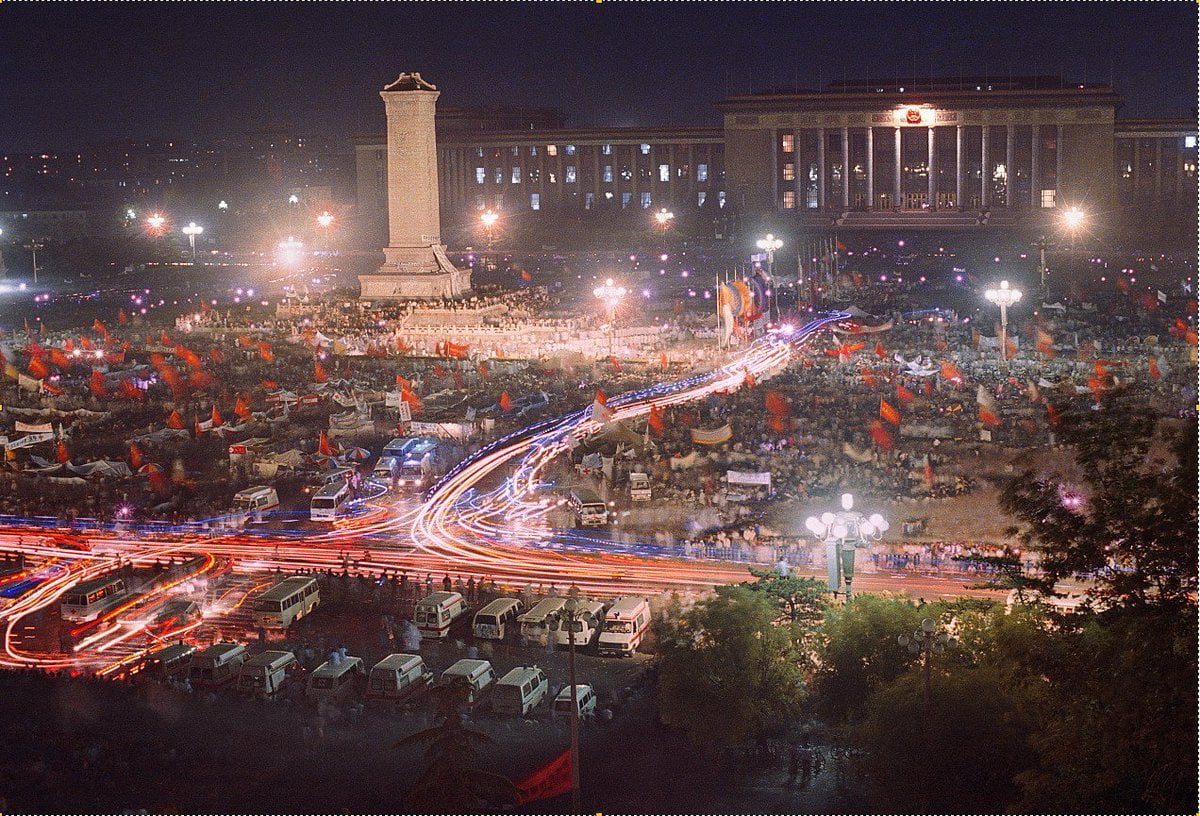
Tiananmen Square Vigil @ Victoria Park – 4 June, 2020

Quite surprisingly the 31st Anniversary vigil of the CCP’s massacre of its own citizens in Tiananmen Square for daring to question the party passed peacefully.

After a year of violence and aggression, the CCP militia formerly known as the HK Police showed a bit of common sense and avoided what could have been a second bloody 4 June.

Wearing blue uniforms, instead of riot green while keeping riot shields and weapons hidden, they turned a blind eye to the tens of thousands of HongKongers who congregated at Victoria Park to stand together and remember those murdered in 1989.

https://bcmagazine.smugmug.com/Bcene-photos/2020/Tiananmen-Square-Vigil-4-June-2020-Victoria-Park/i-pPhJ4Dt

The mood was as sombre as it’s been in several years, with many of those gathering wondering if they were going to be victims of the next CCP massacre…

As the time of the vigil passed and the police hadn’t attacked, the strains of Glory to Hong Kong began to reverberate across the park and a sea of raised hands reminded Beijing – 5 Demands, Not 1 Less.

With the CCP again perverting the Basic Law and ignoring the signed international treaties that define One Country 2 Systems with the forced implementation of a ‘National Security’ law. While their glove puppets in Legco reinterpret the rules to pass the ‘Respect the National Anthem’ law – HongKongers stood united in remembrance and spirit.

HongKongers understand, they like China. They just don’t trust, like or respect the CCP. The March of the Volunteers is not China’s anthem it’s the CCPs. The National Security law is about keeping the CCP and its corrupt sycophants in power not about protecting China.

Standing united across Hong Kong and the world last night, millions of people remembered and reminded those who might have forgotten the truth about the CCP.

https://bcmagazine.smugmug.com/Bcene-photos/2020/Tiananmen-Square-Vigil-4-June-2020-Victoria-Park/i-9Rmzgd5

https://bcmagazine.smugmug.com/Bcene-photos/2020/Tiananmen-Square-Vigil-4-June-2020-Victoria-Park/i-BSp47bm

https://bcmagazine.smugmug.com/Bcene-photos/2020/Tiananmen-Square-Vigil-4-June-2020-Victoria-Park/i-cMvnwv8

https://bcmagazine.smugmug.com/Bcene-photos/2020/Tiananmen-Square-Vigil-4-June-2020-Victoria-Park/i-9c4PX7C

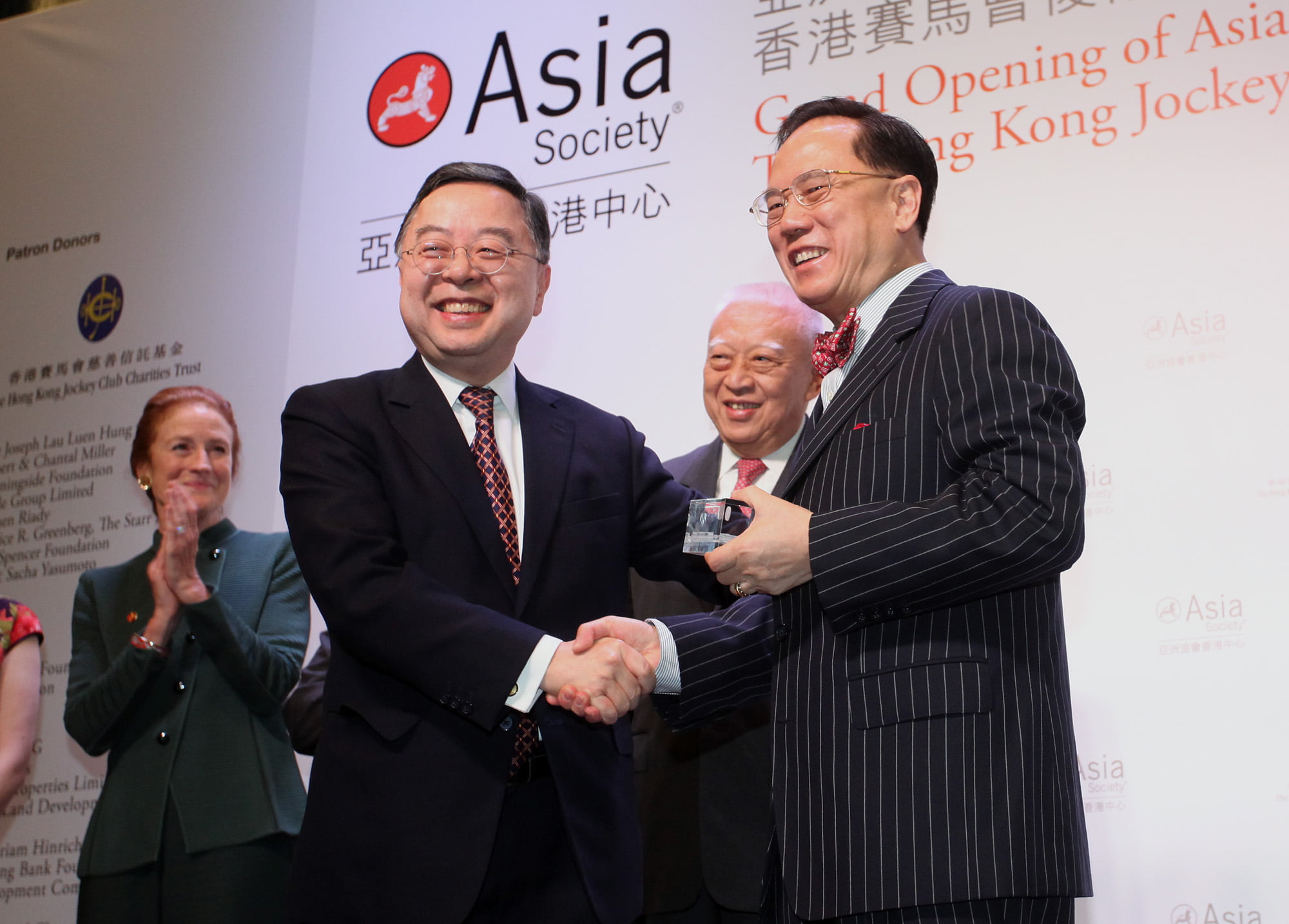
Forbes Deletes Article on Asia Society Billionaire Chairman Ronnie Chan

After the Asia Society blocked Joshua Wong speaking at the launch of a book about Hong Kong recently Forbes published an article written by analyst Anders Corr about the Asia Society’s local chairman Ronnie Chan.

The feature has since ‘disappeared’ from the Forbes website with Chan’s influence suspected to be behind Forbes decision to remove article. For those who missed it here’s Corr’s article in full.

The Asia Society recently barred a student democracy activist, Joshua Wong, from speaking at a Hong Kong literary event. It caused a wave of critical online comments and reporting on the Asia Society, and its influential billionaire donor Ronnie Chan. Chan is Co-Chair of the Asia Society in New York, and Chair of its Hong Kong Center, which has been likened to Chan’s private club.

Chan is known for his anti-democratic views, involvement in foreign policy think tanks, and extensive investments in mainland China. Those investments, as well as his investments in Hong Kong, give him an incentive to ingratiate himself with mainland authorities by promoting China’s foreign policies. Those authorities, after all, have the power to make or break Chan’s business. The issue is broader than Asia Society, though, as Chan and his family are major donors at influential institutions in the US, including Harvard University and the University of Southern California (USC).

Orville Schell of the Asia Society, and Susan Shirk, on the Board of Scholars at the Chan-affiliated USC US-China Institute among other roles, co-chaired an influential study of US-China Relations in February. Had Hillary Clinton won the US presidency, some in the Schell-Shirk task force, such as Shirk herself and Kurt Campbell of the Asia Group, would have been poised to seek influential positions in US government. The focus of Chan’s attentions on institutions that are politically influential on US-China relations raises the question as to whether China is seeking to use Chan, a dual US-Hong Kong citizen, to influence US foreign policy on China.

While the Hong Kong office of the Asia Society released a statement that said the decision to bar the democracy activist was “an error in judgment at the staff level”, several individuals with whom I communicated suspected Ronnie Chan’s influence to be behind the decision. That influence may or may not have been explicit. When a major funder shows a general preference against a class of people, for example democracy and freedom of speech advocates, then staff who counter that preference do so at the peril of their own organisation and jobs.

“Sounds like someone will take a bullet for Ronnie (that is, after all, what he pays them for),” said Joe Studwell, author of How Asia Works and The China Dream. “Ronnie will retain all powers and be left to figure out new ways to avoid any ‘controversy’ at Asia Society HK [Hong Kong]. I’d go for a pure, unspoken focus on ‘cultural’ issues, just like Beijing would want. No contemporary sociology, politics, economics, etc. More oracle bones and Ming vases.”

That prediction would be consistent with recent trends at Asia Society Hong Kong against politically controversial figures stretching back to at least 2009. At least four persons who support democracy and freedom of speech, in addition to Joshua Wong, may have been barred from the Hong Kong chapter of the Asia Society, including Martin Lee, Evans Chan, James Mann, and Renee Chiang.

Martin Lee is the founding Chair of the Democratic Party in Hong Kong. He was arrested during the 2014 democracy protest. According to one source, he has never been invited by the Asia Society in Hong Kong to an event.

Evans Chan filmed a documentary on the 2014 democracy movement in Hong Kong. He said that, “last October, Asia Society cancelled a screening of my film, Raise the Umbrellas, for an ‘unbalanced’ post-screening discussion with Martin [Lee] & Benny Tai.” The New York Times covered the cancellation without apology from the Asia Society, which indicates that the action was probably noted by its leadership without change in policy, since Asia Society Hong Kong repeated itself with Joshua Wong and in at least one other case.

James Mann of the Los Angeles Times commented on Facebook on July 6, “I was asked to speak in Hong Kong a few years ago, and Ronnie Chan vetoed my appearance. The only surprise to me here is that the Asia Society in NY, which professes a belief in liberal values, should allow this sort of thing to happen again and again and again. I guess they must need his money desperately.”

Renee Chiang, the wife of publisher Bao Pu, commented on Facebook that, “I can also confirm being turned down by Asia Society Hong Kong when the Zhao Ziyang book (Prisoner of the State) was published in 2009. Meanwhile, Asia Society in New York hosted a panel talk about the book, at which Orville Schell admitted getting a phone call from Chinese authorities voicing their disapproval, yet they did what they should do: they ignored the threat and held the talk anyway. In Hong Kong, no such call is needed, as they appear to have in-house censors.”

Studwell noted that “the HK government gave Ronnie a very valuable piece of public property (the old arsenal), which he was then allowed to refurbish… and operate as a sort [of] quasi private members club. But the whole thing, surely, only worked because the Asia Society in the United States of America let him use its brand to get his hands on the place.”

The question is then whether the Asia Society headquarters in New York, including its Co-Chair and 66 trustees, are complicit in what appears by its repeated programming decisions in Hong Kong, to be amplification of Chinese government propaganda. What do the Asia Society Co-Chair and trustees, some of whom do business in China, get out of the deal? Is the Chinese government seeking to use Chan to politically influence these trustees and others? Are the trustees seeking access or favors from Chan in China? Chan and staff of the Asia Society Hong Kong office did not reply to requests for comment.

Chan has connections, sometimes very weighty ones, at Harvard University in Cambridge Massachusetts, the University of Southern California in Los Angeles, the Peterson Institute for International Economics in Washington D.C., the World Economic Forum in Switzerland, the East-West Centre in Hawaii, and the Council on Foreign Relations in New York and Washington D.C. These connections are facilitated by donations or the hope of donations, according to a source. The Chan family, through its Morningside Foundation, donated $350 million to Harvard University. This is the largest ever single donation to Harvard.

The latest Asia Society controversy has “renewed questions about the influence that China, and people with deep business interests in China, hold over universities, nongovernmental organisations and other groups that rely on wealthy donors,” wrote Austin Ramzy at The New York Times. Ramzy noted that Ronnie Chan was an “outspoken supporter of Leung Chun-Ying, the pro-Beijing former chief executive [of Hong Kong] who was a target of the 2014 protests.”

Studwell said, “Doesn’t the Asia Society just show the problems of having corporate-led NGOs anywhere in the world? As an organisation it has totally failed to set up a governance system that could deliver freedom of speech. I don’t blame a Ronnie Chan-run Asia Society (HK) for that as his behaviour is entirely predictable based a) on his track record of kowtowing to all Establishments and b) on his vested interests in having a large mainland property portfolio. I personally think that the corporate US interests behind the Asia Society have more to answer for, though not much more because, as I said, corporate-led NGOs don’t work when push comes to political shove.”

Chan’s influence and connections, fueled by profits dependent on the Chinese government, could be used to promote China’s foreign policy interests among elites in the US And the elitism that Chan promotes is consistent with what elites in China think. Victor Shih said, “many in the elite stratum of China, even the younger generation, believe that most people in China, except for the elite, are incapable of making sound political decisions.” With President Trump’s election, that anti-democratic message could resonate among elite Democrats and Republicans alike, whose establishment political connections, for example through the Clinton and Bush families, were ruptured by Donald Trump’s election.

“Ronnie Chan is one of a small number of Hong Kong tycoons who are US-educated or had extensive US experience,” said Edith Terry, former opinion editor at the South China Morning Post in Hong Kong. “The most prominent members besides Ronnie are Tung Chee-hwa and Victor Fung. They regularly hold senior public roles in Hong Kong and most are also members of the Hong Kong delegation.” The CPPCC is a mainland Chinese government body.

Terry said, “The question of influence, however, is a subtle one. They represent a highly privileged class in Hong Kong that has huge vested interest in stability, a continuation of the status quo, not changing it. I believe that for this group, the game is more about keeping senior US policy makers and institutions engaged with the Hong Kong question. There is of course some exertion of soft power both ways. In this case, I would say the tycoons and the multinational elite here talk off the same page. Free speech only goes so far when talk of independence invites intervention by Beijing.

You could say they are all practical billionaires. Whatever their personal feelings are about free speech and Ronnie is notorious for speaking whatever is on his mind, and can be blunt to the point of rudeness in public before large audiences. They know that talk of independence is toxic and are convinced that the only way to stop it is to criminalise it by introducing a national security law, which would be in accordance with the Basic Law and is long overdue in their view. Ronnie and his cohort are extremely sophisticated and understand the usefulness of soft power through back channels and elite institutions. They are very good at it, and it is about being in position to deflect or argue points, not broadcasting simple, black and white messages.”

The perception of undemocratic influence that elites in Hong Kong have on international and domestic politics may be one cause for increasing political instability in Hong Kong. Michael Davis, former professor of law at the University of Hong Kong, said, “in the Hong Kong context this is more than just a free speech issue. I have long felt that the radicalisation of Hong Kong politics is due in no small part to the perception that the Hong Kong government and the pro-establishment business elites do not make much effort to represent the core concerns of Hong Kong people to the Central government and more generally. It seems to be a culture where they regularly lecture Hong Kong on Beijing’s requirements.

So if a prominent organization such as the Asia Society is thought to be leading the charge as Beijing’s mouthpiece in Hong Kong then that is a serious problem and contributes to the sense of futility among our young –not the sort of community service you would expect from such an organisation. Does the society have any mechanism at all to review its policies and practices?”

Studwell thinks that the Asia Society in New York should ask Chan to decrease his influence over programming in Hong Kong. Studwell writes, “I lay responsibility for all of this at the door of the Asia Society in the United States. If the Asia Society believes in free expression and debate, it should very politely, and gratefully given all the money, offer Ronnie two choices: 1. Ronnie steps down, and allows the Asia Society to put in place a governance structure that means that the Asia Society HK operates according to a clearly stated set of principles. Given the government ownership of the premises, I don’t think the HK operation can or should be run from the US. What is needed is a local system that operates according to transparent rules, preferably with an elected board. 2. The Asia Society removes its imprimatur and its moniker, Ronnie picks a new name (Asian Values Society(TM)?), and does things his way.”

Given Chan’s Co-Chairmanship of the Asia Society in New York, such a decision would likely have to be made by his Co-Chair, Henrietta Fore, along with at least half of the 66 trustees. Fore is former Administrator of US AID, and a member of the boards of Essilor International SA, general Mills, Exxon Mobil Corporation, and Theravance Biopharma Inc. The trustees include such personages as Ambassador John Negroponte, currently a Senior Fellow at Yale University, talk show host Charlie Rose, former Australian prime minister Kevin Rudd, and Stephen Schwarzman, CEO of Blackstone Group. Blackstone does extensive business in China, and has $368 billion in Assets Under Management. Chan may not be the only one seeking favor in Beijing.

These and other trustees should take action per Studwell’s advice, or risk their own reputations. The Asia Society, democracy, and free speech will be the better for it, though the trustees’ commercial access in China could suffer. That, like Asia Society’s decision to bar Joshua Wong, is a judgment call.

https://www.forbes.com/sites/anderscorr/2017/07/10/chinese-influence-at-the-asia-society-elitism-and-radicalisation-in-hong-kong/#69700cf53910

Asia Society Fail to Apolgise for Joshua Wong Censorship

In a statement published on their website the Asia Society made no apology to either PEN or Joshua Wong about the censorship involved in their decision not to host the Hong Kong 20/20 book launch if Wong, a contributor to the book, spoke.

Statement on PEN Hong Kong Event, Joshua Wong
NEW YORK, July 6, 2017 — Asia Society takes this issue very seriously,
and after looking into the circumstances, it is clear that an error in judgement at the staff level was made involving the PEN Hong Kong event. Asia Society, throughout its history, has hosted events at all of its global locations with speakers representing all sides of major Asia-related issues. This has been one of our core principles since our founding in 1956; it’s still our policy today. We remain steadfast in our mission to serve as a global forum for meaningful and open dialogue.

In May, Joshua Wong spoke at Asia Society in New York along with other speakers from Hong Kong. Wong and speakers from all sides of the issue are welcome at Asia Society.
For more information, contact [email protected].

It’s sad to see an organisation that claims to “serve as a global forum for meaningful and open dialogue” refuse to apologise for looking to censor such open dialogue.

Tiananmen Square Vigil @ Victoria Park – 4 June, 2017

https://bcmagazine.smugmug.com/Bcene-photos/2017/4-June-tiananmen-square-vigil-Victoria-Park/i-QF48W8w

Tens of thousands of HongKongers gathered to remember those who died as China’s communist leaders turned their guns on their own unarmed people.

Tiananmen was 28 years ago, but the CCP continues to use violence to suppress freedom of speech, sexual equality and especially against those who speak out on corruption, incompetence, nepotism and party members self-enrichment.

While news of few of these violent put downs makes it past China’s draconian censors, we only need to see what has happened here in Hong Kong to know it’s far worse north of the border.

Here publishers disappear, kidnapped from our streets while the police do nothing. A police force that used to be respected and trusted by all. But now a force that cannot ‘see’ a pro-Beijing supporter beat someone up even when it happens infront of their eyes and is recorded on multiple cameras – yet thinks a woman’s breast is a weapon…

Sadly China is infesting Hong Kong with it’s corruption, bribery, censorship… anything that helps China’s leaders and their sycophants to make more money.

If China is so wonderful why do so many people there, especially the very rich CCP leaders, want to take their personal money out of the country and stash it in countries they claim to despise?

We cannot keep silent! We want to keep our city corruption free. Retain freedom of expression, the press, religion, sexuality, an impartial judiciary…as enshrined in the Basic Law.

If you prefer China’s vision of life, everyone working to enrich the chosen and connected few. Feel free to move North.

China gave us the Basic Law, article 25 of which states ‘HongKongers are all equal before the law’. Some though are more ‘equal’ than others and we’ve seen our government buy the tools and guns to suppress the views of those who disagree with China’s view of ‘equality’…

Who will hold a vigil for us?

https://bcmagazine.smugmug.com/Bcene-photos/2017/4-June-tiananmen-square-vigil-Victoria-Park/i-LB5dNsx

https://bcmagazine.smugmug.com/Bcene-photos/2017/4-June-tiananmen-square-vigil-Victoria-Park/i-g9CV32H/A

Google Looking to Censor Coverage of Charlie Hebdo Terror Attack

Today, over a year after the article was published google sent bc magazine a warning over bc’s coverage of the Charlie Hebdo terror attacks and our publishing of a series of iconic Charlie Hebdo covers.

In essence the warning was delete/censor the Charlie Hebdo covers article or we (google) will deactivate your adsense account and stop serving adverts to bcmagazine.net.

Here’s a link to the article www.bcmagazine.net/tag/satire/

bc magazine may not agree with every viewpoint expressed in Charlie Hebdo. But free speech and freedom of the press are two of the cornerstones of a modern society so we are 100% behind their right to use satire and humour to expose the absurd and ask questions of hypocrites – without getting shot.

Fuck off google!

#JeSuisCharlie

[espro-slider id=10092]

Censorship, Intimidation and Harassment of SCMP Reader

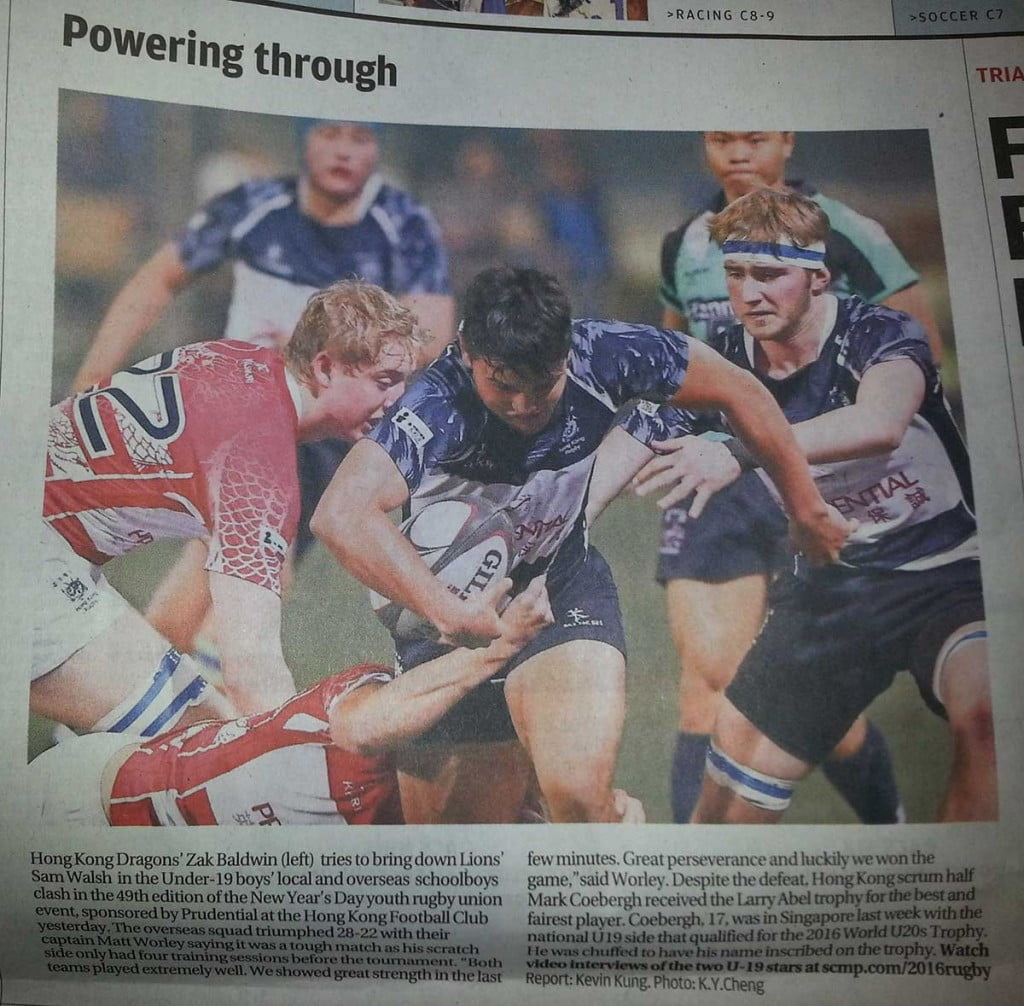
scmp-powering-through---2-january-2016

It’s ironic that while on it’s front pages the SCMP vociferously advocates for press freedom and the release of Bo Lee and his fellow disappeared. The reality within it’s own pages is that of censorship, intimidation and harassment of any reader who dare criticise or question an SCMP employee. The exact type of actions that the SCMP would have its readers believe it looks to expose in others. The hypocrisy is sad.

On the 1 January the SCMP’s Kevin Kung spent 16 hours, working until 1am, on a story about the New Year’s Day Youth Rugby Tournament at HK Football Club. By his own admission he didn’t stay until the end of the tournament. A sterling effort you might think, except that the published article, a massive 250 or so words, quite simply ignores half the participants. Focusing solely on the boys rugby, reading his original story you’d never know that half the rugby played that day was by girls.

Linda Olson the administrator and driving force behind the Women’s Rugby Hong Kong Facebook group enquired politely of Mr Kung about the gender bias in his article.

“I am wondering why you only reported on boys’ rugby in the article below?
The headline makes it sound as if only boys took part.
The article itself makes no mention of the girls who played.
The video includes only brief coverage of girls rugby (the U12s team and captain).
This is unacceptable.
Nearly a quarter of rugby players in Hong Kong are girls/women and it is the most rapidly expanding demographic here.
Please ensure that your coverage is more inclusive in future..”

The article’s author Mr Kung replied and made some edits to ‘improve’ the online version of the article:
1. “Girls” was added to the sub-headline making it gender neutral.
2. A photo with caption of Gracie Hood (GH) was added.
3. An extra paragraph added to the end of the article mentioned the U19s girls’ game (but did not name the Captain as they had with the boys game) and GH being named Best and Fairest of the match.
Mrs Olson notified the WRHK Facebook group members of the changes and thanked Mr Kung for making them, at the same time providing a quantitative analysis of the gender imbalance of the SCMP coverage.

Mr Kung however had also cc’d in SCMP Sports Editor Noel Prentice who then fired off an intimidatory and threatening email to Mrs Olson which he cc’d to senior figures at the HK Rugby Union AND Mrs Olson’s employer!!!

Mr Prentice’s email is quite astounding in it’s arrogance, tone and less than full disclosure of facts.

“I take exception to you accusing my reporter and SCMP of sexist coverage when Kevin has gone out of his way to cover rugby and the New Year’s Day tournament. He spent 16 hours compiling the online and print coverage so please have some respect.

SCMP is a great supporter of rugby and we give what many consider a niche sport a disproportionate amount of coverage. (bc’s note: why, because the HK Rugby Union pay the SCMP a lot of money to write about local and international rugby). And we have also gone out of our way to cover the emergence of women/girls in the game and the opportunity they have been afforded.

We do not have the resources to give blanket coverage to any sport and all sports and events are judged on their news value.

We also strive to be fair and balanced and I would expect you to also adhere to these principles when delivering any gender bias lectures to the students of Li Po Chun United World College of Hong Kong.” SCMP’s Noel Prentice

If it takes Mr Kung 16 hours to write a 250 or so word article it does explain a lot about why the SCMP print edition is so thin and lacking in content compared to years past. Joking aside Noel Prentice’s email is factually mis-representative of Mrs Olson’s enquiry and comment; neglects to mention that the HKRU pays the SCMP lots of money to ‘support’ the writing and publishing of stories about rugby; and extremely patronising of the fairer sex “the emergence of women/girls in the game and the opportunity they have been afforded” and by assuming that boys rugby coverage is of value, while coverage of girls youth rugby has no news value.

If the original article was to quote Mr Prentice “Fair and balanced” then Mrs Olson wouldn’t have needed to contact Mr Kung and could have used the story to show how the media was covering girls and women’s rugby in the same detail as men’s rugby. That it didn’t make any mention of 50% of the tournaments participants makes it unbalanced not fully accurate and a perfect example of gender imbalance in the media – the subject of Mrs Olson’s frustration and her class.

Why Mr Prentice also cc’d Mrs Olson employer, in what appears to be a blatant intimidation attempt to damage her professional standing and work relationship with her employer – while at the same time looking to censor the use of SCMP content in an education setting – is something the SCMP failed to answer when bc emailed them asking for a comment.

Read the full email conversation here – email addresses have been removed to protect people’s privacy.
Read about women’s rugby in bc magazine and here on the Women’s Rugby Hong Kong facebook group.